
Who gets remembered when culture is written into history? Across Africa’s creative industries, women have shaped movements, built businesses, influenced conversations and created opportunities that continue to define the continent’s cultural landscape. Yet many of these contributions remain under-documented despite their impact on fashion, media, film, technology, beauty and business. It is a challenge entrepreneur, investor and cultural strategist Deola Art Alade is addressing through Women Driving Culture.
Art Alade has spent years operating at the intersection of entertainment, business and culture. As the co-founder of Livespot360, she has helped deliver some of Africa’s most ambitious entertainment and live experience projects while building platforms that elevate African creativity on a global stage. Her work has consistently focused on creating opportunities, supporting talent and strengthening the creative ecosystem.

That commitment sits at the heart of Women Driving Culture, an initiative dedicated to documenting, amplifying and supporting women whose work influences how Africa creates, consumes and experiences culture. The platform emerged from a recurring observation. Throughout her career, Art Alade encountered remarkable women whose most valuable insights often surfaced away from the spotlight, during candid conversations where experiences, lessons and strategies were exchanged openly.
“Women have always been driving culture, but we have not always documented their role with the seriousness it deserves,” she says. Through Women Driving Culture, she is building an archive of stories, experiences and achievements that preserve the contributions of women actively shaping the continent’s future. The platform also creates spaces for collaboration, mentorship and meaningful dialogue around leadership, ownership and influence.
As conversations around representation continue to evolve, Art Alade believes the focus must shift towards access, authorship, capital and long-term impact. Women Driving Culture captures these conversations while creating opportunities for the next generation of creative leaders. Here, she lets us in on the inspiration behind the initiative, the women influencing culture across Africa, and her vision for building a lasting institution that documents, supports and celebrates women’s contributions to society.
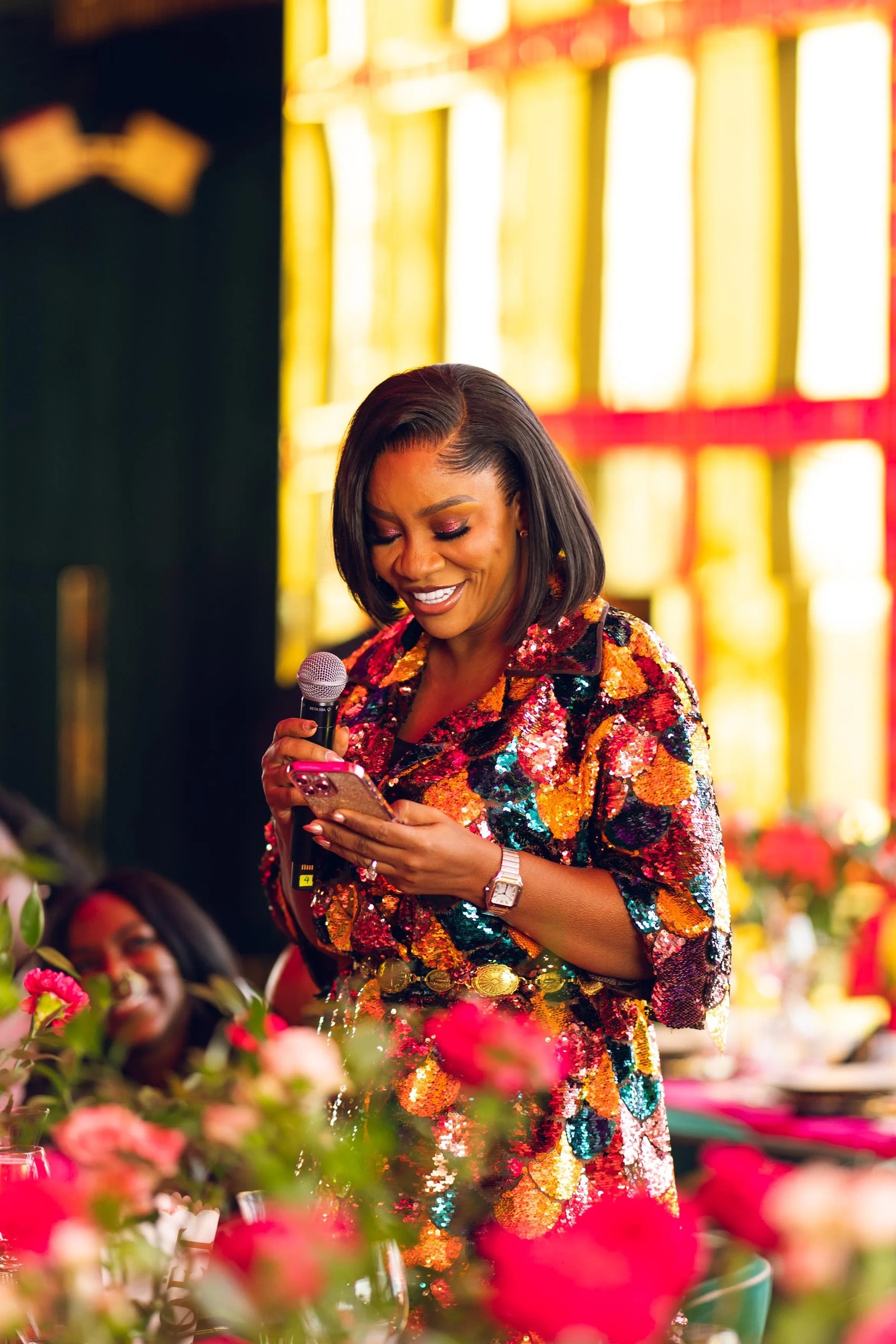
Glamour: Women Driving Culture feels like a natural extension of who you are, but every platform has an origin story. What was the specific moment or gap you identified that made you say this needs to exist?
DAA: Women Driving Culture was born from something I kept noticing over many years of working across entertainment, media, fashion, production, business, and culture. I would find myself in rooms with extraordinary women - filmmakers, designers, beauty entrepreneurs, policy makers, producers, executives, founders - and I realised that some of the richest conversations were not always happening on stage. They were happening in the margins. Over lunch. Between sessions. In the honest conversations women have when they feel safe enough to speak freely.
There was wisdom in those rooms. There was strategy. There was vulnerability. There was power. But too much of it was disappearing once the room ended.
That was the gap for me. Women have always been driving culture, but we have not always documented their role with the seriousness it deserves. Women Driving Culture was created to be more than a celebration. It is a room, an archive, a platform, and eventually a support system for women who are shaping African culture in real time. For me, it is about saying: let us not wait until history forgets us before we start recording what women built.
Glamour: The name is a statement in itself. When you say women driving culture, who are you talking about, and what does it mean to you to document the experiences of these women?
DAA: When I say women driving culture, I am talking about women whose work is shaping how we live, what we value, what we consume, what we wear, what we watch, what we listen to, and what we believe is possible.
Sometimes they are highly visible. Sometimes they are not. But their influence is undeniable.
It is the designer redefining African style for a global audience. It is the filmmaker changing how our stories are told. It is the media executive building platforms. It is the beauty founder creating new standards. It is the policy maker opening doors for the next generation. It is the woman behind the scenes whose decisions shape an entire industry, even if her name is not always the loudest in the room.
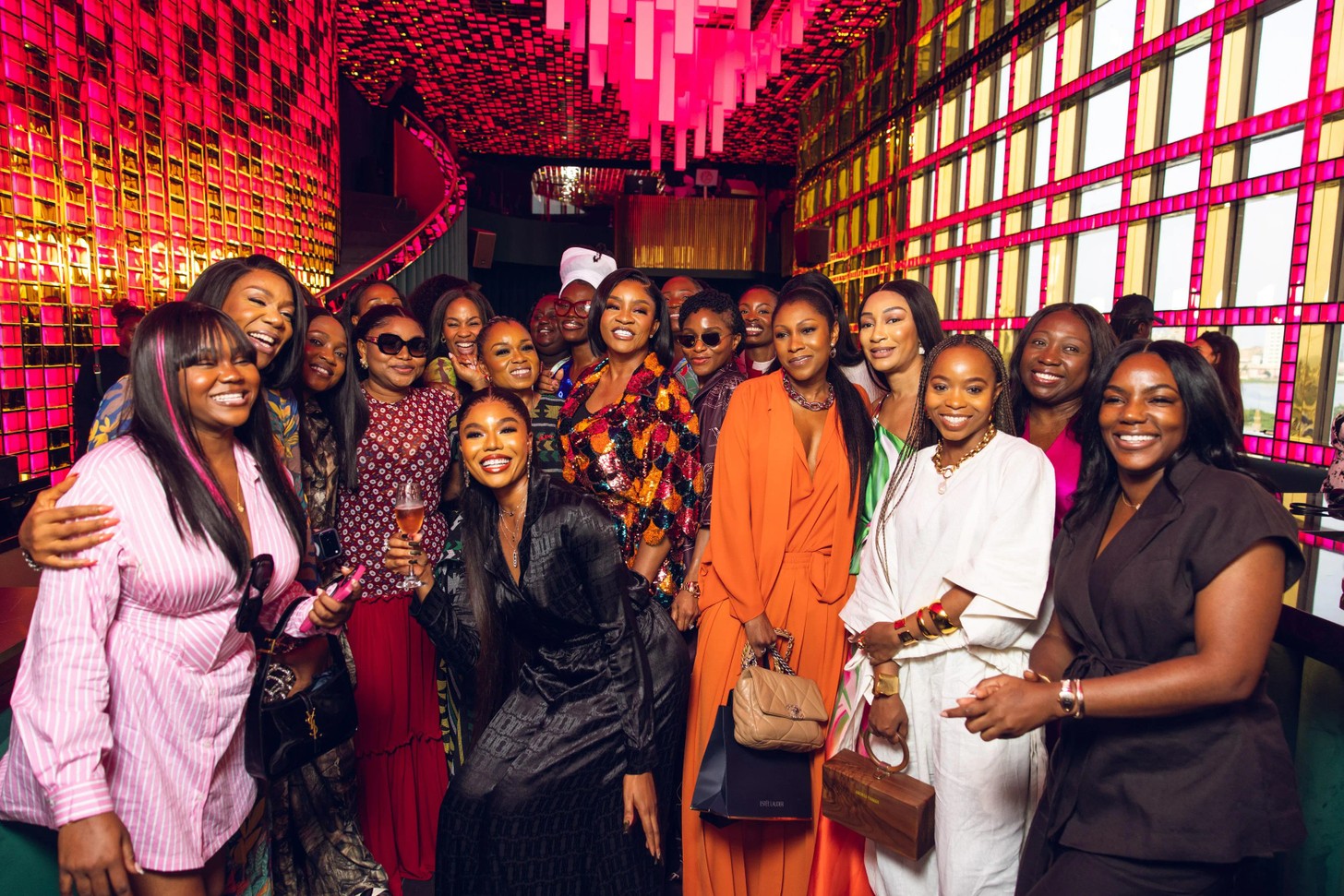
At our first Women Driving Culture Luncheon, we had women like Lisa Folawiyo, Toke Benson-Awoyinka, Titi Ogufere, Busola Tejumola, Funmbi Ogunbanwo and others operating across fashion, media, film, content, policy, business, and culture. What was powerful was not just that they were successful. It was the depth of what they had built, survived, influenced, and made possible.
Documentation matters because culture has a memory problem. Too often, women contribute to the architecture of an industry, but when the story is told, their names become footnotes.
Women Driving Culture is my way of saying: not this time. We will document the women building, shaping, leading, and influencing culture while they are still here to tell the story in their own words.
Glamour: There is a lot of celebration of women in creative spaces right now. Do you think the conversation has moved beyond celebration into something more structural, or are we still largely at the surface?
DAA: I think we are somewhere in between.
The visibility has improved, and that matters. There are more women being recognised, more women leading productions, more women building companies, more women taking up space in industries that were not always designed with them in mind. But visibility is not the same as power. And celebration is not the same as structure.
Celebration is important because it shifts perception. It allows other women to see what is possible. But after the applause, we still have to ask harder questions. Who has access to capital? Who owns the IP? Who controls the platforms? Who gets funded? Who gets credited? Who gets to make decisions? Who is in the room when policy, investment, and infrastructure are being discussed?
At the Women Driving Culture Luncheon, the conversation was not just about celebrating women. It was about access, authorship, collaboration, policy, pipelines, ownership, and how women can collectively influence the future of Nigeria and Africa's creative economy. So yes, the celebration matters. But the real work is underneath the celebration. That is where systems change.
Glamour: Who are some of the women driving culture in Africa right now that you think deserve far more attention than they are getting?
DAA: There are so many women across the continent doing powerful work, and I think part of the problem is that we often only celebrate women when they become globally visible. But culture is also being shaped by women who are building consistently, quietly, and with deep influence.
I would mention women across different layers of the ecosystem. There are women like Lisa Folawiyo, who has done so much to shape how African fashion is understood globally - not as costume, but as luxury, craft, identity, and modernity. There are women like Busola Tejumola, who has played such an important role in content, storytelling, and platform building.
There are women like Titi Ogufere, whose work in design and interiors has helped shape how African design excellence is documented and positioned. There are women in beauty, film, policy, media, live production, technology, and business who may not always be household names but whose work shapes the direction of the culture. And then there are younger women coming up now - stylists, producers, creative directors, editors, founders, writers, and technologists - who are building with such clarity and courage.
For me, the bigger point is that we need to widen the lens. We cannot keep defining cultural influence only by fame. Some of the most important women driving culture are not the most visible. They are the ones building the systems, platforms, aesthetics, businesses, and opportunities that other people stand on.
Glamour: Is there a woman who has shaped how you think about leadership, culture, or impact whose influence you do not think you have acknowledged publicly enough?
DAA: Yes, definitely. I think many women have shaped me in different ways, but I would start very close to home.
My mother shaped a lot of how I understand strength, discipline, and quiet resilience. Sometimes when we talk about leadership, we only look at boardrooms, titles, or public achievements. But my earliest lessons in leadership came from watching women hold families, communities, values, and dreams together, often without applause.
I have also been shaped by women I have encountered throughout my career. Some were mentors. Some were peers. Some were women I simply observed from a distance. Women who built with grace, who kept going through difficult seasons, who did not allow the limitations around them to define the scale of their ambition.
As I have grown, I have realised that leadership is not always loud. Sometimes leadership is consistency. Sometimes it is courage. Sometimes it is choosing to build even when the room has not fully made space for you yet.
That is one of the reasons Women Driving Culture matters to me. It gives us a chance to acknowledge women while they are still in the middle of their journey, not only after the world has decided their legacy is worthy of attention.
Glamour: Women Driving Culture is a platform built around documenting the stories of women shaping African culture. How do you identify whose stories deserve to be told, and what is the standard you hold that selection to?
DAA: For me, the starting point is impact, not just visibility. Visibility is important, but it can sometimes be misleading. There are women who are very visible, but their deeper story has not really been told. And there are women who are not as visible, but their work is shaping an entire industry from behind the scenes.
We are interested in both. The standard is not perfection. It is not just fame. It is not just popularity. The standard is contribution.
Who is building something that will outlast a moment? Who is changing how an industry works? Who is opening doors for others? Who is creating new language, new aesthetics, new businesses, new platforms, new possibilities? Who has a story that can teach another woman something about courage, creativity, resilience, ownership, or impact?
I am also very interested in honesty. I do not want Women Driving Culture to become a platform where we only polish women's stories until they look perfect. I want the real story. What did it take? What did it cost? What did she learn? What did she build? What did she make possible for others? That is the kind of record worth keeping.
Glamour: What does Women Driving Culture's commitment to the next generation of creative women actually look like in practice?
DAA: In practice, it has to move beyond inspiration. Inspiration is important, but a young woman who is building also needs access, guidance, opportunity, and sometimes very practical support.
So Women Driving Culture is thinking about the next generation in a few ways. First, through documentation. When a young woman can see the story of another woman who built something meaningful in the same environment, with similar challenges, it changes what she believes is possible.
Second, through access. We want to create rooms where emerging women can connect with women who have already built, led, failed, recovered, scaled, and learned. Third, through mentorship and knowledge-sharing. There is so much wisdom sitting with women across Africa's creative industries, and we need to create more intentional ways for that wisdom to move from one generation to another.
And finally, through tangible support. Through the impact pillar of Women Driving Culture, the intention is to support women in the creative industries who have the talent and vision, but need resources, visibility, networks, or structure to take the next step. For me, the commitment is simple: we cannot keep telling young women to dream big without helping to build the bridges that make those dreams possible.
Glamour: How do you measure impact for a platform like this? What does success look like?
DAA: Some of it can be measured, and some of it has to be felt. The measurable side matters. We can track how many women are documented, how many women are supported, how many collaborations come out of the platform, how many younger women gain access to mentorship, opportunities, funding, rooms, or visibility because of Women Driving Culture.
Those are important indicators. But the deeper impact is harder to put into a spreadsheet.
Success is when a woman feels seen in a way that gives her more confidence to own her story. Success is when a young creative woman watches or reads one of these stories and thinks, 'If she could build, I can build too.' Success is when the archive becomes a reference point for understanding how African women shaped fashion, film, media, beauty, technology, business, and culture.
And success is also when the conversations move beyond the room into action - into collaborations, investments, policy conversations, productions, businesses, and platforms.
For me, impact is not just applause. Impact is what changes because the platform exists.
Glamour: Women Driving Culture feels like it is still in its early chapters. Without giving everything away, what can you tell us about where the platform is going and what more is coming later this year?
DAA: Women Driving Culture is still in its early chapters, but the vision is very clear.
The luncheon was the beginning, not the destination. It gave us a powerful first room, but WDC is being built as a broader cultural platform across three connected pillars: experiences, media, and impact.
The experiences pillar is about creating curated rooms where women shaping culture can gather with intention. I believe deeply in the power of the right women sitting together honestly, because sometimes the most important collaborations and shifts begin in rooms like that.
The media pillar is about documentation. We want to tell these stories properly through interviews, profiles, visual storytelling, and eventually original formats that can travel beyond the room. One of the ideas we are developing is a premium docu-reality series that follows women shaping culture across different industries, because the world needs to see not only the finished success, but the journey, the decisions, the sacrifices, and the work behind it.
And then there is the impact pillar, which is very important to me. Visibility must become something more tangible. We want WDC to create access, mentorship, support, opportunities, and long-term value for the next generation of women in the creative industries.
So, for me, Women Driving Culture is not just an event. It is a platform with permanence. A media property with scale. And, ultimately, an institution in the making.
The goal is simple: women shaping culture should not only be gathered. They should be documented, amplified, supported, and remembered.


