
For more than a decade, Ugoma Ebilah has been at the forefront of a cultural shift that has transformed how African art is valued, collected, and understood around the world. Yet her influence extends far beyond the market. Part strategist, part cultural thinker, and now institution builder, Ebilah has built a career on challenging conventional ideas about who gets to shape culture, create value, and define the future.
Drawing on a background in finance and business, she approached the art world not as an insider bound by tradition, but as a systems thinker determined to understand why extraordinary African creativity was often disconnected from the structures that confer visibility and influence. Her work has helped elevate some of the continent’s most celebrated artists while reshaping conversations around patronage, cultural leadership, and long-term investment in the arts.

GLAMOUR: Looking back at the beginning of your journey, what first convinced you that African art deserved a bigger place on the global stage than it was being given?
Ugoma Ebilah: I think the premise is slightly flawed because I was never trying to convince the world that African art deserved a bigger place. I was trying to understand why the world had failed to recognise the place it already occupied.
Africa has always been one of the great engines of human creativity. What fascinated me wasn’t the quality of the work; it was the disconnect between the quality of the work and the structures that determined visibility, value and influence.
Very early on, I realized that what many people called “the art market” was often simply a reflection of who had access to platforms, networks and narratives. Once I understood that, the challenge became less about promoting African art and more about helping build the ecosystems through which its significance could be properly understood.
I’ve always believed that the future of culture would be shaped not by those who inherited power but by those willing to rethink where power resides.
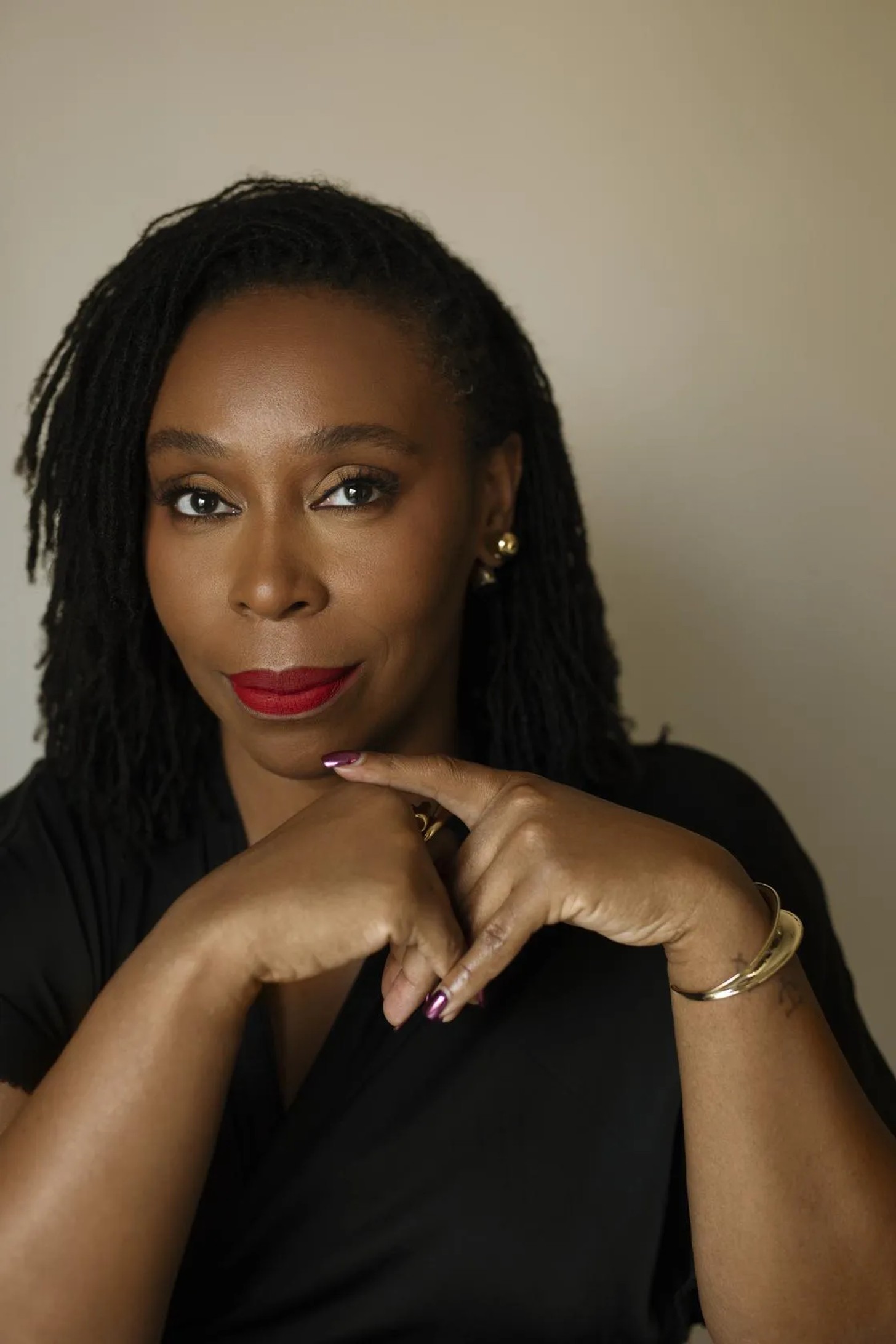
GLAMOUR: You have built one of the most influential careers in contemporary African art without following a traditional institutional path. Were there moments when being an outsider became your greatest advantage?
Ugoma: Absolutely.
Part of that stems from the fact that I didn’t begin in the art world. My early career was shaped by finance and corporate environments where I learned to think about structure, value creation, systems, growth and long-term sustainability.
That background gave me a very different lens. While many people were looking primarily at artworks, I was often looking at ecosystems. I was asking questions about patronage, infrastructure, market inefficiencies, incentives, visibility and value.
I was never intimidated by money, nor did I romanticise it. I learned early that capital is simply a tool. Used thoughtfully, it can expand opportunities, improve livelihoods and help important ideas travel further.
Being an outsider allowed me to move between worlds that don’t always speak to one another comfortably, the worlds of culture, business, philanthropy and finance. I could see that extraordinary artistic talent often existed alongside weak structures and that one of the greatest opportunities was not simply to promote artists but to strengthen the systems around them.
In hindsight, that outsider perspective became one of my greatest advantages. I wasn’t burdened by assumptions about how the art world was supposed to function. I was interested in how it could function better.
That thinking ultimately led me beyond the market itself. Today, with Mbari Kola, I’m applying many of those same lessons about institution-building, stewardship, networks and long-term value creation to culture. Because if we want lasting impact, we cannot only support artists; we must build the structures that allow creativity, patronage and cultural leadership to thrive for generations.
GLAMOUR: You've championed artists whose work has gone on to achieve international recognition and record-breaking sales. What do you look for in an artist before the rest of the market catches on?
Ugoma: I don’t look for what the market will like. I look for what the market will eventually have no choice but to confront. The artists who interest me most are often expanding the language of contemporary culture itself. They’re not simply making beautiful work; they’re creating new ways of seeing, thinking and feeling. I look for intellectual courage. I look for artists who are building a world rather than producing objects. I look for rigour, obsession and originality.Markets are often reactive. Visionaries tend to arrive first.
GLAMOUR: Many women are taught to seek validation before taking big risks. You built a career by trusting your own eye and instincts. How did you develop that confidence, and what has it cost you?
Ugoma: I’ve never thought of confidence as believing I’m right.
I’ve thought of confidence as being willing to act before consensus forms. One of the most liberating realisations of my life was understanding that expertise and certainty are not the same thing. Some of the most influential decisions I’ve made happened long before there was evidence to support them.
Of course there is a cost. If you’re consistently early, there will be periods when people misunderstand you, dismiss you or question your judgement. That’s part of the price of conviction. But history is rarely moved forward by people who wait to be reassured. And courage is essential for creativity, for building anything meaningful and for life in general.
GLAMOUR: The phrase "rewriting the rules" is often overused, but your career genuinely challenges conventional ideas of who gets to shape culture and markets. Which rules did you decide early on that you were simply not going to follow?
Ugoma: I rejected the idea that culture sits downstream from economics.
I’ve always believed the opposite. Culture shapes how societies imagine themselves. It influences aspiration, identity, innovation and ultimately economic outcomes. I also refused to accept that cultural institutions should be passive custodians of the past. The institutions that matter most are active participants in shaping the future. And perhaps most importantly, I rejected the notion that Africa’s greatest contribution to the world had already happened. I think some of the most important cultural conversations of the twenty-first century are emerging from this continent right now.
GLAMOUR: Mbari Kola is being described as something Africa has never seen before: part arts society, part cultural institution and part creative home. What gap did you see that convinced you this needed to exist?
Ugoma: For years I found myself asking a deceptively simple question:
Where do Africa’s most curious minds gather?
Not for a conference. Not for an exhibition opening. Not for a networking event. But where do artists, collectors, thinkers, writers, entrepreneurs, patrons and cultural leaders develop lasting intellectual relationships?
I realized that while we had remarkable individuals, we had very few enduring cultural societies capable of convening excellence across disciplines and generations.
Mbari Kola was born from that observation. It is not simply an arts institution. It is a social infrastructure for culture. A place designed to foster patronage, conversation, scholarship, experimentation and belonging at the highest level. In many ways, we are building the kind of institution that should have existed decades ago.
GLAMOUR: The original Mbari clubs of the 1960s became legendary spaces for artistic experimentation and intellectual exchange. What aspects of that spirit are you bringing forward, and what does a 21st-century version need to do differently?
Ugoma: The original Mbari understood that culture is a living conversation.
What we’re carrying forward is that spirit of intellectual generosity, experimentation and radical exchange of ideas. What is different today is that creativity operates within a globalised world. Contemporary artists are simultaneously local and international. Cultural influence moves across borders instantly. A twenty-first-century Mbari, therefore, has to be both rooted and connected. It must nurture local communities while participating in global conversations.
Most importantly, it must be built to last and to progress our conversations and imaginations and sense of civic cultural duty. Great cultural moments are inspiring. Great cultural institutions are transformational.
GLAMOUR: Building a cultural institution requires more than creative vision; it requires leadership, resilience, fundraising, negotiation, and long-term thinking. What has surprised you most about the transition from curator to cultural architect?
Ugoma: What surprised me most is that the transition wasn’t as dramatic as it appears.
Looking back, I realise I’ve spent much of my career building the foundations for this moment, cultivating relationships, nurturing patrons, developing trust and demonstrating that culture deserves serious investment. In a country with a significant trust deficit, and where the humanities are often undervalued, that was never a straightforward proposition. It required patience, consistency and a long-term belief in the transformative power of culture. Mbari Kola is, in many ways, proof of what trust can build.
People often think institutions are constructed from money, buildings and strategy. Those things matter, but institutions are really built on belief. The belief that ideas matter, that community matters, and that culture can enrich our lives in ways that go beyond transaction and consumption. I think people are hungry for meaning. They want to belong to something larger than themselves. They want to contribute to something that will outlast them. That is the opportunity and the responsibility of institution building.
GLAMOUR: What do you hope a young African woman walking into Mbari Kola ten years from now will feel, see, or believe that might not have been possible before spaces like this existed?
Ugoma: I hope she experiences possibility as something tangible. I hope she encounters a version of African excellence that is confident, sophisticated and unapologetically ambitious.
I hope she sees artists, collectors, patrons, scholars and cultural leaders who look like her and realises these are not exceptional paths reserved for a fortunate few. But most of all, I hope she understands that she does not have to wait for permission. Many of us inherited a world where opportunity often appeared to live elsewhere. I want her generation to inherit a world where cultural leadership can be imagined, built and sustained from Africa itself.
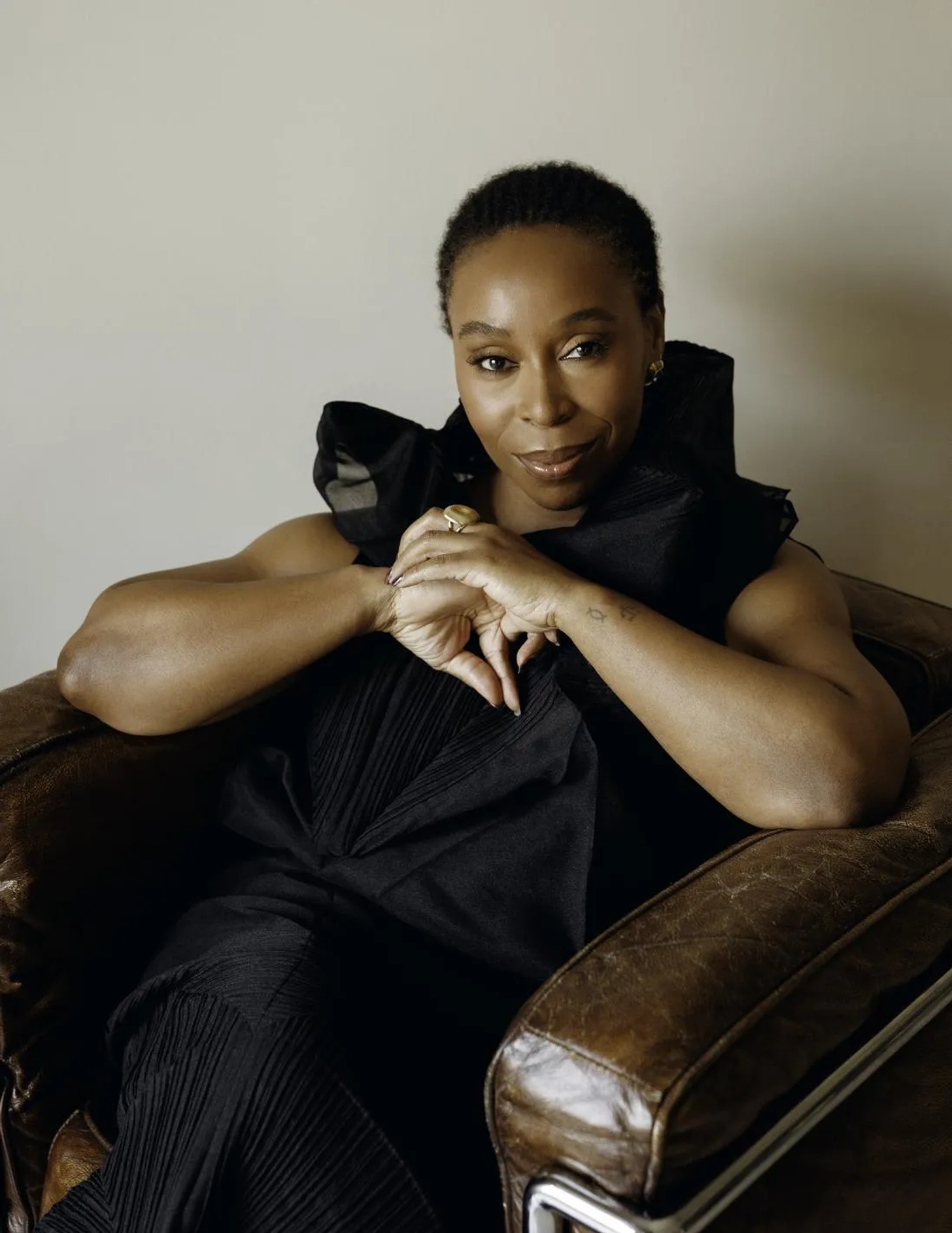
GLAMOUR: When people look back on your career decades from now, what do you hope will matter more: the artists you helped elevate, the market you helped shape, or the institution you're building for future generations?
Ugoma: I hope people won’t see those things as separate. One of the defining lessons of my career has been that culture thrives through ecosystems, not individuals. Artists matter. Patrons matter. Collectors matter. Markets matter. Friendships matter. Scholarship matters. Gathering places matter. Institutions matter. The visible and invisible networks that connect people matter.
Too often we speak about cultural development as though one breakthrough artist or one successful exhibition or one influential institution can transform everything. In reality, lasting change happens when all of these elements evolve together.
If there is a thread that runs through my work, it is a belief in infrastructure not only physical infrastructure but also social infrastructure, intellectual infrastructure, financial infrastructure, emotional infrastructure and cultural infrastructure. The market helped create visibility and opportunity. The artists expanded our understanding of what was possible. The relationships built trust, community and patronage. And now Mbari Kola seeks to connect those elements more intentionally and more permanently.
What excites me about Mbari Kola is not simply that it is an institution. Africa has institutions. What excites me is the possibility of creating a living ecosystem where artists, collectors, scholars, entrepreneurs, patrons and cultural leaders can encounter one another, influence one another and grow together.
Because real transformation is rarely linear. It is catalytic.
A conversation becomes a collaboration. A collaboration becomes a movement. A movement becomes a community. A community becomes an institution. And an institution, at its best, becomes a platform through which future generations can imagine and build things that were previously impossible. So if people look back decades from now, I hope what they see is not a career defined by transactions or even achievements but by connections.
I hope they see someone who helped strengthen the web of relationships, ideas, opportunities and structures that allow culture to flourish. Ultimately, I would like my legacy to be measured not by what I built personally, but by what became possible because those connections existed.
Recent stories by:
Thobeka Phanyeko

Matt B on ALKEBULAN III, ancestral memory and the search for belonging

Set aside time for yourself with these feel-good weekend reads

The inspirational story of Season Creations: A Journey of Healing, Heritage, and Bold Expression

7 Signs of financial abuse and how to break the chains according to Financial Adviser at Momentum Financial Planning, Ralene Grobler


