
From the dancefloors of Johannesburg to global stages like Hï Ibiza, fabric, and Glastonbury, Desiree’s rise has been anything but accidental. Rooted in the pulse of South African Afro house yet shaped by a wider love of electronica and sonic experimentation, her sets move with both intention and instinct bridging worlds while staying deeply anchored in identity. In conversation, she reflects on building a career without shortcuts, the emotional intelligence of reading a crowd, and what it means to carry Johannesburg with her wherever she plays.
The first time I experienced Desiree behind the decks felt nothing short of magical. Commanding the booth with an effortless presence, she had the crowd, myself included, moving nonstop to a seamless blend of deep house and techno. That was about five years ago, and since then her tracks have become staples across my playlists. Her mixes are rich with soulful selections that awaken every musical sense, drawing you deeper into her world with every beat.

Now a globally in-demand artist, Desiree (Palesa Desiree Shilabje) has built a reputation for seamlessly weaving diverse influences into the rich, percussive pulse of south African sound. Her ascent has been swift and assured, landing the cover of DJ Mag North America and features in Mixmag and Beats In space, while also delivering a standout essential Mix for BBC radio 1, appearing on Boiler room, and securing a residency with rinse FM. That momentum has carried her onto some of the world’s most revered stages, from Ibiza’s DC-10 and Hï to London’s fabric and Glastonbury, capped by a powerful Coachella 2025 debut across both weekends.
In the studio, Desiree continues to sharpen her voice. Her sophomore eP album Intersexy—featuring the title track alongside ‘Khuluma Nami’ with Jabulile Majola, signaled a bold first step, with more releases on the horizon. Most recently, she reimagined Nina simone’s “Four Women,” delivering a haunting, emotionally charged remix that underscores her depth as a producer.
Extending her vision beyond performance and production, Desiree is also the force behind MMiNO, her party and platform rooted in the Sepedi word for “music.” since its launch in 2023, MMiNO has evolved from a local series into a global-facing movement grounded in inclusivity and connection…spotlighting south African talents like Sanetran and Dormantyouth, alongside international names such as Kampire of the Nyege Nyege collective. What began at home has since expanded outward, with standout editions in London signaling its growing international footprint.
“My earliest memories of music are rooted in family gatherings, where my uncle would always have jazz playing in the background;” Desiree says “It wasn’t something we consciously focused on but it was simply part of the atmosphere, woven into everyday life. I grew up surrounded by people who sang and danced; in our home, it felt instinctive, almost second nature,” “At the time, I didn’t think of it as any kind of musical education, it was just how we lived. But in hindsight, it shaped my understanding of music as something deeply communal: a way people come together, mark moments, and share emotion, Desiree shares some of her early music memories that laid the foundation for her love of music.
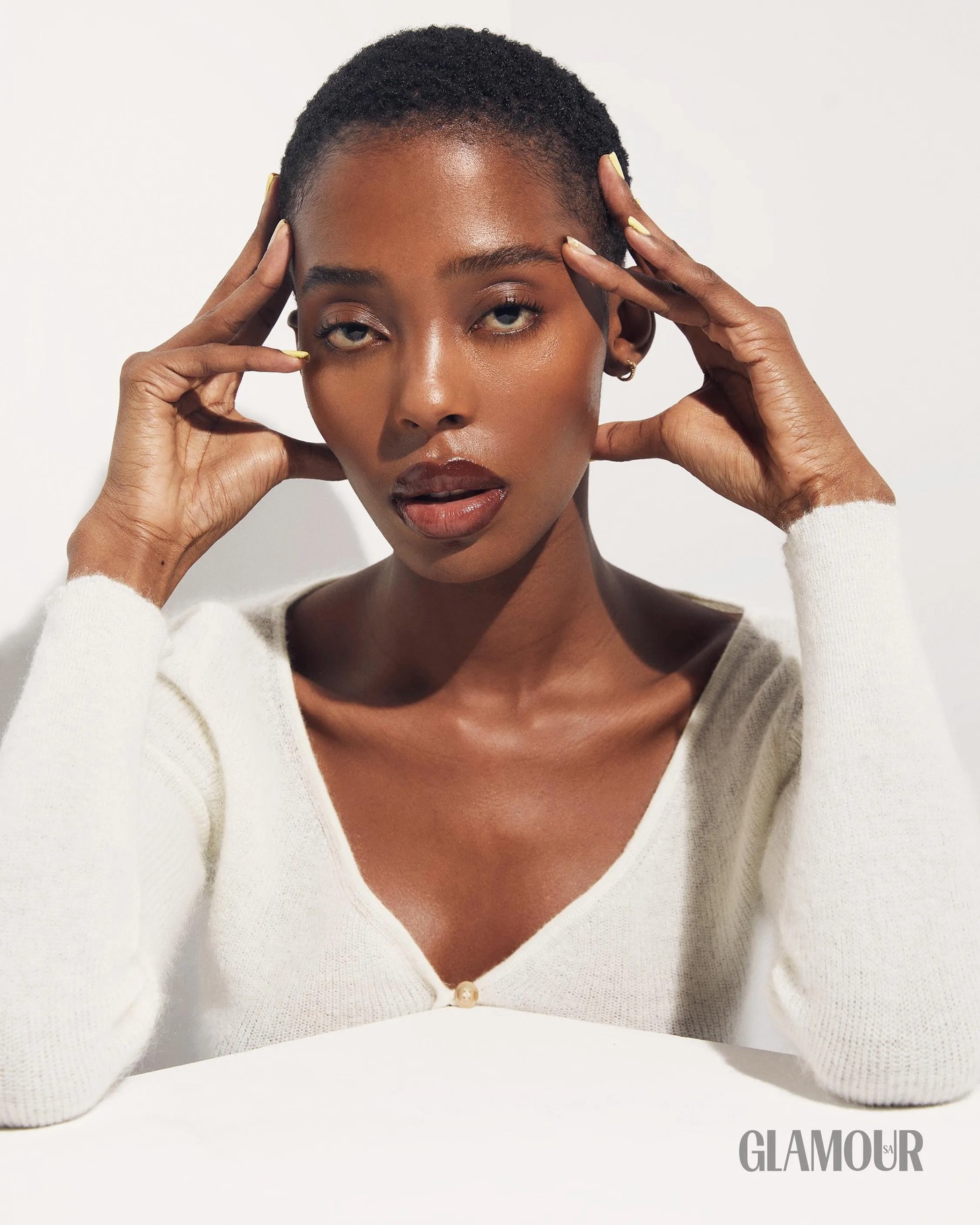
Besides jazz, what other music did you listen to?
“I was a bit of a weirdo growing up, honestly. I don’t know how a 15-year old Black girl from a township in South Africa ended up listening to Radiohead, Nick Cave, or Red Hot Chili Peppers, there was no one around me who even knew who those artists were. Not my friends, not my family," says Desiree. “At the same time, I was binge-watching runway shows and falling in love with the music behind the clothes, house, techno, electronica. That world opened something up for me. Those early obsessions taught me about texture and atmosphere, and that sensibility still sits underneath everything I do now.” she says.
Desiree’s affinity for fashion is unmistakable, woven into every look she steps out in. With a model’s silhouette and an instinct for style, she wears each ensemble with effortless confidence. Her wardrobe strikes a playful balance between flirtation and flair, perfectly echoing the vibrant energy of her stage persona.
When did you first step behind the decks, and what drew you to DJing?
“My journey into DJing began on the dancefloor,” she reflects. “I fell in love with music as a raver fi rst.” While studying in Braamfontein, one night in particular shifted everything when I heard an electrifying set at Kitchener’s Carvery Bar by Da Capo. “He was playing Afro House, a sound I was already deeply obsessed with. At that moment, I just knew…this is it.” What started as a natural instinct for collecting and curating music soon evolved into something more intentional. “I’ve always had a knack for putting music together,” she says, “so I began doing the same with house, and it all grew organically from there.” Her first major break came at surreal electronica, a party that not only marked her debut on a public stage but also led to her first residency, cementing her place behind the decks.
Johannesburg stands as South Africa’s music mecca where sound pulses through every corner, and music fans are spoiled for choice. For Desiree, it was more than just a backdrop; it was a catalyst. “Jozi shaped everything,” she says. “I grew up in Ivory Park but commuted to school in the suburbs, so I was constantly moving between different worlds and different economic realities.” That duality, she explains, sparked a deep sense of curiosity. “I never quite felt like I fit in one place, and that pushed me to search for sounds that made sense of my experience.”
It was in Braamfontein, however, that the pieces finally fell into place. “Discovering that scene, it was where everything came together. That community became my home.” This marked a turning point, when Desiree began to see music not just as a passion, but as a possible life’s work.
“Honestly, it took a while,” she admits. “even when the bookings started coming in, DJing still felt like a hobby. I was modelling on the side, doing internships linked to my degree and I had a lot going on.”
The shift came in the summer of 2022, in a moment of quiet realisation. “I remember looking at the Lost Village lineup and seeing my name alongside all those artists. That’s when it hit me that this could actually be something.” From then on, there was no more hesitation. “I stopped hedging and started treating it like a career.”
Her sound is often described as Afro rooted with techno precision and a fusion that feels both intentional and instinctive. “It came together naturally,” Desiree explains. “The African foundation is always there. There’s a distinct rhythm and sound design in south African Afro-house that you just don’t find anywhere else. Producers from Europe try to emulate it, but it’s never quite the same.” Layered onto that is a broader sonic upbringing. “I grew up on electronica sounds that, on the surface, aren’t even related to dance music.” That contrast became a creative compass. “I’ve always been drawn to combining things you wouldn’t traditionally put together and making them work.”
What drew you to reinterpreting your latest mix “Four Women” by Nina Simone?
“It’s a song that already says everything,” Desiree reflects. Originally performed by Nina Simone, “Four Women” captures the full spectrum of Black womanhood, endurance, defiance, tenderness and rage in a way that still feels immediate and unfiltered. “None of it has aged,” she says. “As a Black woman from Johannesburg, those archetypes aren’t historical to me but they’re present.”
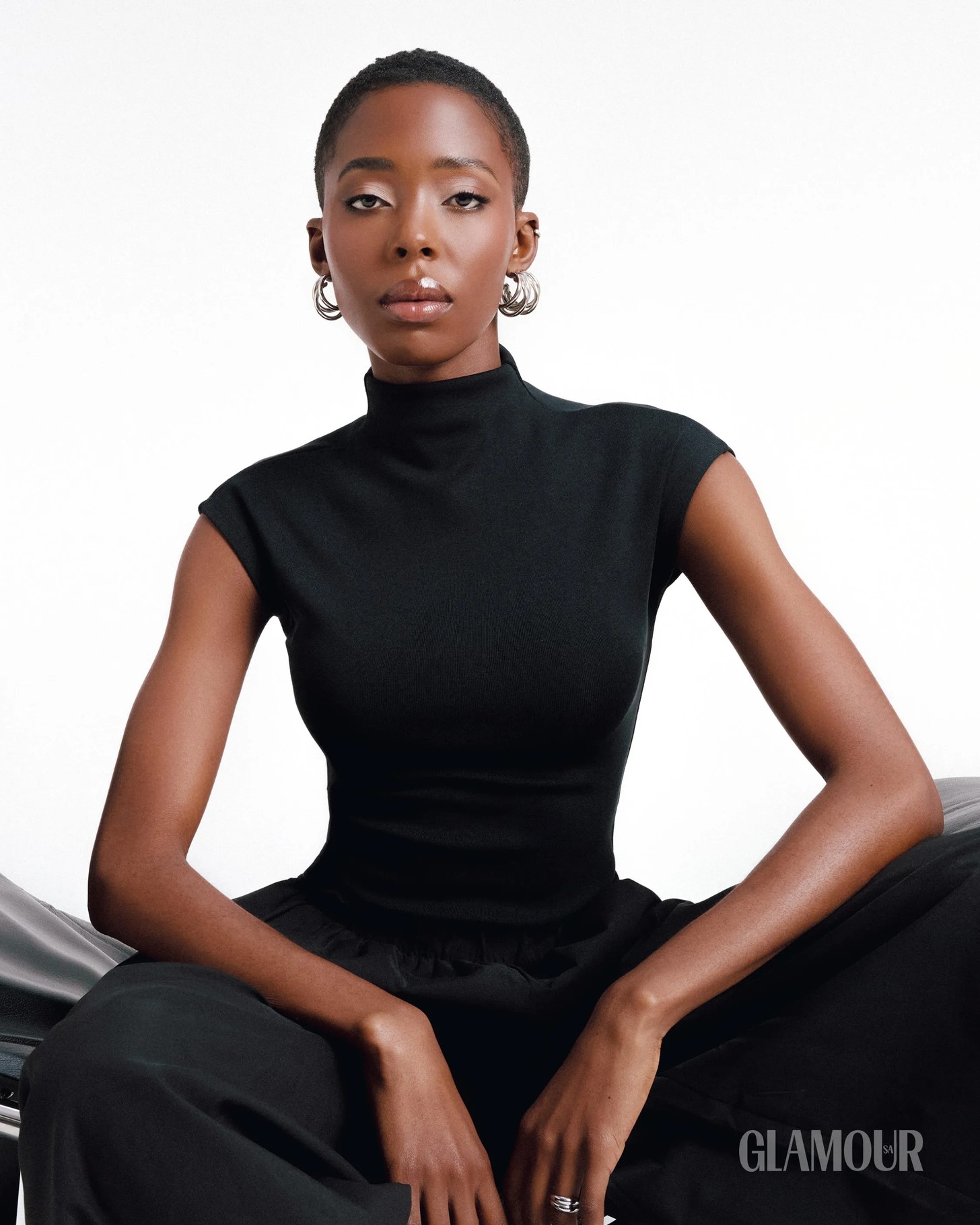
That song carries deep historical and emotional weight, how did you approach it with care and intention?
“With a lot of reverence and a lot of listening,” she says. “I wasn’t trying to update Nina Simone or improve on something that’s already complete.” Instead, her approach was rooted in translation rather than transformation. “I wanted to bring her into my world and onto the dancefloor and let her speak there.” It became an act of preservation as much as reinterpretation. “The remix is about love, not ownership. The soul of the original was always the anchor and everything I added had to serve that.”
How intentional are you when blending Afro house and techno in your sets?
“Very intentional but never rigid,” Desiree says. “I’ve always been eclectic. even my earliest SoundCloud mixes weren’t strictly Afro house. I’ve always liked to keep things fluid.” rather than following a fixed formula, she approaches each set with a sense of direction. “I come in knowing the emotional journey I want to take people on, but I leave room to move within that.” The moments where genres truly collide, she explains, aren’t planned but they’re felt. “That fusion happens instinctively. I’m constantly reading the room, sensing when people are ready to be taken somewhere unexpected.” It’s a balance of restraint and trust. “I don’t force south African records into my sets, they build in naturally. And I trust the crowd will follow.”
How do you ensure your sets remain both globally accessible and rooted in your identity?
“I always play south African music, whether it’s Afro house, gqom or deep house,” she says. “There’s a moment I look for in every set: when a crowd connects with a south African record they’ve never heard before.” It’s a subtle but powerful shift. “You can see it land, that instant where they stop trying to place the sound and just feel it. That’s the whole point.” For her, the music speaks for itself. “It doesn’t need me to explain it. My role is to give it the right context, the right sequence, and the space to breathe.”
You’ve gone from Surreal Electronica to global stages like Hï Ibiza and fabric, what has that journey felt like?
“Surreal but earned at the same time,” she says. “I remember opening for Black Coffee at Ushuaïa in Ibiza early on. It was still during Covid, the shows were small, there was barely anyone there. At that point, I didn’t even believe this could be a career.” What followed was a quiet but decisive shift. “Then the summer of 2022 happened at rapid, but she’s clear-eyed about the reality behind it. “I’ve been digging and building for years. Nothing happened overnight. There was no viral moment but just the work. And everything has grown organically from that.” she says
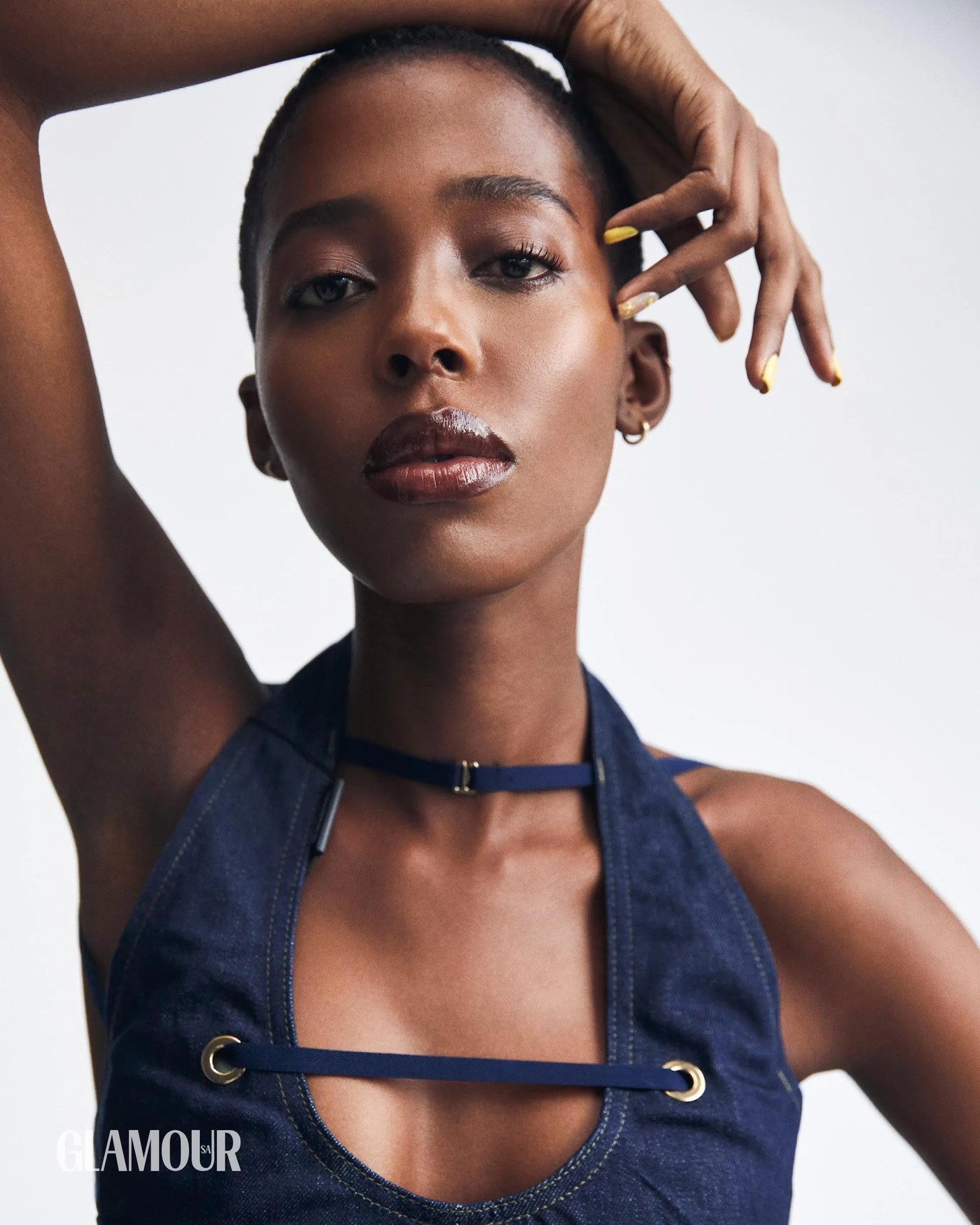
What stands out to you about performing at festivals like Glastonbury?
“The challenge,” she says without hesitation. “A festival crowd hasn’t necessarily come for your sound, you’re meeting people in the middle of something much bigger.” That makes the connection all the more rewarding. “When you take a Glastonbury crowd somewhere unexpected, especially with a south African record they’ve never encountered and you feel it land, that’s a very specific kind of moment. A club can’t give you that.”
How does the energy of different cities influence the way you play?
“Enormously,” she explains. “We party differently in south Africa. The BPMs are lower, and people dance with their whole bodies, their hips, their waist. There’s a certain groundedness to it.” elsewhere, the dynamics shift. “In europe, crowds are more accustomed to intensity. London, especially, people have heard everything, so they want to be genuinely surprised.” each destination brings its own rhythm and perspective. “Nairobi is one of my favourite places to play as the energy is infectious, and the scene is growing in such an exciting way.” For her, every city becomes part of the learning curve. “You start to understand how music fits into people’s lives in different ways and that shapes how I play.”
What has travelling the world as a DJ taught you about the global music community?
“That the desire to connect through music is universal,” she says. “But it’s also shown me that we still have serious work to do when it comes to who gets to be in the room creating it.” she speaks candidly about the imbalance that persists behind the scenes. “There are people in positions of power who use that power in ways that have nothing to do with music and any woman in this industry understands what that means.” still, she’s witnessed meaningful progress. “It is getting better. There’s more representation, more space for women and other underrepresented voices.” And with that shift comes a noticeable change in the culture itself. “When diverse talent is given real platforms and the room to exist fully, the music becomes richer. The energy changes. The room feels more alive;” adds Desiree.
What does ‘home’ mean to you now that your career is so globally rooted?
"I was born in Johannesburg and lived there for 25 years,” she reflects. “Now I’m based in Berlin, constantly moving. so ‘home’ has become more of a feeling than a place.” It reveals itself in fleeting, powerful moments. “It’s a south African record landing perfectly with a crowd who’s never heard it before. It’s a familiar energy showing up in a completely new city.” No matter where she is, that sense of origin remains close. “I carry Jozi with me. I don’t need to be standing in it to feel it.”
Recent stories by:


