
Amapiano has become one of South Africa’s most influential cultural exports,producing a new wave of global talent. Among its standout acts is TxC, the Gqeberha-born duo of Tarryn Reid and Clairise Hefke, who have helped push the genre onto the world stage. Breaking out during lockdown, they built their rise through high-energy sets, sharp curation, and a distinct visual identity, going on to make history at the 2025 BET Awards as the first female DJ duo to win Best New International Act.Their momentum includes projects like Turn Off the Lights and the EP A Fierce Piano, alongside a growing global touring footprint. Beyond music, TxC’s presence in fashion and performance cements them as key figures in Amapiano’s evolution.
GLAMOUR: You started DJing duringCOVID-19 when the world felt paused.What pushed you to begin then, andhow did that shape your sound andambition

Clairise: We started DJ school just beforethe full lockdown hit. Suddenly, we had this new skill we were so passionate about, but nowhere to showcase it because everything was shut down.
Tarryn: We had to get creative. Weturned to online platforms - Facebook,YouTube, and TikTok - and startedsharing mixes and clips. With everyoneat home and consuming digital content,we were able to reach audiences bothlocally and internationally.
GLAMOUR: Coming from Gqeberha, a city oftenoverlooked in mainstream music, howhas your hometown influenced youridentity as artists and the energy youbring to amapiano?
Tarryn: Being “overlooked” became fuel for us. It never held us back -if anything, it lit a fire. We’ve always known what we’re capable of, so it turned into a quiet “watch us” energy. We’re not just doing this for ourselves, but for where we come from. Coming out of Gqeberha, people don’t always expect big sounds or artists, and that’s exactly why we go so hard everytime we step on stage. It’s about putting our city on the map and showing that where you’re from doesn’t limit what you can build. Every performance carries a piece of home, and we take that seriously,while still keeping it fun and authentic.
GLAMOUR: There’s a strong sense of dualityand sisterhood in your work. How doyou maintain creative alignment andbalance as a duo?
Clairise: We’ve known each other for a longtime, even before working together, so there’s a natural understanding of how we think and operate.
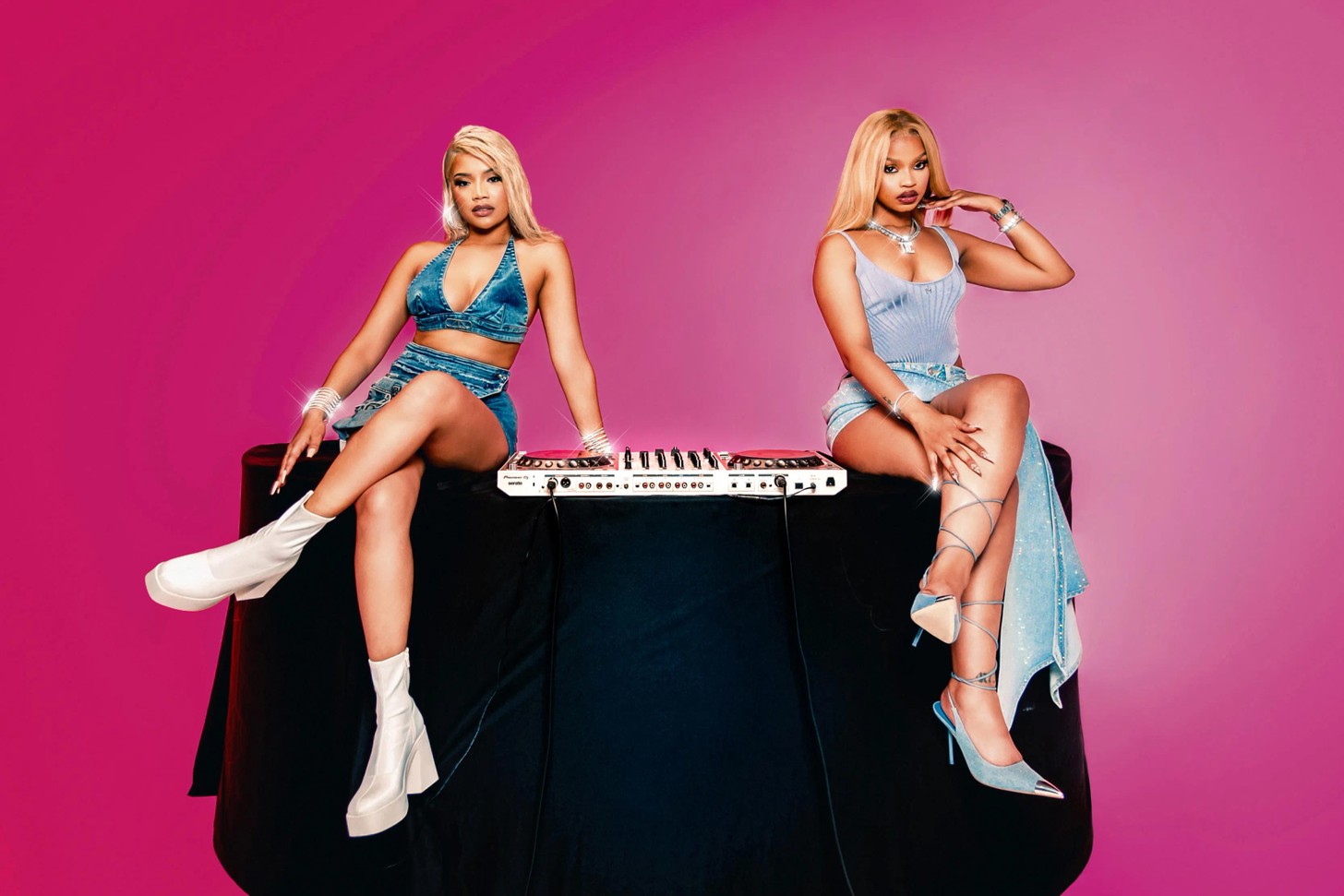
Tarryn: We constantly bounce ideas off each other and divide responsibilities based on our strengths. We’re also very honest, nothing gets ignored. We address things in the moment, which keeps everything transparent and balanced.
GLAMOUR: Amapiano has exploded globally, but you’ve managed to carve out a distinct lane. How would you define the TxC sound, and what sparked your decision to blend Afrobeats with amapiano?
Both: We’re not afraid to experiment. Blending amapiano with Afrobeats was a risk, but it paid off - those tracks became some of our biggest. Collaboration has always been part of how we create, and with this fusion we wanted to go beyond just working together, but truly blend the genres. It felt natural from the start, and that’s usually our sign.
The TxC sound is multifaceted and constantly evolving.We lean into groove-heavy percussion,while also exploring soulful elements and more aggressive log drums. What excites us most is how these different influences come together to create something that feels fresh but still familiar - and how it connects with people globally.
GLAMOUR: Amapiano is rooted in community and culture. How do you stay connected to that essence as your career expands globally?
Clairise: We stay connected by keeping up with what’s happening at home—new artists, new sounds, and new trends. That keeps us inspired and grounded.
Tarryn: We also make a conscious effort to collaborate with South African artists on every project. It’s important for us to protect the authenticity of the sound and represent both the genre and the country properly.

GLAMOUR: You’ve toured across Africa,Europe, and the United States. How have different audiences responded to your music, and what have those global stages taught you?
Clairise: The response has been incredible. No matter where we go - Africa, Europe, or the US - people connect to the energy of amapiano. Even if they don’t fully understand the language or culture, they feel it. Every crowd is different. Some already know the sound, while others are experiencing it for the first time. That’s taught us how to read the room, adapt our sets, and bring everyone along on the journey.Those global stages have shown us that music is a universal language.They’ve also pushed us to be intentional about how we represent where we come from, while continuing to grow andexperiment.
GLAMOUR: Your collaboration with Davido brought together amapiano andAfrobeats in a powerful way. How did that partnership come about, and what did you learn from working with him?
Both: We sent him the beat after meeting him and waited a year before he came back ready to add a verse. Working with Davido showed us what it means to operate on a global level—his work ethic,intentionality, and how he opens doors for other collaborations. What stood out most is how he stays grounded and rooted in who he is while moving the music forward globally.
GLAMOUR: Beyond music, your coordinated fashion and visual identity have become part of your brand. How intentional is that, and what story are you telling through your style?
Clairise: Tarryn is definitely the creative forcebehind our fashion direction.
Tarryn: It’s very intentional, but still experimental. I love playing with contrasts—soft but powerful, vintage but futuristic, a little chaotic but still put together. Fashion is another way we tell our story without saying a word. I’m always translating how we feel into what we wear—whether it’s a dreamy phase,a bold era, or a “don’t mess with us”mood. The goal is for our style to feel like an extension of the music: expressive,unpredictable, and very us.
GLAMOUR: Winning at the 2025 BET Awards marked a major global milestone. What did that recognition mean to you?
Clairise: It meant so much to us. It was our first award, and to receive it on an international stage made it even more special.

Tarryn: It felt like confirmation that South African artists have earned their place on the global stage. Our sound is finally getting the recognition it deserves, andright now, the world is watching to seewhat comes next.
GLAMOUR: What were some of the biggestchallenges you faced transitioningfrom local DJs to internationallyrecognised artists?
Clairise: Adjusting to constant travel anddifferent time zones has been one ofthe biggest challenges. Your body clockis always shifting, so maintaining yourhealth and energy is crucial.
Tarryn: Another challenge has been shifting perceptions - from being seen as DJs to being recognised as artists with a distinct sound and vision. That transition takes time, especially on a global stage whereyou constantly have to prove yourself.
GLAMOUR: As women in a still male-dominated DJ and production space, what barriers have you had to break, and how do you navigate those dynamics?
Clairise: When we started, we were often sexualised, and our abilities were doubted before we even got behind the decks. We had to work harder to prove that we deserved our place. Over time,through our performances and music,we’ve shown what we’re capable of. We’ve learned to own our space, set boundaries,and not be afraid to take up space.
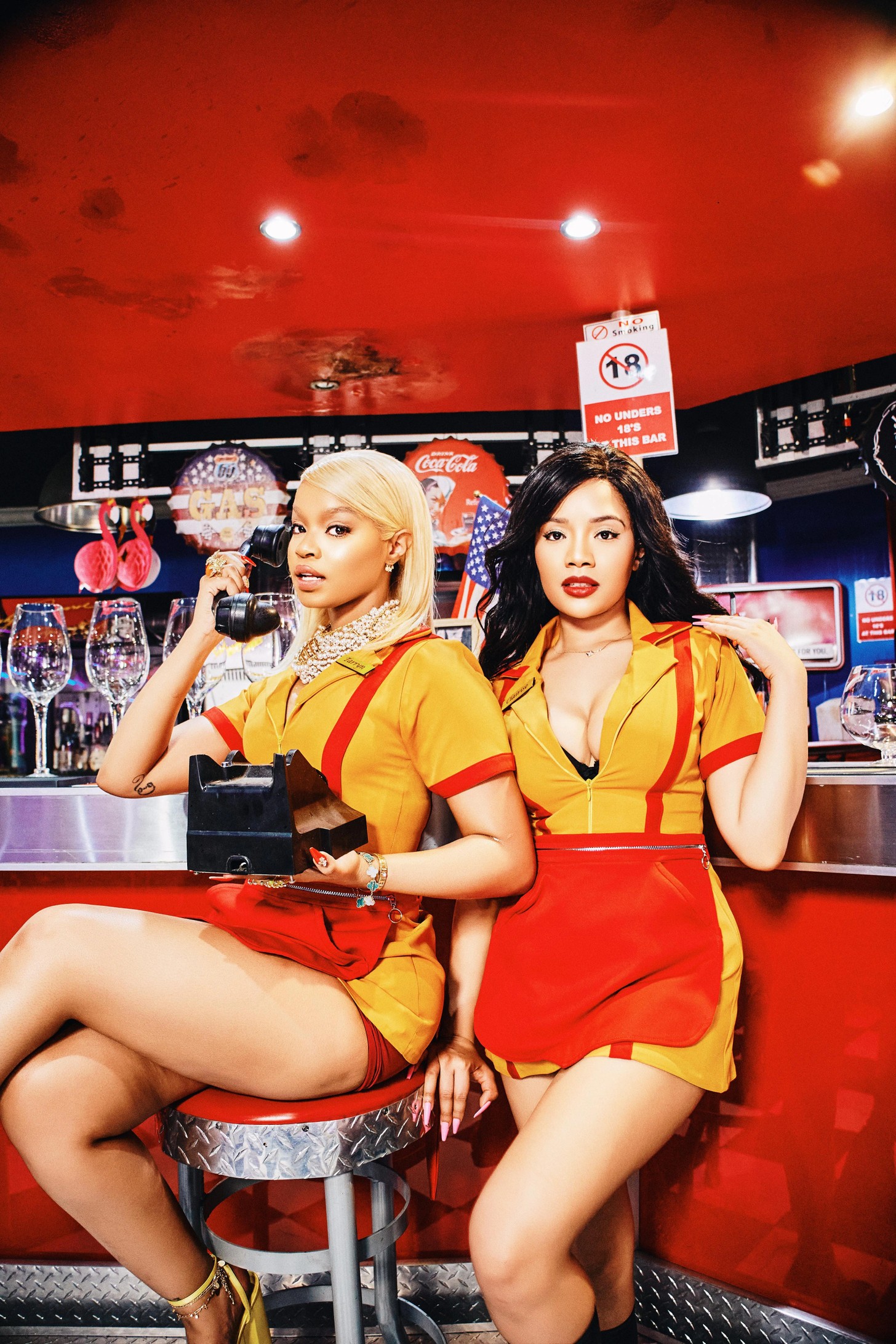
GLAMOUR: Your rise has been relatively rapid.How do you stay grounded while everything around you is scaling so quickly?
Both: We keep God at the centre ofeverything we do—that’s what grounds us and reminds us where it all started. What began as a pure love for music has grown into something much bigger,and we never want to lose sight of that. Having our family and friends around us also keeps us grounded. They knew us before any of this, so they keep us real. It’s that balance of faith and community that keeps everything in check as we continueto grow.
GLAMOUR: Through everything from starting out during COVID to global touring,what has music taught you about yourselves individually and as a duo?
Both: This journey has taught us patience, especially during COVID, when there were no crowds, no festivals, and nowhere to perform. We had to trust the process, even when we couldn’t see the full picture. We’ve also learned to believe in ourselves and in each other. As a duo,music has shown us the power of unity,leaning into each other’s strengths to build something stronger together.
Original article appeared on GLAMOUR's '26 Disruptors isse.
Recent stories by:
Sindeka Mandoyi

When South African heritage becomes fashion: The FIX x Lucky Star

How to maintain your workout routine while travelling

GLAMOUR’s Digital Content Producer reviews Yesteryear by Caro Claire Burke

Celebrating literacy month: Organizations empowering young readers


