
Born and raised on the South Side of Chicago, GRAMMY® Award-winning singer, songwriter and producer, Matt B has built a global career that took him from Japan to stages and audiences around the world, developing a sound that moves effortlessly between R&B, Afrobeats, orchestral music and cinematic storytelling. But beneath the success has been a deeper search: an understanding of where he comes from and where he belongs.
Six years ago, that search led him to take an AncestryDNA® test. What began as a personal attempt to learn more about his family history would become a life-changing journey across Ghana and Nigeria. His discoveries ultimately connected him to the Igbo people of Owerri, where he was welcomed as a “lost son,” reunited with members of his ancestral family and given the Igbo name Ikechukwu, meaning “Strength of God,” alongside the chieftaincy titles Ahamefula and Nwanne Di na Mba.

That journey became the foundation for ALKEBULAN, an ambitious album trilogy exploring ancestry, identity, belonging and the stories carried across generations. Following the GRAMMY®-winning ALKEBULAN II, Matt B now completes the trilogy with ALKEBULAN III: The Water Remembers, a project inspired by the idea that memory can survive through people, culture, music and the generations that follow. Featuring artists including Fatoumata Diawara, Skales and The Cavemen., the album turns a deeply personal journey into a collective story of connection and ancestral memory.
Returning to Africa has also meant confronting history in a deeply personal way. Standing at Ghana’s Assin Manso Slave River and Elmina Castle, walking through the Door of No Return and later arriving in Owerri, he encountered places that transformed history from something read in books into something felt and experienced. The journey has reshaped his understanding of his music, his identity and the legacy he hopes to leave for his children and future generations.
As ALKEBULAN III: The Water Remembers marks the final chapter of a six-year musical and personal journey, Matt B is looking beyond the GRAMMYs and accolades. At its heart, his story is about finding roots, reclaiming connection and understanding that sometimes, looking back can give us the clarity to move forward. Matt B caught up with Glamour for an exclusive interview.
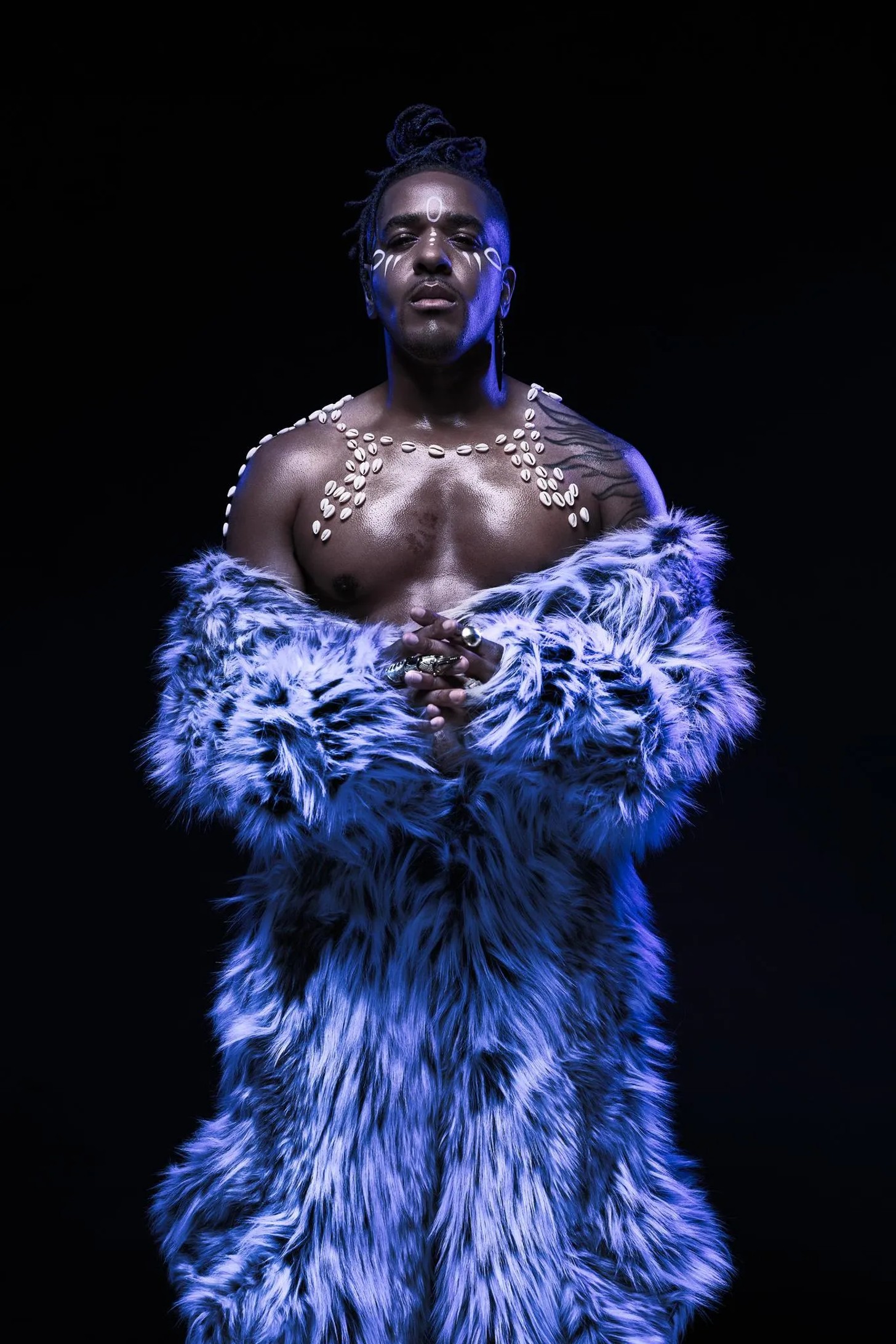
Glamour: You’ve gone from Chicago to Japan, built a global music career and ultimately won a GRAMMY®. Looking back, do you think your younger self was chasing success, recognition, or something deeper?
Matt B: I think my younger self was chasing success and recognition, but underneath that, I was also searching for belonging. As a man, you’re often taught that your value is based on what you can provide rather than simply who you are. Society tends to measure you by what you’ve built, what you own and what you’ve accomplished, and as you get older, that pressure can become even greater.
Growing up on the South Side of Chicago and coming from extreme poverty, I didn’t have very much, but I always longed for more. Even at a young age, I knew my purpose was greater than my circumstances. I didn’t know exactly where that belief would take me, but I knew I couldn’t allow where I started to determine where I would finish.
So I poured myself into the passion I had, which was music. Of course I wanted to be successful, but beneath that ambition was something deeper. I wanted my life to mean something. I wanted to make an impact, and I wanted people who came from circumstances like mine to be able to look at my journey and understand that where you begin doesn’t have to determine where you end.
You can overcome your circumstances. You can achieve things that may seem impossible from where you’re standing. But you have to be willing to work, persevere and continue believing in your purpose, even when your circumstances give you every reason not to.
Glamour : Six years ago, you took an AncestryDNA® test simply looking for answers about where you came from. Did you ever imagine that a DNA test would eventually lead you to Nigeria, a GRAMMY®, an album trilogy and a completely new chapter of your identity?
Matt B: When I took that AncestryDNA test six years ago, I had absolutely no idea it would eventually lead to something this monumental. At the time, I was simply looking for answers about who I was and where I came from. I could never have imagined that one decision would eventually lead me to Nigeria, help inspire the ALKEBULAN trilogy, become intertwined with a GRAMMY win and ultimately change the way I understand my own identity.
We’re often told that one decision can create a ripple that reaches much further than we realize, but it’s difficult to understand what that actually means when you’re standing at the beginning of the journey. Sometimes you don’t recognize the significance of a moment until years later, when you can finally look back and see everything that grew from it.
Taking that DNA test was one of those moments for me. What began as a personal search for answers became something far greater than I ever could have imagined. Six years later, I’m still processing the magnitude of everything that has happened and the impact this journey has had on my life.
Sometimes the smallest step toward discovering who you are can completely change where you’re going.
Glamour: Was there a moment in Ghana or Nigeria when you stopped feeling like you were “discovering” your ancestry and started feeling like you were being remembered by it?
Matt B: Throughout this entire journey, it felt less like I was discovering something new and more like I was uncovering a memory I already possessed. There was something intangible that seemed to already exist within me, and my responsibility was simply to find my way back to it.
It felt as though my ancestors were speaking to me. There was this heartbeat, this rhythm I was responding to, guiding me toward something that had been within me all along.
There were so many moments when I felt that. Walking through the Door of No Return, which for me ultimately became a Door of Return. Going to the Assin Manso River, where so many of our ancestors experienced their Last Bath, while symbolically it became my first bath on this journey home. Then arriving in Owerri, experiencing the ceremonial traditions surrounding the kola nut with the Igbo people and being welcomed with open arms. Those moments didn’t feel foreign to me. In some strange way, they felt familiar.
That idea became central to The Water Remembers. I became fascinated by the idea that water could retain the memory of what it had experienced. Our bodies are predominantly made of water, and spiritually, I began asking myself: what if we also carry something of the memories of those who came before us? What if their experiences, their resilience and their longing for home continue to live within us?
I don’t know that there was one specific moment when I stopped feeling like I was discovering my ancestry. The entire journey felt like I was being remembered by it.
I wasn’t discovering home. I was remembering my way back to it.
Glamour: You traced your lineage to the Igbo people of Owerri and were welcomed into the community as a “lost son.” What was going through your mind when you first arrived in a place your family had been connected to for generations?
Matt B: When I arrived in Owerri, Nigeria, stepped off the plane for the first time and looked out into the distance, I had this overwhelming feeling that somehow I had already been there. There was a level of connection I couldn’t explain—a sense of recognition, almost like a shared memory.
To then be received by the Igbo people as a lost son meant the world to me. After spending so much of my life searching for where I came from, I had finally found a place where I belonged—a place I could definitively say my ancestors came from.
One of the most impactful moments was meeting members of my living ancestral line who had been identified through Ancestry and historical records. I remember looking into their eyes and realizing that one of them looked almost exactly like my father. It was surreal. You’re standing face-to-face with someone whose branch of your family has been separated from yours for more than 400 years, and somehow that resemblance survived.
In that moment, those centuries of separation suddenly felt much smaller. So much had happened between us—generations, oceans, slavery, completely different lives and cultures—and yet there was still something recognizable staring back at me.
It made me realize that despite more than 400 years of separation, there are things that were never completely severed.
We are still connected. We are still one.
Glamour: You’ve spoken about meeting relatives in Owerri for the first time. What is something they told you about your family that you wish you had known growing up?
Matt B: When I met my living relatives for the first time, what they shared with me felt like an affirmation. I learned that throughout the generations, my family and the Igbo people I descend from have valued hard work, education, trade, craftsmanship, history and knowledge.
What amazed me was how familiar those values felt. Despite more than 400 years of separation, so many of them somehow made their way across the Atlantic and remained present within my own family in the Americas. We were raised to work hard, educate ourselves, create, build and understand the importance of leaving something behind for the generations that follow us.
I wish I had known growing up that those values had roots that extended so much further back than the family history I was aware of. There was an entire lineage behind us that I simply didn’t know.
Meeting my relatives allowed me to see that legacy reflected back at me. Despite everything that happened and all the generations of separation, something survived. Those values continued through my family, and today they’re reflected in me.
Glamour: You were given the Igbo name Ikechukwu, meaning “Strength of God,” as well as the titles Ahamefula and Nwanne Di na Mba. Beyond the honour itself, did being given those names change how you see yourself?
Matt B: When I returned home to Imo State, I was given the Igbo name Ikechukwu, meaning “Strength of God,” along with the chieftaincy titles Ahamefula, meaning “May my name not be forgotten,” and Nwanne Di na Mba, meaning “A brother in a foreign land.”
There is so much power in a name. When you take away someone’s name, in many ways you’re taking away their identity. That idea has been at the heart of the ALKEBULAN project from the beginning. One of the reasons I chose the name ALKEBULAN was because, symbolically, I saw it as a way of giving Africa its name back—giving the continent its identity back.
Then years later, something incredibly poetic happened: Africa gave me a name.
When I was given the name Ikechukwu, it wasn’t simply another name for me to carry. It represented an identity being restored. Something that had been separated from my family lineage for hundreds of years was being bestowed upon me again. The chieftaincy titles made that responsibility even greater because they connected that restored identity to legacy, community and what I now have a responsibility to carry forward.
When I returned to America, I returned as a different person. I understood that America is not where my story begins. It is an incredibly important chapter of my story and the story of my family, but it isn’t the first chapter.
My story stretches back much further. And now I have the privilege and responsibility of continuing to write it—not only through my own life, but through my children and the generations that will come after me.
Glamour: Before reaching Nigeria, you visited Assin Manso Slave River and Elmina Castle in Ghana. How did confronting that history in person affect you differently from learning about the Transatlantic Slave Trade through books or school?
Matt B: Visiting Assin Manso Slave River and Elmina Castle had a profound effect on me. It’s one thing to read about these places and the Transatlantic Slave Trade in books. On a page, it can almost feel like ancient history—something that happened so long ago that you’re completely disconnected from it.
But when you physically stand in those spaces, everything changes. You begin to realize just how close to home this history actually is and, in the greater scope of human history, how recently so much of it happened. These weren’t simply names, dates and statistics anymore. These were real people who stood where I was standing, with families, dreams, fears and lives that were completely disrupted.
I couldn’t begin to imagine the hardship and pain my ancestors endured. But I also found myself thinking about the hope they must have held onto in order to survive—the hope that their children, their grandchildren and generations they would never live to meet might one day experience something better. Their endurance ultimately made it possible for me to be born and, centuries later, return to places connected to their story.
The other thing I still struggle with is understanding how one human being could treat another human being with that level of cruelty. Standing there made that question much more difficult to escape. I still don’t have an answer for it, and I don’t think I ever truly will.
Books allowed me to learn the history. Being there forced me to confront its humanity.
Glamour: There’s a fascinating irony in your story: you became globally recognised for creating music inspired by Africa, and then discovered that Africa was already an essential part of your own story. Did that discovery make you listen to your own music differently?
Matt B: As an African American—some of us identify as FBA, Soulani or Freedmen—I believe we are connected to the motherland in more ways than we fully understand. The heartbeat of Africa lives within us, and I believe it sings through us. I know it sings through my music and even through my everyday life. For me, that connection feels inescapable.
Discovering my ancestry definitely made me listen to my own music differently. I started going back and paying closer attention to the rhythmic patterns I had chosen, the melodic toplines and even the way I structured certain songs. I began recognizing elements that felt connected to African musical traditions, even though I hadn’t consciously created them from that perspective at the time.
That’s what made the discovery so profound. My connection to Africa wasn’t something that suddenly began when a DNA test gave me an answer. In many ways, it had already been expressing itself through me creatively. The DNA simply gave me a clearer understanding of where some of that connection came from.
It made me realize that Africa has always been an anchor point in my musical creativity. The difference now is that I’m conscious of it. I’ve unlocked another dimension within my music that I can intentionally continue to explore and create from.
In a way, I discovered that I had been speaking a language long before I fully understood where I learned it.
Glamour: If the version of Matt who took that DNA test six years ago could meet you today, what do you think would surprise him most?
Matt B: If Matt from six years ago could meet Matt today, I actually don’t think there would be very many surprises. I think there would be an overwhelming amount of joy.
Six years ago, I set out on a mission of discovery. I wanted to understand who I was, where I came from and where I belonged. I didn’t know where that journey would take me or what I would find along the way, but the intention was always there.
I think the younger version of me would look at everything that’s happened and simply say, “We did it. We found what we were looking for.”
More than the GRAMMY, the music or any of the accomplishments, I think what would mean the most to him is the peace I have today. There is something incredibly grounding about finally knowing where you come from and understanding that your story is much bigger than you ever realized.
I think he would be filled with a level of joy and peace that words couldn’t fully describe.
Glamour: Your music moves between R&B, Afrobeats, orchestral sounds and cinematic storytelling. Do you think your refusal to fit neatly into one genre is connected to the way you’ve come to understand your own identity?
Matt B: I think my level of genre-bending is definitely a reflection of how I’ve come to understand my own identity. I’m not just one thing. I don’t belong to only one facet of music, culture or identity. I’m multilayered, and I create from a space of experiencing and enjoying music rather than allowing myself to be confined by whatever genre someone believes I belong to.
There’s a tremendous amount of freedom that comes with that, but freedom also comes with responsibility. When there are no rules, you have to create your own. You have to understand yourself well enough to remain grounded while still giving yourself permission to explore.
There has always been a duality and juxtaposition within my life. I went from extreme poverty to living in comfort. I grew up in the ghetto on the South Side of Chicago and eventually attended a prestigious university. I grew up understanding myself through my African American identity—as Soulani—and then later discovered the depth of my ancestral roots in Africa.
My life has constantly existed between worlds that, from the outside, might appear to contradict one another. But to me, they don’t contradict each other. They’re all pieces of the same person.
That’s reflected in my music. R&B, Afrobeats, orchestral music and cinematic storytelling don’t have to compete for space within my work. They can coexist because those same kinds of contrasts have always coexisted within me.
My music is simply a reflection of that.
Glamour: You’ve collaborated with artists across Africa and worked with the Royal Philharmonic Orchestra. What happens creatively when musicians from very different cultural backgrounds collaborate, and what have those collaborations taught you about your own sound?
Matt B: Working with musicians from so many different cultural backgrounds has taught me a tremendous amount about music as a whole. There are so many overlapping similarities between musical traditions, but there can also be extreme differences, and trying to marry those worlds together is no easy feat.
What I’ve learned is that it’s all about finding balance. And balance doesn’t always mean having an equal amount of everything. Sometimes you only need a small element of something to bring the entire composition into harmony. Learning that was essential while blending so many different genres, cultures and musical traditions throughout my work.
When you’re working with artists across Africa and then bringing in something as grand as the Royal Philharmonic Orchestra, you have to understand when to allow one musical language to lead and when another should simply complement it. The goal isn’t to force everything into the same space. It’s to allow each element to retain what makes it unique while finding the point where they can communicate with one another.
Those collaborations have reinforced something I’ve always understood about myself: my sound is eclectic. It’s a combination of the many different experiences I’ve had around the world.
The more I travel—through Asia, Europe, Africa and the Americas—the more my musical horizon continues to expand. I’m constantly discovering not only how different we are, but how similar we are. Music has this incredible ability to reveal both at the same time, and every collaboration gives me another language to incorporate into my own creative vocabulary.
Glamour: You won your first GRAMMY® for ALKEBULAN II. What did that achievement mean to you personally, especially knowing that the win also marked the first GRAMMY® for the Royal Philharmonic Orchestra and the first for East Africa, specifically Uganda?
Matt B: Bringing home that first GRAMMY meant the world to me, not only for myself, but for the collective. I’m a huge believer in inclusion and bringing different worlds together, so it was incredibly gratifying to see that work recognized on behalf of so many people from so many different walks of life.
There is an African proverb that says, “If you want to go fast, go alone. If you want to go far, go together.” That GRAMMY is a representation of what can happen when we choose to go together.
Knowing that the win also represented the first GRAMMY for the Royal Philharmonic Orchestra and a historic first connected to East Africa, specifically Uganda, made the moment even more meaningful. We had people from different countries, cultures and musical traditions coming together to create one body of work, and every one of those contributions mattered.
That’s what I think about when I look at that GRAMMY. I don’t just see my name or my accomplishment. I see the collective. I see all of the musicians, artists, producers, engineers, cultures and communities whose fingerprints were on that project.
There is strength and resilience in numbers. When we bring our individual gifts together toward a common purpose, we can go much further than any one of us could have gone alone.
Glamour: We often talk about “finding yourself,” but your story is also about finding people, family members, communities and an ancestral homeland. What has this journey taught you about belonging?
Matt B: This journey has taught me so much about belonging, but perhaps the greatest lesson is that belonging starts within. It starts with knowing who you are and understanding where you come from.
Before this journey, I often felt like a tree without roots, and a tree without roots cannot stand. But when those roots are restored and deeply buried in the earth, they give you a strong foundation—and from that foundation, there is no limit to your growth.
It’s often said that you don’t know where you’re going unless you know where you’ve been. Finding my family, my community and my ancestral homeland gave me something I didn’t fully realize I was missing: a starting point. I now understand that my story extends much further back than I previously knew.
And strangely enough, looking backward has allowed me to move forward with greater clarity. Knowing where I come from has helped me understand who I am, and understanding who I am allows me to move through my journey more decisively.
That’s what belonging means to me now. It’s not simply finding a place where other people accept you. It’s having roots strong enough that wherever life takes you, you know where you stand.
Glamour: Your music has evolved significantly over the years, from your early R&B work to the ALKEBULAN trilogy. When you look at your catalogue as one continuous story, what themes, experiences or ideas have remained constant, and how intentional are you about carrying those threads from one project into the next?
Matt B: Throughout all of the years and all of the genres I’ve explored, several themes have remained consistent: love, hope, confidence and belonging. These are universal experiences. They’re things we all desire, and they’re also things all of us have struggled with to some degree.
I’m very intentional about carrying those overarching themes throughout my music. The sound may evolve, the instrumentation may change and the stories may become more expansive, but that emotional foundation remains the same.
When I look back at my earlier R&B work and compare it to where I am today with the ALKEBULAN trilogy, on the surface they may seem like very different chapters. But underneath, I’m still asking many of the same questions. What does it mean to love and be loved? Where do I belong? How do we hold onto hope through difficult circumstances? How do we find the confidence to become who we’re supposed to be?
With ALKEBULAN, those questions have simply expanded. Belonging became connected to ancestry. Love became connected to my people and the diaspora. Hope became connected to what my ancestors endured and what future generations can become.
Those themes are the heartbeat of everything I do. As long as I continue creating, I believe they’ll continue finding their way into the music.
Glamour: You’ve uncovered a part of your family story that was separated from you for generations. What do you hope ALKEBULAN III inspires the GLAMOUR audience to do: listen, question, call a parent or grandparent, take a DNA test, or simply become more curious about where they come from?
Matt B: I hope my story inspires people to seek out who they are and where they come from. All of us go through life searching for some sense of belonging, and so many people are moving through the world without fully understanding their identity.
When you begin to understand who you are and where you come from, I think it makes life just a little easier and a little sweeter. There is a certain peace that comes with having that foundation, and I believe everyone deserves the opportunity to experience that in some way.
I don’t think that journey has to look the same for everyone. Maybe it means taking a DNA test. Maybe it’s calling your mother, father or grandparents and asking questions you’ve never thought to ask. Maybe it’s opening an old family album, researching a surname, learning about a tradition your family has carried for generations or simply becoming curious about the people who existed before you.
Through listening to ALKEBULAN III: The Water Remembers and absorbing the larger story surrounding this project, my prayer is that people feel inspired to begin their own journey of ancestry and discovery.
Ultimately, I hope that discovery does more than tell you where you came from. I hope it gives you a stronger understanding of who you are and inspires you to become a better version of yourself.
Glamour: From a legacy perspective, what do you hope people take way from your story?
Matt B: Oftentimes I ask myself, what will my legacy be? What will I leave behind that inspires others and strengthens my ancestral lineage—my children, their children and their children’s children?
Ultimately, I’ve come to the conclusion that I want to allow the Most High to use me for His greater will and purpose on this earth, and to magnify and glorify His name through the gifts He has given me. The medium I’ve been blessed to do that through is music.
So when I think about legacy, I don’t necessarily think about how many records I’ve sold, how many awards I’ve won or how many accomplishments have my name attached to them. Those things are blessings, but eventually they fade. What matters to me is whether the work continues to touch people after I’m gone. Did it inspire someone? Did it help someone understand themselves differently? Did it open a door for someone who came after me? Did my children and the generations after them inherit something meaningful from the life I lived?
I pray that whatever I’m building today continues to endure long after I’m no longer here. If my music, my story and the way I lived my life can continue to inspire future generations to walk in their purpose, then I believe that is a legacy worth leaving behind.
Glamour: ALKEBULAN III features an impressive roster of West African stars like Fatoumata Diawara, Skales, and The Cavemen.; how did these specific voices help shape the narrative of “ancestral memory” you are exploring in this project?
Matt B: There are so many different collaborators on this album, and I’m incredibly grateful that each of them took the time to understand where I was coming from creatively and then bring a piece of themselves into the project. I was already very aware of each artist—their sound, their story and their impact—so every collaboration was intentional. We all share a desire to bring light into the world through our music and our lyrics. We do it for the culture.
Each artist represents something different within the larger story. Fatoumata Diawara brings her incredible storytelling and free spirit. Skales represents the confidence and resilience of the people. The Cavemen. represent wisdom and the connection between generations. Elsewhere on the album, Goya Menor represents strength, Boy Spyce represents curiosity, and Kabusa Oriental Choir represents brotherhood, community and the collective.
That became incredibly important when exploring the idea of ancestral memory because I didn’t want ancestry to be represented solely through trauma. What our ancestors carried forward wasn’t only pain. They carried strength, wisdom, joy, spirituality, creativity, confidence and community. Those qualities survived displacement and continued to manifest throughout the diaspora.
That’s why I couldn’t tell this story entirely through my own voice. Community and the collective are fundamental to what I’ve experienced throughout Africa, and I wanted the album itself to embody that. Every artist brought their own culture, experiences and musical language into the project.
In many ways, that’s what ancestral memory means to me. None of us exists in isolation. We are carrying pieces of the people who came before us, adding our own experiences to them and then passing something forward to the generations that come next.
These artists didn’t simply feature on ALKEBULAN III. Their voices helped turn my personal journey into a collective story.
Glamour: Your journey to Owerri this past June included receiving two chieftaincy titles; how does carrying that responsibility influence the way you represent the diaspora in your current documentary and short film?
Matt B: When I think about receiving those two chieftaincy titles, I understand that they are both a great honor and a great responsibility—one that should never be taken lightly. To be given a position of leadership among the people means understanding that with leadership comes responsibility. You are there to serve your community, not to be served by it.
That distinction is extremely important to me. I don’t look at these titles simply as recognition or something ceremonial that happened during my time in Owerri. I look at them as a responsibility that I now carry with me.
I bring that same thought process into how I represent the diaspora. I see myself as a conduit who can help bridge gaps—not only between generations, but across continental divides. There has been so much separation between Africa and its diaspora over the centuries, and I believe storytelling can be one of the tools that helps bring us closer together.
That’s part of the responsibility I feel with the documentary and short film. I want people throughout the diaspora to see themselves somewhere within my journey, while also representing the people, traditions and communities who welcomed me home with the respect and dignity they deserve.
If these films can help move the needle forward, create greater understanding and encourage even a few people to begin building those bridges for themselves, then I believe I’m honoring the responsibility that was bestowed upon me.
For me, that’s what carrying these titles means. It’s not about what they give me. It’s about what they now require of me.
Glamour: With ALKEBULAN III set to arrive on August 21, what specific emotions are you feeling as you prepare to share this final chapter of the trilogy with the world?
Matt B: With ALKEBULAN III: The Water Remembers right around the corner, I feel an incredible amount of excitement, but there is also a bit of sorrow. This is the final album of the trilogy, and I’ve dedicated so much of my life over the past six years to telling this story. To finally arrive at the end is definitely bittersweet.
When you spend that much time immersed in something, it becomes more than a project. ALKEBULAN has been part of my life, my growth and ultimately my understanding of who I am. I started this journey searching for answers, and I’m ending it with a much stronger understanding of my identity, my ancestry and my purpose. It’s difficult not to become emotional knowing that this particular chapter is coming to a close.
But what brings me great joy is knowing that the music isn’t going anywhere. These albums are now a permanent part of my catalogue. I get to perform these songs for the rest of my life, continue sharing these stories and continue building upon everything this journey has started.
So August 21 doesn’t necessarily feel like an ending. It feels like the completion of a chapter. I’ve spent six years building this story, and now I finally get to release it into the world and allow it to become part of other people’s stories.
I’m excited. I’m proud. I’m a little sad. But more than anything, I’m grateful that I was able to see this journey all the way through.
Recent stories by:
Thobeka Phanyeko

Surviving Grief: A guide through the worst days of your life

This is how you can make an impact

A Force For Good: Tyler Vivier on women, storytelling and the power to inspire change

Are you considering pivoting your career in your 40s? This is what you need to know


