
Author and Co-Founder of Sweet Life, Bridget McNulty shares her journey with diabetes advocacy, community empowerment, and practical ways to make a difference this Diabetes Awareness Month
This Diabetes Awareness Month, we speak to celebrated author, advocate, and co-founder of Sweet Life, South Africa’s largest online diabetes community, Bridget McNulty. Following her own Type 1 diabetes diagnosis 19 years ago and navigating personal grief, Bridget transformed her search for connection and practical resources into a platform that empowers thousands. Here, she opens up about the intersection of grief and chronic care, shares key insights on grassroots community initiatives like the #WearBlueforDiabetes campaign, and offers essential advice for living a full, healthy life with diabetes.

GLAMOUR: What inspired your writing on grief and glimmers, and what led you to diabetes advocacy?
Bridget: It might not seem as if grief, glimmers and diabetes advocacy are that closely connected, but they all carry a golden thread: I needed something that I couldn't find.
When my mom died very suddenly (10 days from diagnosis till death), I needed a book about grief that was warm and empathetic and easy to read - something to guide me through the worst days of my life. I couldn't find it, so I wrote The Grief Handbook. When the daily drudge of adulting got too heavy and I couldn't appreciate the small wonders in my life, I needed a reminder that there are so many beautiful ordinary moments in life, and that they're worth noticing. I couldn't find it, so I wrote Daily Glimmers. And when I was diagnosed with Type 1 diabetes (19 years ago!) I needed a community to support me: somewhere I could get expert advice and speak to people who understood what daily life with a chronic condition is like. Somewhere I could vent and celebrate and connect. I couldn't find it, so I created Sweet Life (www.sweetlife.org.za), which is now South Africa's largest online diabetes community.
GLAMOUR: What are the key messages or insights from your work that you hope resonate most with readers during Diabetes Awareness Month?
Bridget: Empowered individuals empower communities. We can't sit around waiting for diabetes to be fixed from the top-down, we have to create diabetes awareness in our communities. But it can be so simple! All we're asking South Africans to do is wear blue for diabetes, either on Friday 13th November if they're at work or school, or Saturday 14th November if they want to join a diabetes walk. We're sending out 100 DIY Diabetes Walk boxes so there will be 100 diabetes walks to join around South Africa! You can find out all about it on www.sweetlife.org.za/wear-blue-for-diabetes
Don't forget to post a pic of yourself wearing blue online, using #WearBlueforDiabetes, so we can share it!
GLAMOUR: How has your experience as an author helped shape your work and community outreach at Sweet Life?
Bridget: Sweet Life is an authentic community for all South Africans with diabetes, and telling the stories of our community members is a core part of that. I think an understanding of grief is really useful when dealing with a chronic condition, because it's a form of grief in itself: I will never not have diabetes. It's with me for life. Many of our community members struggle with this. Empathy is one of Sweet Life's core values, and I think my writing helps me tap into empathy, whether it's through the lens of grief or joy.
GLAMOUR: What were some of the biggest challenges you faced when first diagnosed, and how did they influence your advocacy work?
Bridget: I really wanted a community of like-minded people to connect with and inspire me. People who could show me that it's possible to live a healthy, happy life with diabetes. All I was given was shock tactics: the risk of complications if I didn't take care of myself. Our work now is grounded in reality but definitely with a positive angle, because diabetes is hard but it doesn't have to stop you living your best life.
By the time I was diagnosed, I was desperately ill (3 days away from a diabetic coma, the doctor said) and that's because I didn't know the 5 symptoms of diabetes - and nor did anyone around me. So I've become a passionate advocate for spreading the 5 symptoms of diabetes far and wide! (I've attached a graphic with them here). I want people to know the 5 symptoms as readily as they know the symptoms of a cold, because it can make such a difference to be diagnosed early - you don't have to get desperately ill, like I did.
At the same time, I was really lucky when I was diagnosed, because I'm on medical aid and I immediately got excellent care. The inequity of diabetes care depending where you are in the country is something I feel really passionate about, and it's one of Sweet Life's core focus areas: to create foundational diabetes education that takes the best knowledge available to us (from South African diabetes experts) and translates it into easy-to-understand language at the right health literacy level. We've just printed 10,000 copies of a Diabetes & Mental Health book where we interviewed clinical psychologist Daniel Sher, who both lives with diabetes and works with people with diabetes, about all the most important information surrounding diabetes and mental health. We'll soon be publishing another book, about Type 1 diabetes in children, with all the most important information from SA's top paediatric endocrinologists, so that any child who is diagnosed with Type 1 diabetes, anywhere in the country, has access to the information they need to live a healthy life with diabetes.
GLAMOUR: How has the landscape of diabetes management and support changed in South Africa since you founded Sweet Life?
Bridget: We began in 2011, which seems like another world when it comes to the online space! An online community didn't even exist then. Diabetes management has also changed enormously since then, with new devices like CGMs (Continuous Glucose Monitors), smart insulin pens and much more advanced insulins now available - to some. A lot of the advocacy work run by SA Diabetes Advocacy (our advocacy organisation in South Africa) is focused on better access for these devices, as they make it so much easier to manage diabetes.
GLAMOUR: What advice would you give to someone who has recently been diagnosed with diabetes and feels overwhelmed?
Bridget: It gets easier! It is so much to absorb at first, and it feels as if your life will never be normal again. But it all makes sense in time, and diabetes doesn't have to stop you from doing anything. I've travelled all over the world, hiked multi-day hikes, walked 500km of the Camino de Santiago in Spain, had two healthy children, run my own business, scuba dive and live a happy, healthy, active life with diabetes. There is nothing diabetes has stopped me from doing.
GLAMOUR: How can family members and friends best support a loved one living with diabetes?
Bridget: It really helps to understand how the person living with diabetes feels - and that can be hard if they don't really know how to communicate it. One of the most helpful parts of our online community on Facebook (South Africans with Diabetes) is that we ask questions about life with diabetes, and the community responds. Reading through the comments gives a really vivid understanding of what it's like to live with diabetes. And then, you know, ask! Every person is different and wants a different level of support. There's no right or wrong.
GLAMOUR: What role does mental health play in diabetes management, and how do your resources address this connection?
Bridget: Mental health plays a huge part in diabetes management. People with diabetes are twice as likely to develop depression and anxiety, and the conditions often feed into each other (high blood sugar can make you feel depressed, and feeling depressed can lead to high blood sugar). It's a complicated interplay, but one that's really important to address head on. That's why we've just written a whole book about Diabetes & Mental Health, and why we have a lot of articles about it on our website and speak about various aspects of mental health in our community (specifically diabetes burnout, which is a type of depression related to diabetes). We also run a diabetes stigma campaign each May, #DiabetesLooksLikeMe, to address head-on some of the stigmas surrounding diabetes, which often contribute to mental health.
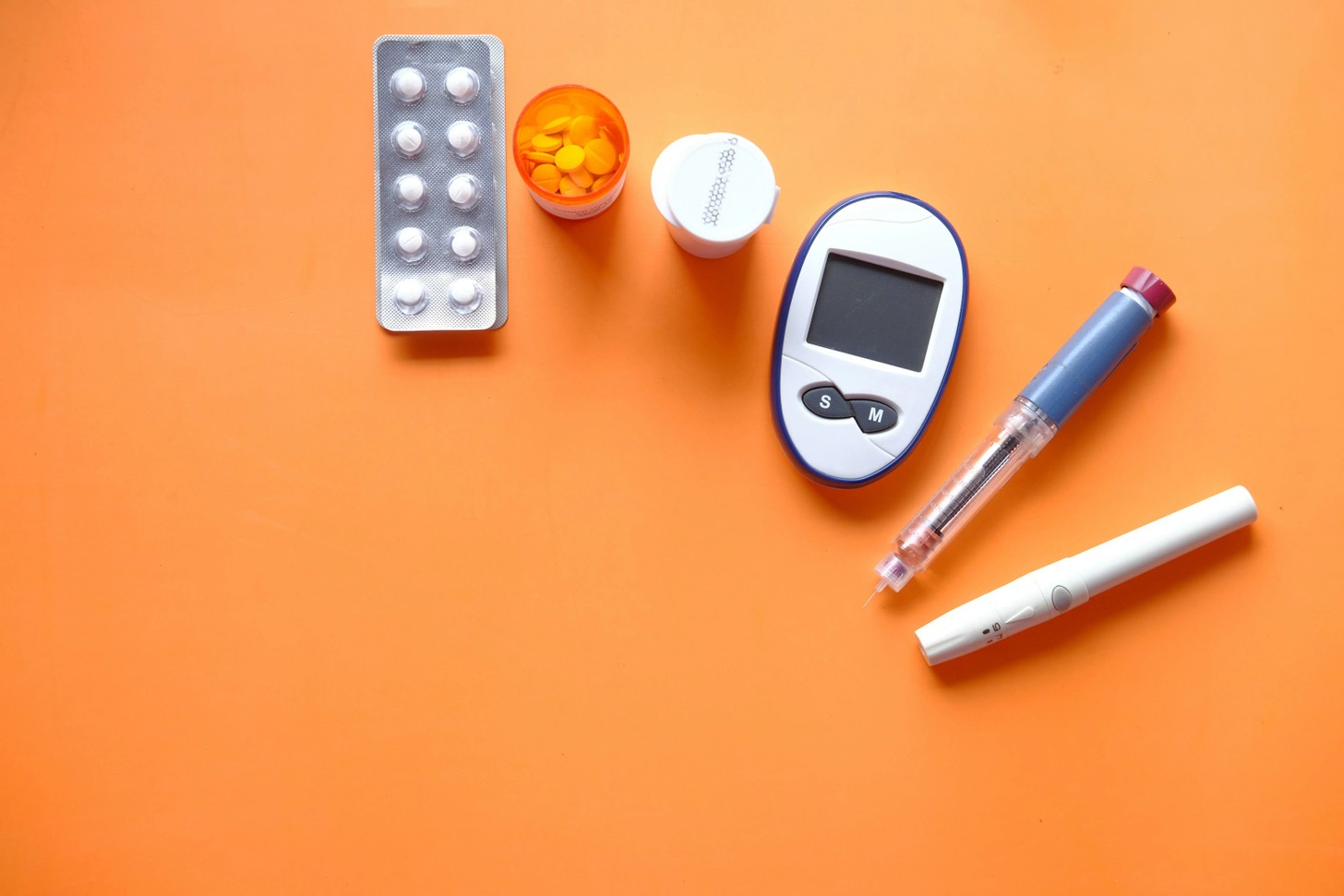
GLAMOUR: What are some of the most common misconceptions about living with diabetes that you aim to debunk?
- It's your fault if you have Type 2 diabetes.
- It absolutely is not. Type 2 diabetes was called a lifestyle condition because it can be triggered by the wrong kind of lifestyle (eating a lot of junk food, not exercising enough, carrying extra weight) but there's a strong hereditary component and a lot of the time people don't choose a lifestyle: their environment makes it more difficult to make healthy choices. Not impossible! But more difficult. Also, feeling like you gave yourself a chronic condition isn't good for anyone.
- If you eat too much sugar, you'll get diabetes.
- Not helpful, and not true. Nobody should be eating too much sugar or junk food, but it's not as straightforward as that.
- If you have diabetes, you'll go blind or have a limb amputated.
- Not true. Long periods of high blood sugar can lead to complications, which can eventually lead to blindness and amputation, but there are many steps in between, and no reason to fear a diabetes diagnosis. The earler you're diagnosed, the healthier you can be.
- Diabetes only affects a certain kind of person.
- DiabetesLooksLikeMe shows that diabetes affects all kinds of people: young and old, every body size, every race, every gender... Type 1 diabetes is often diagnosed in younger people (it's an auto-immune condition) but diabetes can affect anyone.
- Life with diabetes is not delicious.
- This is absolutely not true! You may have to change the way you cook or eat a little, but it's very possible to live a full, healthy, delicious life, eating all your favourite foods (maybe in smaller quantities!) and feeling great with diabetes.
GLAMOUR: Can you share a practical daily tip or habit that makes a significant difference in managing the condition effectively?
Bridget: Walking. It's so simple, but so effective! We all need to move our bodies more, but for people with diabetes, if you can go for a walk (or do a little dance!) for 10 minutes after a meal, it will make a big difference to your blood sugar.
GLAMOUR: What upcoming projects or initiatives is Sweet Life currently working on that you are most excited about?
Bridget: #WearBlueforDiabetes on the 14th November is the biggest diabetes awareness campaign of the year. We invite any and all South Africans to take part and wear blue in support of people with diabetes. If you can't wear blue at work or school, we can send you blue ribbons. Find out all about it on www.sweetlife.org.za/wear-blue-for-diabetes
Our Diabetes Education in Schools project, where we're taking diabetes education to underserved schools in KZN, is really exciting. We're currently fundraising to reach even more schools - we have an amazing diabetes advocate, Siyabonga Kwanele Zuma, who is visiting schools to motivate and educate them. Find out more at www.sweetlife.org.za/donate
I could go on and on - we have a project we're excited about pretty much every month! For anyone who'd like to keep in the loop, we send out a monthly newsletter - it's short and snappy, the one email everyone interested in diabetes in South Africa should be reading. Sign up at www.sweetlife.org.za/sign-up
GLAMOUR: What is your ultimate vision for diabetes awareness and healthcare support in South Africa?
Bridget: A South Africa where diabetes is not the number one killer of South Africans, but a manageable condition. South Africans with diabetes live long, healthy, happy lives, feeling supported and understood.
Recent stories by:
Thobeka Phanyeko

Feed Your Tribe with Chef Mmule

This is how TikTok is elevating the creator economy

The Art of the Serve: Roxanne Read on Representing South Africa at Hennessy MyWay

GLAMOUR Exclusive: Founder&CEO of Soweto Fashion Week, Stephen Manzini on the future of African fashion


