
Soweto Fashion Week took place this past weekend, a platform that continues to stand as a vital cultural force and economic springboard for South African design. From its beginnings giving township talent a voice to establishing international partnerships across global platforms such as the BRICS Fashion Summit and Moscow Fashion Week, Soweto Fashion Week has expanded far beyond the runway.
We caught up with Founder and CEO Stephen Manzini to discuss the creative direction of the SS2026 season, bridging fashion education with commercial industry, and shifting the global perception of African fashion.

GLAMOUR: What inspired the theme and creative direction of Spring/Summer 2026, and what message do you hope audiences will take away from this year's showcase?
Stephen Manzini: For me, Spring/Summer 2026 is about the evolution of South African fashion and the freedom to express ourselves without limitations. I have always believed that fashion is a language, and every designer has a different story to tell through their work.
The creative direction this season is centred on individuality, innovation and the confidence to explore different aesthetics. We are bringing together established designers, emerging talent and fashion institutions, and that combination is important because it demonstrates the depth of creativity that exists in our country.
I want audiences to leave understanding that South African fashion is not one-dimensional.
We can produce streetwear, luxury, contemporary fashion, couture and experimental design, all while maintaining our own identity. My message is simple: we should not have to look beyond our borders to appreciate the excellence that exists within them.
GLAMOUR: Following what you describe as a landmark Autumn/Winter season, what lessons have you taken from that event, and how have they influenced the planning and ambitions for SS2026?
Stephen Manzini: Every season teaches us something, and Autumn/Winter 2026 was particularly important because it challenged us to look at the bigger picture. We have reached a point where we cannot measure success simply by the number of designers on the runway or the number of people attending an event.
We have to look at the quality of production, the relationships we are building, the opportunities created for designers and the overall contribution to the industry. One of the biggest lessons was the importance of collaboration and strengthening our partnerships. We also recognised the need to give emerging designers more structured opportunities to progress into the main showcase. For Spring/Summer, we have been intentional about creating a programme that brings together education, emerging talent and established industry players. We are not just looking at putting together another successful fashion week. We are looking at how each edition contributes to the long-term development of the South African fashion industry.
GLAMOUR: The press release notes that South African designers are gaining international recognition. How is Soweto Fashion Week positioning itself to help local designers translate that recognition into sustainable international opportunities?
Stephen Manzini: International recognition is important, but recognition alone does not build a business. Designers need access to markets, buyers, manufacturers, distribution channels and meaningful industry relationships. Through my involvement with the BRICS Fashion Summit's International Committee, our engagements with international fashion platforms and relationships with industry stakeholders, we are working to create opportunities for South African designers beyond simply travelling to showcase collections.
Our participation in international platforms, including engagements connected to Moscow Fashion Week and MAGIC in Las Vegas, has helped us understand what the global market is looking for and where South African designers can position themselves. We have also facilitated international exposure for South African designers through our BRICS engagements. Since 2024, we have been working to take South African talent into these international spaces. The bigger ambition is to move from exposure to actual economic participation. We want designers to secure buyers, retail partnerships, collaborations and eventually establish sustainable businesses internationally.
I always say that we should not simply export creativity; we should export businesses. That is where the real value lies.
GLAMOUR: Nine emerging designers showcased their work on opening night. What criteria do you use to select these designers, and what opportunities does participating in Soweto Fashion Week create for their careers?
Stephen Manzini: When selecting emerging designers, I look for originality, creativity, commitment and the ability to communicate a clear identity through their work. Technical ability is important, but I am equally interested in the designer's vision and potential.
When selecting emerging designers, I look for originality, creativity, commitment and the ability to communicate a clear identity through their work. Technical ability is important, but I am equally interested in the designer's vision and potential. I am not necessarily looking for someone who has the biggest resources or the most expensive collection. Sometimes the most exciting talent comes from designers who are working with very limited resources but have an incredible understanding of design and storytelling. The emerging designers' bloc is important because it gives these creatives an opportunity to experience a professional fashion platform, interact with industry stakeholders, build their portfolios and introduce their brands to a wider audience. For some, this is their first major runway experience. For others, it is an opportunity to reposition their businesses and attract new opportunities. We want designers to understand that this is not the end goal. It is the beginning of a journey. We want to see them grow, return with stronger collections and eventually compete at the same level as established designers.
GLAMOUR: This season includes fashion students from the University of Johannesburg and Tshwane University of Technology. Why is it important to create a platform for student designers, and how do you help bridge the gap between fashion education and the commercial industry?
Stephen Manzini: I have always believed that education and industry should not operate in isolation. Our fashion institutions are producing incredibly talented young people, but there needs to be a stronger connection between what students learn in the classroom and what happens in the commercial fashion environment.
By bringing institutions such as the University of Johannesburg and Tshwane University of Technology onto the platform, we are giving students an opportunity to experience the industry first-hand. They get to understand collection development, deadlines, production requirements, styling, presentation and the expectations that come with presenting work on a professional runway. More importantly, they begin building relationships before they graduate. They get to see that fashion is not only about designing garments. It is also about entrepreneurship, manufacturing, marketing, retail and understanding the business behind the creativity. We want to establish a stronger pipeline where a student can graduate, enter the industry and eventually become an established designer. We should not wait until someone has graduated and struggled for five years before giving them access to the industry.
GLAMOUR: How does Soweto Fashion Week support designers beyond giving them an opportunity to showcase their collections on the runway? Are there mentorship, networking, retail or business development opportunities available?
Stephen: The runway is only one part of what we are trying to build. If a designer presents a beautiful collection and goes home without any meaningful industry connections or opportunities, then we have only done half the job.
Our broader vision is to build an ecosystem around fashion. This includes connecting designers with industry stakeholders, educational institutions, international platforms, potential partners and commercial opportunities. We also encourage designers to think beyond the creative side of their businesses. They need to understand costing, pricing, production, brand positioning, intellectual property and how to make their businesses sustainable.
We have been building relationships with international fashion organisations and exploring opportunities that can create pathways into different markets. There is still a lot of work to be done, particularly around retail access and manufacturing, but we are intentional about moving in that direction. I want Soweto Fashion Week to become an institution that contributes to the entire fashion value chain, not simply an event that happens twice a year.
GLAMOUR: Luthando Mbobo's journey from the emerging designers bloc at AW2026 to the main show this season is a notable highlight. Does his progression reflect the kind of talent development pathway Soweto Fashion Week hopes to establish for other designers?
Stephen: Absolutely. In fact, this is one of the things that gives me the greatest satisfaction as a founder. When we create an emerging designers' platform, the intention is not simply to give someone a few minutes on the runway. We want to identify talent, nurture it and create opportunities for that talent to grow.
Luthando's progression is a good example of what we would like to see happening more consistently. A designer comes onto the platform, demonstrates their potential, develops their brand and earns the opportunity to move into a bigger showcase.
That is how an industry develops. We cannot only celebrate established names and expect the next generation to somehow find their way into the industry. We need to create pathways. We need to give people opportunities, but we must also challenge them to improve their craft, strengthen their businesses and raise their standards. For me, seeing a designer progress from emerging to established is a much bigger achievement than simply adding another name to a line-up.
GLAMOUR: How important are cultural identity and storytelling in the overall creative vision of this season, particularly in showcasing what makes South African fashion distinctive?
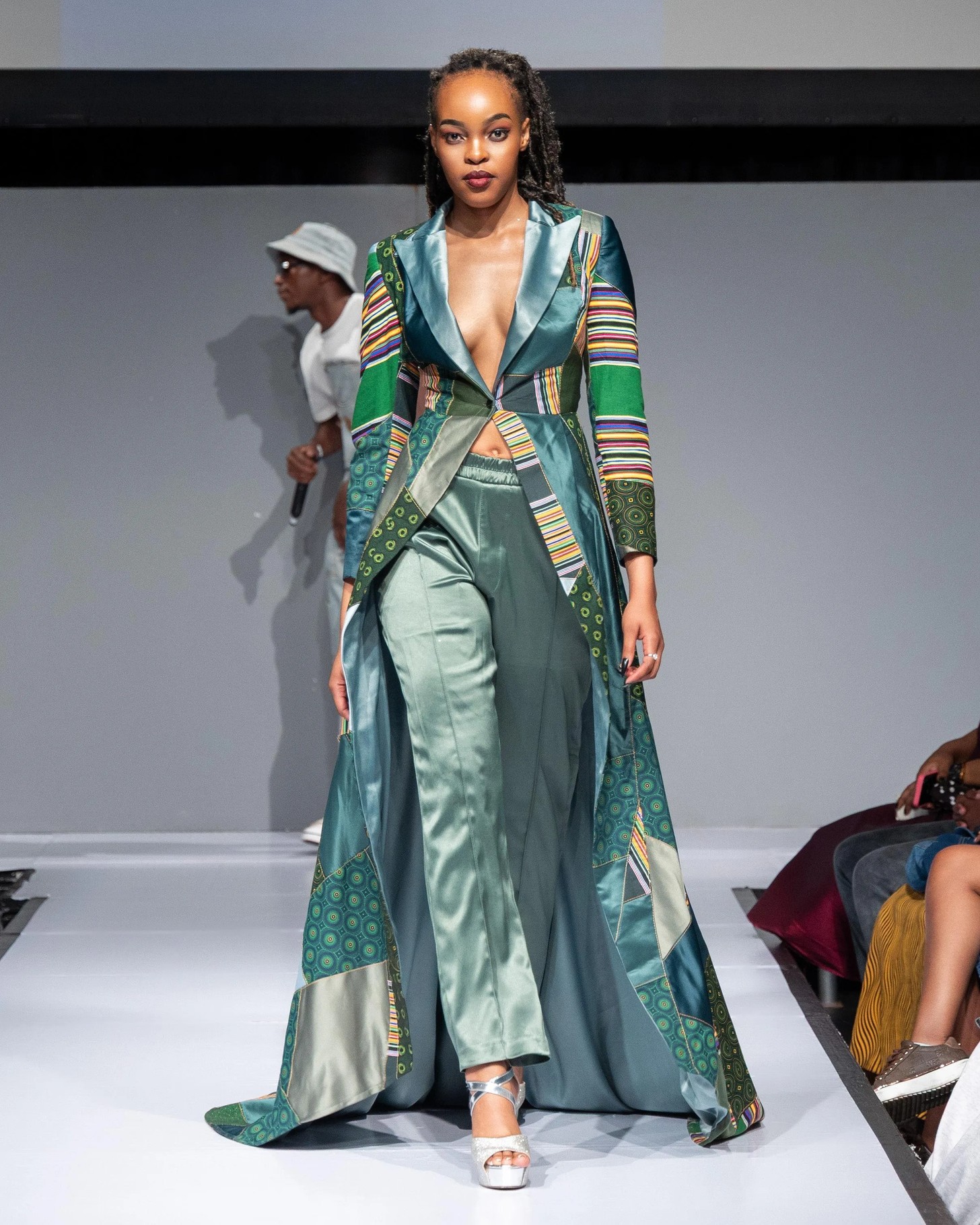
Stephen Manzini: Cultural identity is extremely important, but I also want to be careful that we do not restrict African fashion to a particular visual representation. For a long time, international perceptions of African fashion were often limited to traditional prints, beads and certain cultural references. While those elements are important and have their place, Africa is much more diverse and sophisticated than that.
Our designers must have the freedom to interpret their identities in different ways. One designer may communicate their heritage through traditional craftsmanship, while another may express their South African identity through minimalism, streetwear, contemporary silhouettes or avant-garde design. What makes our fashion distinctive is not necessarily a particular fabric or print. It is the perspective, the experiences and the stories behind the people creating it. I want the world to understand that South African fashion can be globally relevant without losing its authenticity.
We should be confident enough to tell our own stories and allow the world to engage with them on our terms.
GLAMOUR: With designers coming from different parts of the country and working across different aesthetics, how does Soweto Fashion Week ensure that the runway reflects the diversity of South African fashion and its many creative voices?
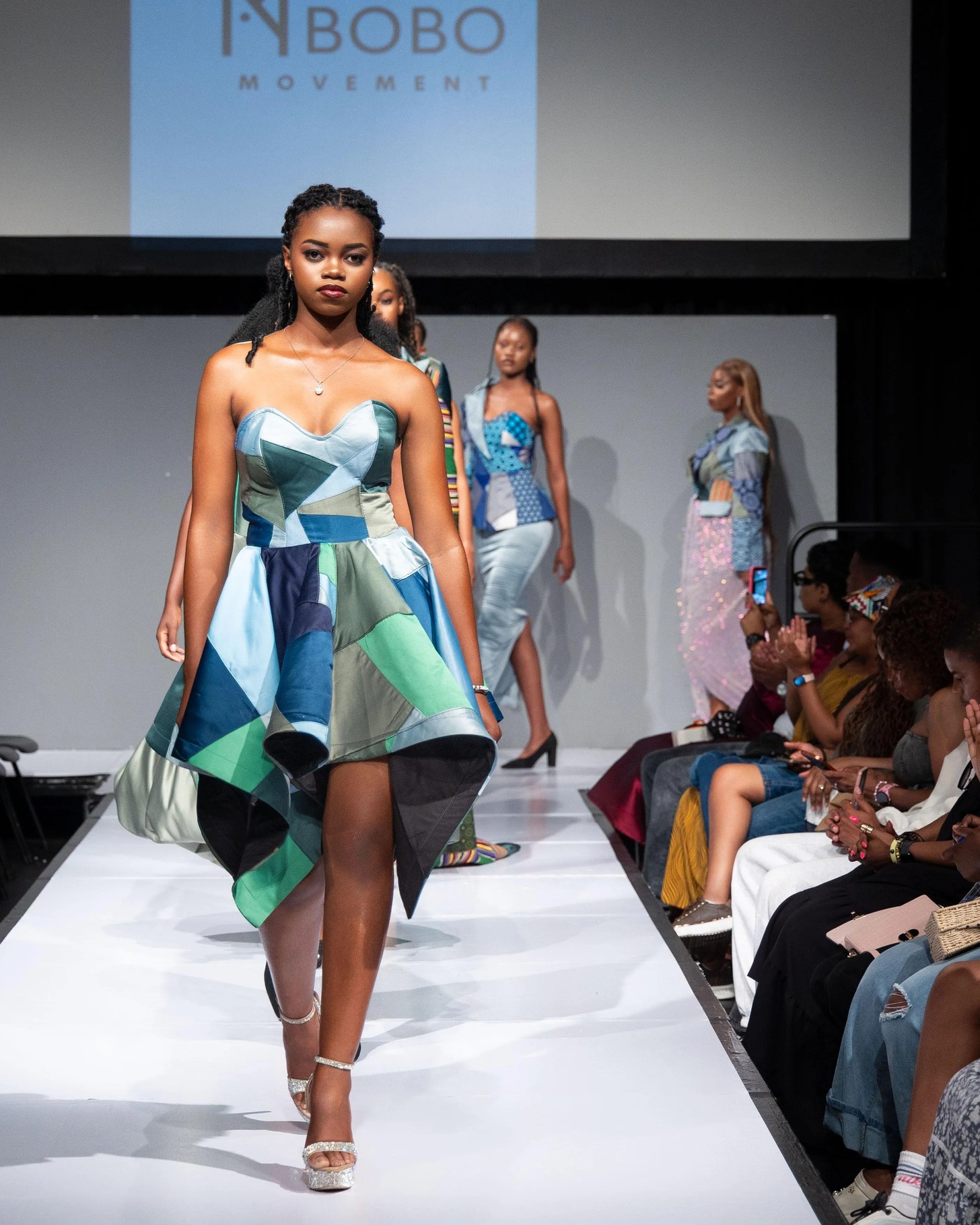
Stephen Manzini: South Africa has nine provinces, different cultures, different histories and different creative expressions. It would be impossible, and quite frankly unfair, to suggest that one aesthetic represents our entire fashion industry.
Our approach is to create a platform that allows different voices to coexist. We look at designers from different parts of the country, different stages of their careers and different design disciplines. We also work with fashion institutions because the next generation of designers must be part of that conversation. The runway should reflect the country we live in. It should accommodate contemporary African fashion, streetwear, luxury, formalwear, experimental design and everything in between.
I have always maintained that fashion should not be gate kept. Talent should not be restricted by geography, background or access to certain circles. If the creativity and commitment are there, we want to create opportunities for those voices to be seen.
GLAMOUR: Beyond the glamour of the runway, how does Soweto Fashion Week contribute to the local creative economy, particularly in Soweto, and support the businesses and people working behind the scenes in fashion?
Stephen: This is a very important conversation because people often see the models, the designers and the final runway presentation, but they do not always see the economic activity taking place behind the scenes.
A fashion week creates work for photographers, videographers, makeup artists, hairstylists, models, dressmakers, seamstresses, technical crews, production teams, transport providers, security personnel and many other service providers. There are also opportunities for local suppliers, small businesses, exhibitors and entrepreneurs who participate in the broader event ecosystem. Our contribution to Soweto goes beyond hosting an event in the area. We want to contribute to positioning Soweto as a destination for fashion, creativity and entrepreneurship.
My vision has always been to see fashion become a meaningful contributor to local economic development. We need to move towards an environment where designers can manufacture locally, access resources, employ people and build businesses that can sustain themselves. Fashion is an industry with a much wider economic footprint than people sometimes realise.
When fashion grows, communities must also benefit.
GLAMOUR: What are the biggest challenges currently facing emerging and established South African designers, and what role do you believe platforms such as Soweto Fashion Week should play in addressing them?
Stephen: One of the biggest challenges is access to capital. Many designers have the talent and the ideas, but they do not necessarily have the resources to manufacture at scale, purchase quality materials or fulfil larger orders.
The second challenge is access to markets. We have incredible creativity in South Africa, but we need stronger relationships between designers, retailers, manufacturers and distributors. There is also the challenge of consumer support. We cannot continuously talk about the importance of developing local fashion while the local designer struggles to secure space in the retail environment.
Another challenge is the business side of fashion. Being a talented designer does not automatically make someone a successful entrepreneur. Designers need to understand the commercial realities of the industry.I believe platforms such as Soweto Fashion Week must help address these gaps by creating visibility, facilitating relationships, supporting education and connecting designers to opportunities. But we must also challenge the government, the private sector and the retail industry to take local fashion seriously. We need investment in the industry, stronger local manufacturing capacity and a retail environment that gives South African brands a fair opportunity. We cannot build a sustainable fashion industry through creativity alone. We need an ecosystem that supports the entire value chain.
GLAMOUR: What would make Spring/Summer 2026 a successful season for the organisers, participating designers and the South African fashion industry as a whole?
Stephen: For us as organisers, success is about delivering a professional and memorable showcase, strengthening our partnerships and continuing to build confidence in the platform.
For the designers, success should go beyond applause on the runway. I would like them to leave with new relationships, increased visibility, potential business opportunities and a stronger understanding of where their brands can go.
For the industry, I would like this season to reinforce the importance of investing in South African fashion and recognising the commercial potential of our creative sector.
We have been doing this since 2011, and one thing I have learnt is that building an institution takes consistency. You do not build an industry in one season, and you certainly do not build a global brand overnight.
I often say that we have not even scratched the surface of what we can achieve. There is still so much potential in South African fashion, and we have a responsibility to create the structures that will allow that potential to grow.
Ultimately, I want Spring/Summer 2026 to be remembered not only for the collections presented, but for the opportunities created and the confidence it gives to the next generation of South African designers. Soweto will always be at the heart of this journey, but our ambitions are international. We want to build something that South Africa can be proud of and that the world can recognise.
Recent stories by:
Thobeka Phanyeko

Linda Mtoba on her love language, kitchen secrets, and what to expect when Celebrity Come Dine With Me South Africa premieres on BBC this November

GLAMOUR Exclusive: Pamela Mtanga on returning to TV, dual hosting, and building a career on her own terms

Fashion Friday: Founder and Creative Director of Lin Couture, AmaLinda on her mother’s enduring legacy, and how her passion for design led to the birth of her luxury brand

A snapshot of our November Issue Cover Story featuring Gaisang Keaikitse Noge, Gezelle Magerman and Thembeka Zondo-Cele alongside Gail Mabalane


