
Rapsody has spent more than two decades building a career on her own terms. A GRAMMY Award-winning rapper, celebrated lyricist and one of hip-hop’s most distinctive voices, she has worked with some of the culture’s biggest names, from Kendrick Lamar and Eryakah to Childish Gambino. Yet, for all the acclaim and collaborations, there has always been something deeper driving her work: a desire to understand herself, her history and the world around her through music.
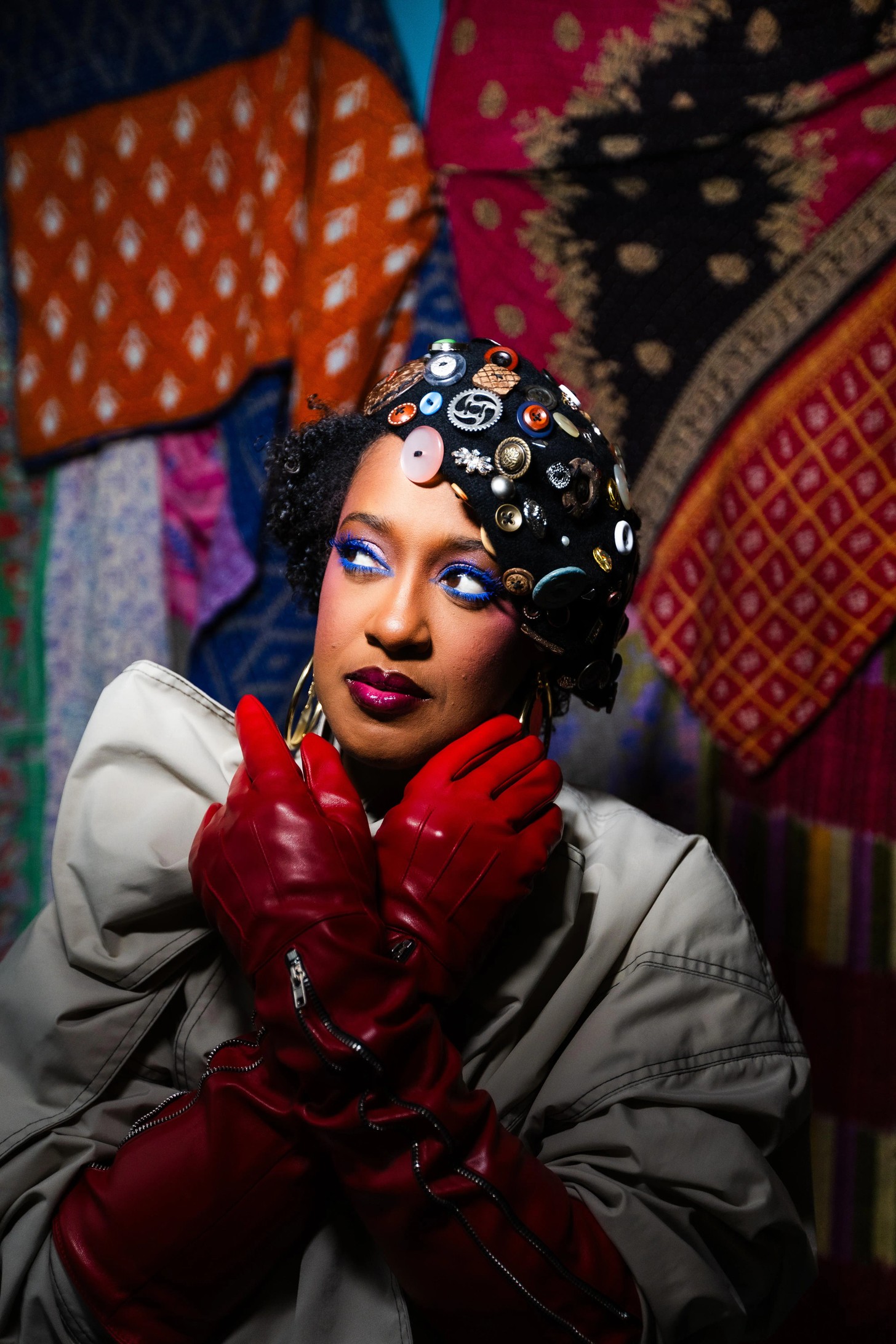
That journey arrives at a new chapter with God Gotta Afro & Gold Hoops, her fifth studio album and a 16-track project that feels expansive, intimate and completely assured.Partly recorded in South Africa, the album features local musicians, including gospel group Karabo Ya Morena, whose choir also features on the title track alongside a reference to the legendary Miriam Makeba. Together, these elements bring a distinctly South African thread to a project that explores Black identity, spirituality, beauty, history and belonging.

When we speak to Rapsody, she is reflective, moving easily between memories of discovering hip-hop as a young girl and the experiences that shaped her latest body of work. She speaks about music with the same enthusiasm she brings to conversations about culture, community and creativity. There is no sense that she has arrived at a final version of herself. If anything, she sounds more interested than ever in exploring what else she can become.
GLAMOUR: Thinking back to your childhood, what music filled your home, and what first drew you to hip-hop?
Rapsody: Michael Jackson was my introduction to music. Off the Wall was the first CD I bought at a very young age. But I fell in love with hip-hop through two records. MC Lyte’s “Poor Georgie” was the first time I saw a woman rock a mic. I watched that video, and even her style — the baseball cap tilted to the side and the jeans — she was fly. The storytelling made me realise that was what I wanted to do.I later discovered that Lauryn Hill was also in the video as one of the background dancers, which is crazy.Then there was Method Man and Mary J. Blige’s “All I Need”. That cemented what I already loved about the culture.Hip-hop was fresh, and it was growing alongside me.
I watched my older sisters and cousins embrace it at family functions, dancing to it. The way we tied our shoe laces and wore our pants, sometimes backwards during the criss cross era, created so much space to be creative, be an individual and give young people a voice. It was raw, in your face, fun and righteous. It taught you things, but it also gave you joy. Those were all the things I loved about hip-hop.
GLAMOUR:You’re just released your fifth studio album, God Gotta Afro and Gold Hoops. How does it feel to be at this point in your career?
Rapsody: I’m thrilled. I feel like this is the album you spend your life going through experiences, growing, healing and learning to make.With every album, people say, “Wow, it’s amazing,” but I always knew there was so much room for me to grow, show my range and become a more complete artist. Not that we ever stop becoming, but this is the one where I feel like everyone will see that.
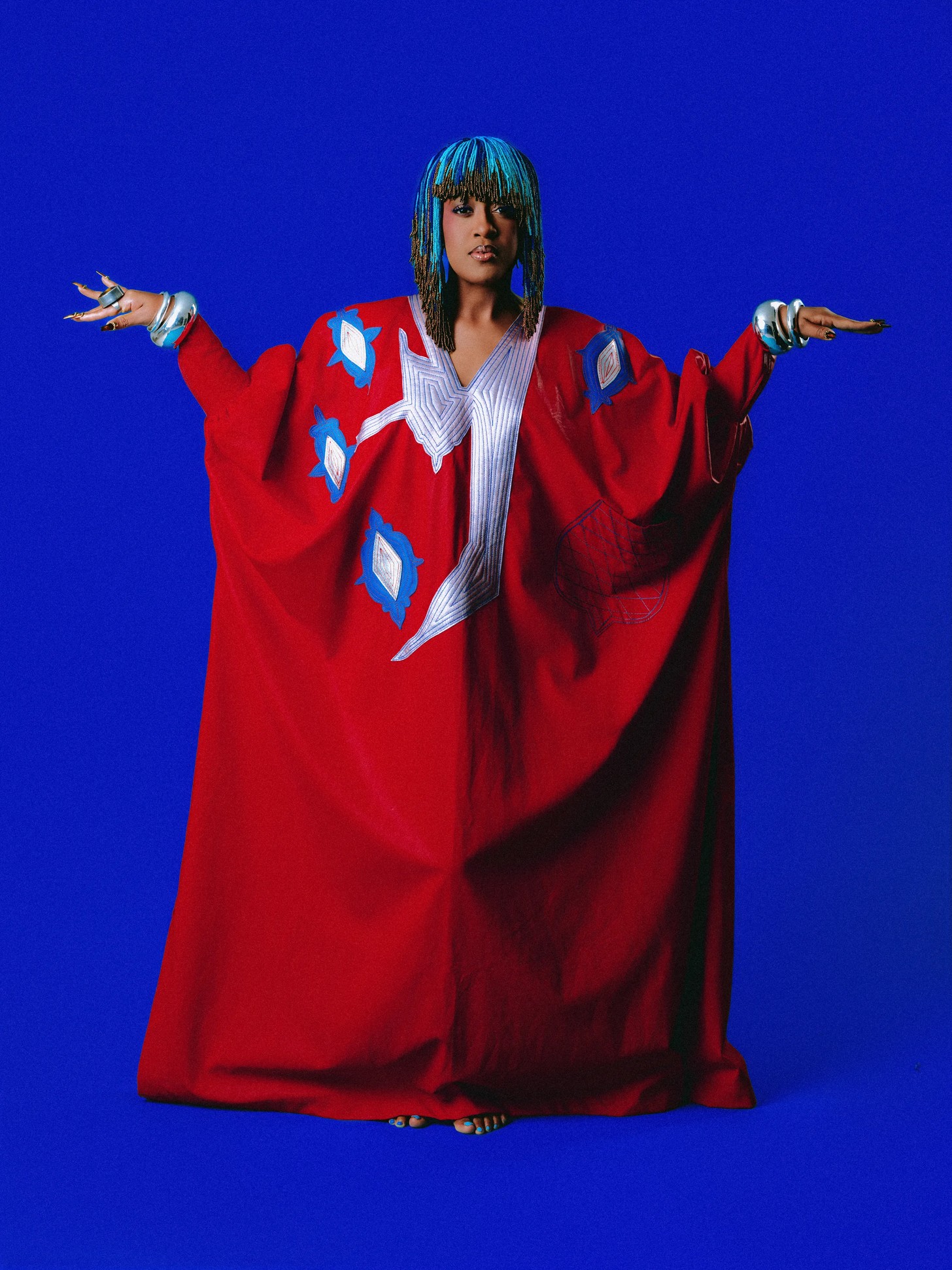
Everything I saw in myself, what Mr Porter saw in me and what so many others have seen throughout the years comes together in one project. It’s soul, funk and hip-hop, and I’m playing with my voice in different ways and styles. It’s truth. It’s honest. It’s Black.I love Black. Black as hell.
GLAMOUR: How did you arrive at God Gotta Afro and Gold Hoops?
Rapsody: The album’s title is a declaration of Black identity, spirituality and womanhood.It was an experience I had in Ghana.I was there for the first time and got up one morning to take a five-day tour through different regions. We were heading to the Ashanti region. It was five in the morning, and the radio was playing Westernised, white gospel music.I asked the driver to change the station, but station after station, that’s exactly what I heard. I asked him why, and he said, “This is what everybody listens to here.”
It made me think about how, even on the continent, the spirituality of Africa isn’t necessarily represented.These are ancient ways that we worship and practise our faith, but you don’t hear them. Instead, you hear something from the West that isn’t necessarily representative of us.I connected that to America, where God is often depicted as a white man with blue eyes. Why can’t we see God in ourselves? God can have an Afro and gold hoops. God can have braids. God can have a bust down. See God in all things, and don’t allow people to dictate our perception of what God is.We can’t honestly comprehend what God is, so we shouldn’t reduce God to one idea and make that idea white.
GLAMOUR: Your experiences in Ghana and South Africa helped shape the album. How did spending time on the continent influence the music and its message?
Rapsody: Before I went to Ghana and Johannesburg, I already knew I was going to work on the album in Johannesburg. I have a friend, Nomsa Mazwai, whom I’ve known since 2012. She was on my first album,so I wanted to reconnect with her. Ghana also gave me another perspective. I learned a lot about W.E.B. Du Bois and Dr Kwame Nkrumah while I was there, and it made me think about the bridge between Black America and Africa.That bridge isn’t over. We are still one. We are still connected.
GLAMOUR: The album has a strong spiritual element. Was it intentional to bring that into the music, particularly on lead single “God Gotta Afro ”, which features South African gospel group Karabo Ya Morena?
Rapsody: Before recording, I knew I wanted to work with a youth choir. I asked Nomsa if she could connect me with someone, and she found the choir.This was actually for a different song. We hadn’t even conceptualised “God Gotta Afro " yet. By the time I returned to Johannesburg and we were working on new songs, we had the production for “God Gotta Afro”. I was freestyling the hook, and Mr Porter suggested we get the choir to sing on this one as well.It all came together and aligned with everything else we were already doing.
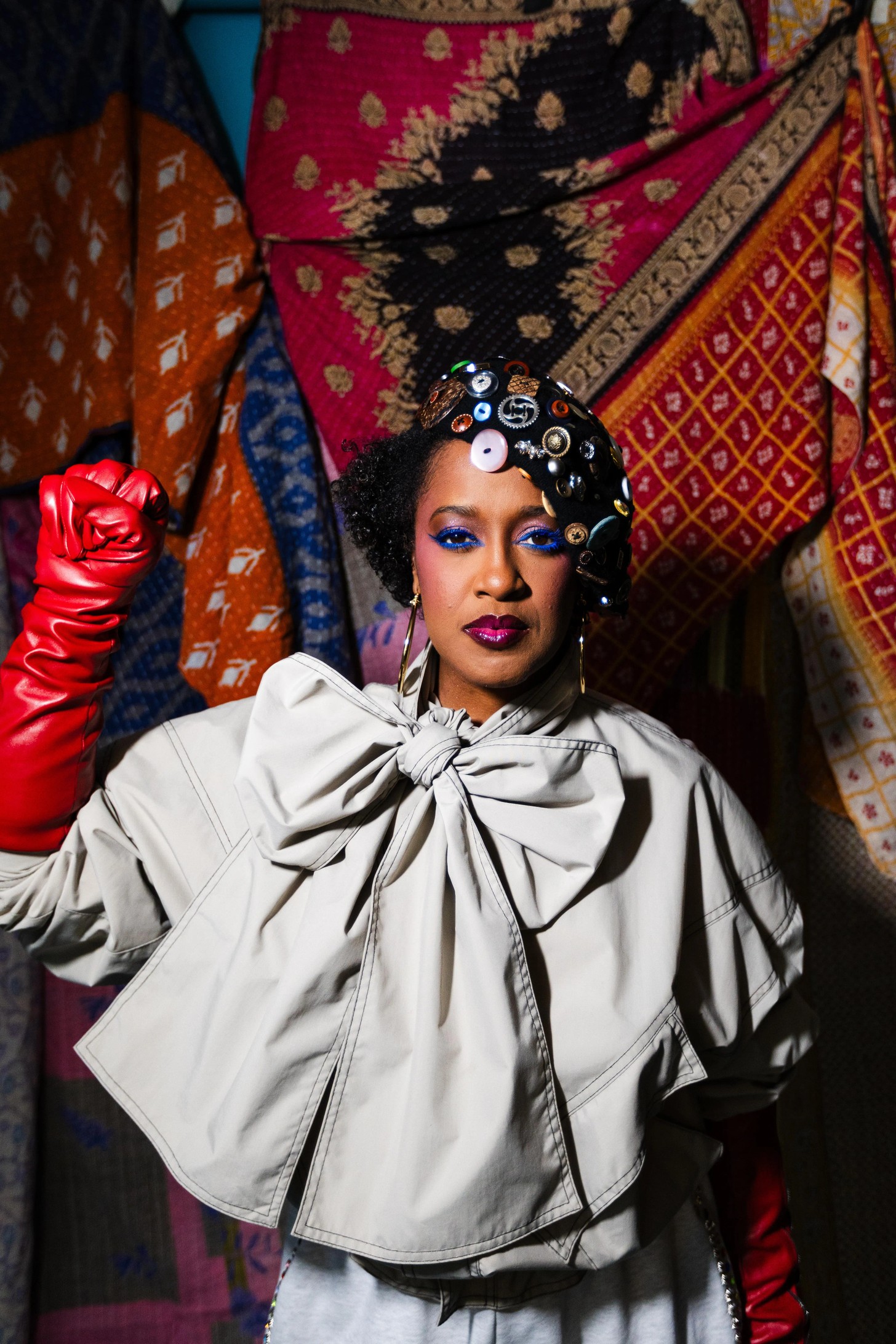
The album’s visuals feel like an extension of the storytelling. Are you planning visuals for each song?
I’m a music lover and a film lover. I create albums like they’re movies, with the music as the soundtrack. In my world, I want to create visuals for everything. I almost want to make short films. Right now, we have two visuals out: one for “God Gotta Afro” and another for “Applejuice”. We’re working on a third, and there are three more we’d like to do,depending on time and, of course, budget. Hopefully, if we can’t make full-length videos, we’ll create visualisers or other creative pieces for every song. I think they’re all special and deserve that extra element.
GLAMOUR: “Applejuice” introduces listeners to your singing, revealing a side of your artistry they may nothave heard before. What made you explore your vocals?
Rapsody: I grew up listening to Lauryn Hill, Whitney Houston and Patti LaBelle. For me, if you’re not singing-singing, then you don’t need to sing at all. That was my world.I had to get comfortable and realise that everybody has different gifts. You have to learn how to use what you have and understand how you’re supposed to use it. Some people are supposed to be Whitney Houston and sing to the heavens. Some are just supposed to be me. I’m a good feeling. I’m grateful that people are enjoying it and that I feel freer and more confident in figuring out all my gifts and how to use them to the best of my ability.
GLAMOUR: Your relationship with South Africa dates back to your debut album, "The Idea of Beautiful", and your collaboration with Nomsa Mazwai. How did that connection begin?
Back in 2012, when I was working on The Idea of Beautiful, the producer I was working with at the time, 9th Wonder, went to South Africa and came back with Nomsa’s music. He said, “Listen to this, I found this girl.” He thought her sound would be beautiful to build around for my album.With anybody I work with — whether it’s a producer, featured artist, background singer or graphic designer — I like to speak to you directly. I want to get to know you and for you to get to know me. I never wanted my collaborations to feel transactional.I love creating a village and family.Nomsa and I started talking, and eventually I went to South Africa. We hung out and created the album together.
If you ever meet Nomsa, she has so much energy. Her pen is one of the best. Her writing is poetic, and you feel it. As time went on, we lost contact for a while. Then, about a year before I returned to South Africa, I found her on Twitter and reached out. We started messaging and catching up.When I knew I was going back, I told her I was coming and wanted to see her. I also wanted to get back into the studio because I would love to have her on this album again. That’s my girl. I believe that when you visit another country and are inspired by its people, they should become part of your art. You should bring the country, the people and the artists with you.She was my first phone call, and we’re thick as thieves now. We talk every other day. She has new music out, and I’m featured on one of her newer songs, “Njalo Njalo”.
GLAMOUR: “Pick A Side” explores authenticity, capitalism and the pressures of the music industry. What inspired the song?
Rapsody: Having been in this business for so long, Mr Porter and I have shared similar experiences. When you show up authentically as yourself, it comes with challenges.The industry is a microcosm of the bigger world we live in. As artists, we’re truth tellers. We put a magnifying glass on things and blow them up. In anything you do, whether it’s music, hip-hop or life, you always have to pick a side. You can either show up authentically as yourself or bend to capitalism and do things that go against who you are for rewards or financial gain.The song shines a light on how I see myself as an artist, how I look at other artists and how the industry operates, including the illusions and manipulation.It’s my perspective and my truth, which I want to share with people, especially artists entering the business. I want to remind them that they always have a choice to pick themselves.You can still be successful by making that choice. You don’t have to be a carbon copy. There isn’t just one way to succeed, even if it sometimes feels that way because of what you see or what the industry chooses to show you.I want people to stop, think and have conversations. The song holds up a mirror for some and a window for others.
GLAMOUR: After all these years, what has hip-hop taught you about yourself?
Rapsody: That I’m enough as I am. Just being who I am and showing up as myself is the purpose of why we’re here. We all come into this world with an assignment. We all have special gifts and purposes, and it’s up to us to embrace them wholly and authentically while taking care of one another. Hip-hop is a beautiful village where we don’t judge. We make space for each other, celebrate each other and speak truth to each other. It teaches you to be yourself, truthful, honest, fearless and joyful. Share knowledge, share messages and teach one another. It’s a community and a bridge that connects people around the world.Hip-hop has done so much for global relations. It reminds us that there is space for everybody to exist.
GLAMOUR: When you think about Black hair, what comes to mind?
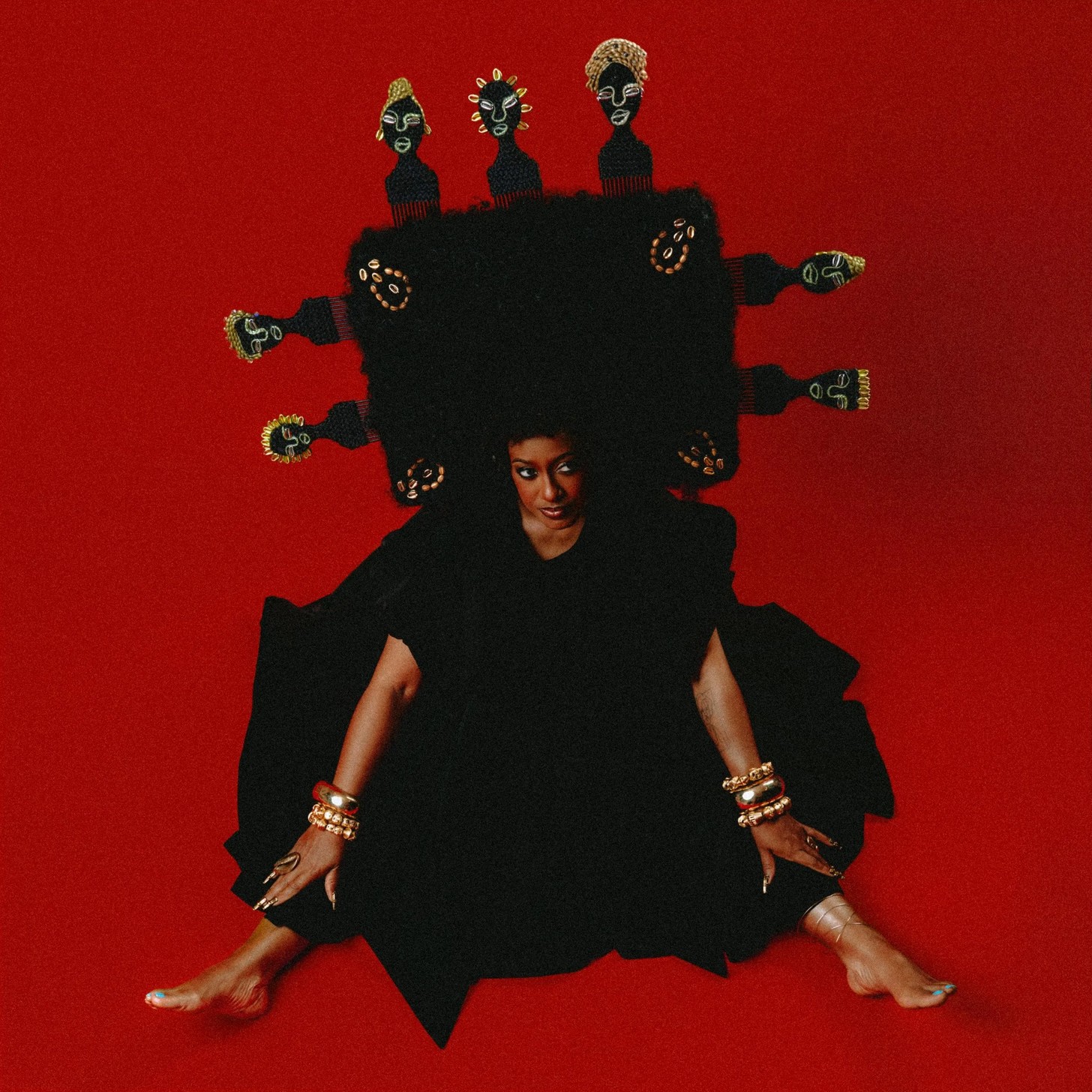
Rapsody: When I see Black hair, I think of beauty, strength, creativity and expression.Black hair serves so many purposes. It represents confidence and boldness, allows for creativity, tells a story and introduces people to who you are. When we talk about history, maps were sometimes braided into Black hair. Seeds were also hidden in Black hair so people could feed one another. It’s almost like a life force.That’s how I see Black hair. It’s beautiful. It’s bloodline.
GLAMOUR: What do you hope listeners take away from the album?
Rapsody: I want them to walk away feeling proud of who we are.I want them to feel reconnected to a source. I learned a lot about W.E.B. Du Bois and Dr KwameNkrumah when I was in Ghana, and I want to bring attention back to the fact that the bridge between Black America and Africa is not over. We are still one, and we are still very much connected.We have to remain united, remember who we are and recognise our power. We must know our truths,rather than accept the versions of our history that have been rewritten for us. We need to recognise our genius, joy, pride and perseverance.I wrote this album almost as if somebody would discover it in the future.
We’re living in a time when books are being banned and history is being white washed and rewritten. We have to continue telling the truth about who we are and preserving it.I wanted to express how I see us, from Africa to America. If my album were buried and banned, and someone discovered it 100 years later, these are the things I would want them to know about themselves.
GLAMOUR:Finally, what would you like to say to your fans in South Africa?
Rapsody: Y’all fill my heart up. I feel welcome there. Everybody says, “You’re South African now.” I’ve probably been given about 15 names already! I feel at home there. I feel like I have extended family there. I feel connected, and I carry that wherever I go.I’m a reflection of where I grew up and all the people I know, but I’m a reflection of South Africa, too. I’m a reflection of Ghana and Accra. That’s family.I’ll forever speak light and love over Accra, Johannesburg and Cape Town.Those are my people.
Recent stories by:
Sindeka Mandoyi

Resigning Soon? 5 Ways to protect your professional reputation

Stylist and creative director Panashe Ndhlovu on the women who inspired her journey

5 Best workouts to help get rid of back handles and tone your back

Setting powder vs. Finishing powder: The glow-Up guide to getting it right

From TV to TikTok: How music videos are being rewritten for the digital age
GLAMOUR Recommends
Painted by Esther did Beyoncé’s makeup, but she’s worked with these stars too
Langa Mavuso announces 'The Other Side Tour': A new chapter in his musical journey
Masego on Fix Your Face, vulnerability and the stories that shaped his most personal album
Angélique Kidjo talks Hollywood walk of fame star, HOPE!! and her return to South Africa: GLAMOUR Exclusive


