
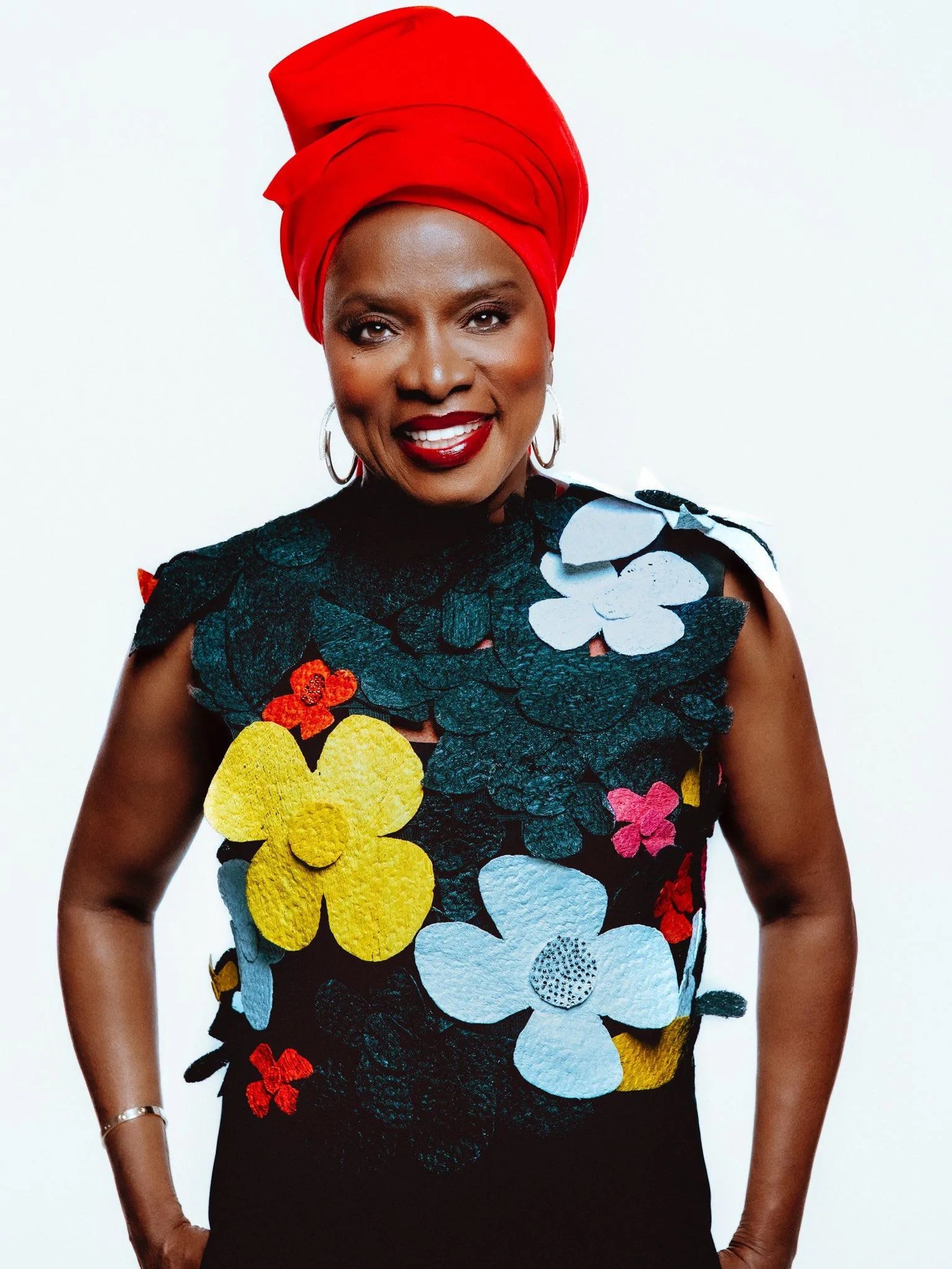
It hasn’t even been a week since five-time GRAMMY Award winner Angélique Kidjo was honoured with a star on the Hollywood Walk of Fame when she joins GLAMOUR over Zoom. And if you’ve seen the recently released video for “Bando”, her collaboration with Pharrell Williams and Quavo, there is simply no denying that Kidjo is cool. At 66, she arrives on screen in a pair of striking shades, radiating the kind of confidence and swagger that makes you wonder if she has ever known how to be anything else.
But beneath the shades, the swagger and a career that has taken her from Benin to some of the world’s biggest stages is an artist deeply guided by purpose. Kidjo has spent decades using her voice not only to make music, but to speak about justice, freedom, Africa and the power of hope. She is an artist who has never separated the music from the message, and perhaps that is what makes this latest honour feel so significant.
From growing up in Benin as the youngest girl among 10 children, to discovering her voice at six, briefly considering a career in human rights law and ultimately choosing to fight for justice through music, hers is a story rooted in conviction.
Ahead of her return to South Africa for Joy of Jazz, Kidjo speaks exclusively to GLAMOUR about her Hollywood Walk of Fame honour, the parents who believed in her, why the stage is her sanctuary, grief, spirituality, HOPE!! and what South Africa means to her.
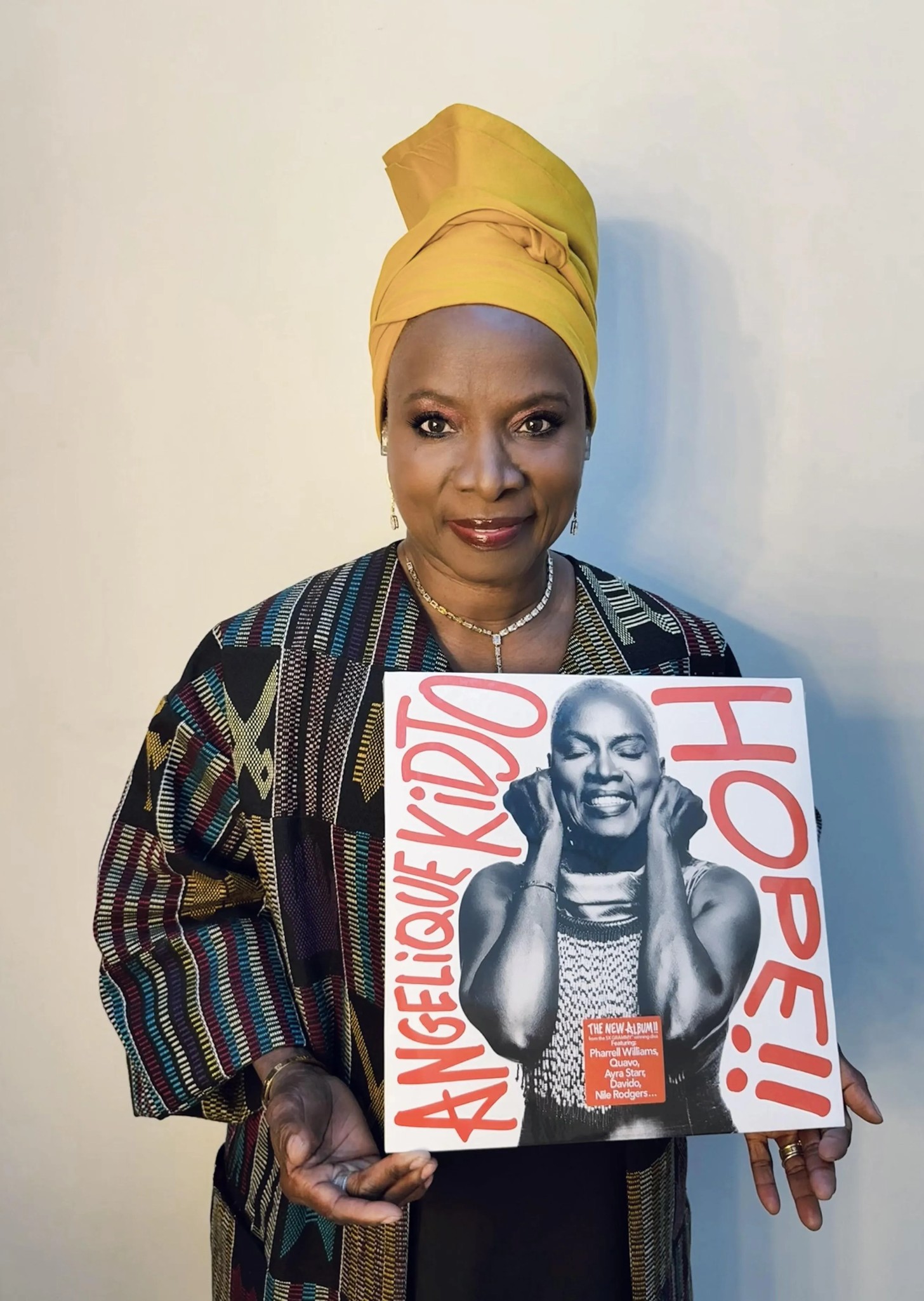
GLAMOUR: You were recently honoured with a star on the Hollywood Walk of Fame. What did that moment mean to you?
Angélique Kidjo: It was incredibly emotional because I never imagined I would end up on the Hollywood Walk of Fame. When you make music, you expect awards for music, but this felt different. I immediately thought about how much I would have loved my mother and father to be there. If I’m here, it’s because my father had the courage to believe in me.
When a promoter pulled out of my first show because he thought I was too young and nobody would come, my father said, “I’m going to prove you wrong.” He was retired, with 10 children, and every penny counted, but my family supported him. So that star represents more than me. It represents everyone who believed in me before anybody else did.
GLAMOUR: What are some of your fondest memories of growing up in Benin?
Angélique Kidjo: I was the youngest girl and incredibly energetic. I did everything my brothers did, played soccer, rode bikes and climbed trees. There was so much love in our home, and I always felt protected.
My brothers taught me to be aware of my surroundings and even taught me self-defence because many of them practised martial arts. I was always right there with them. I think that energy has stayed with me.
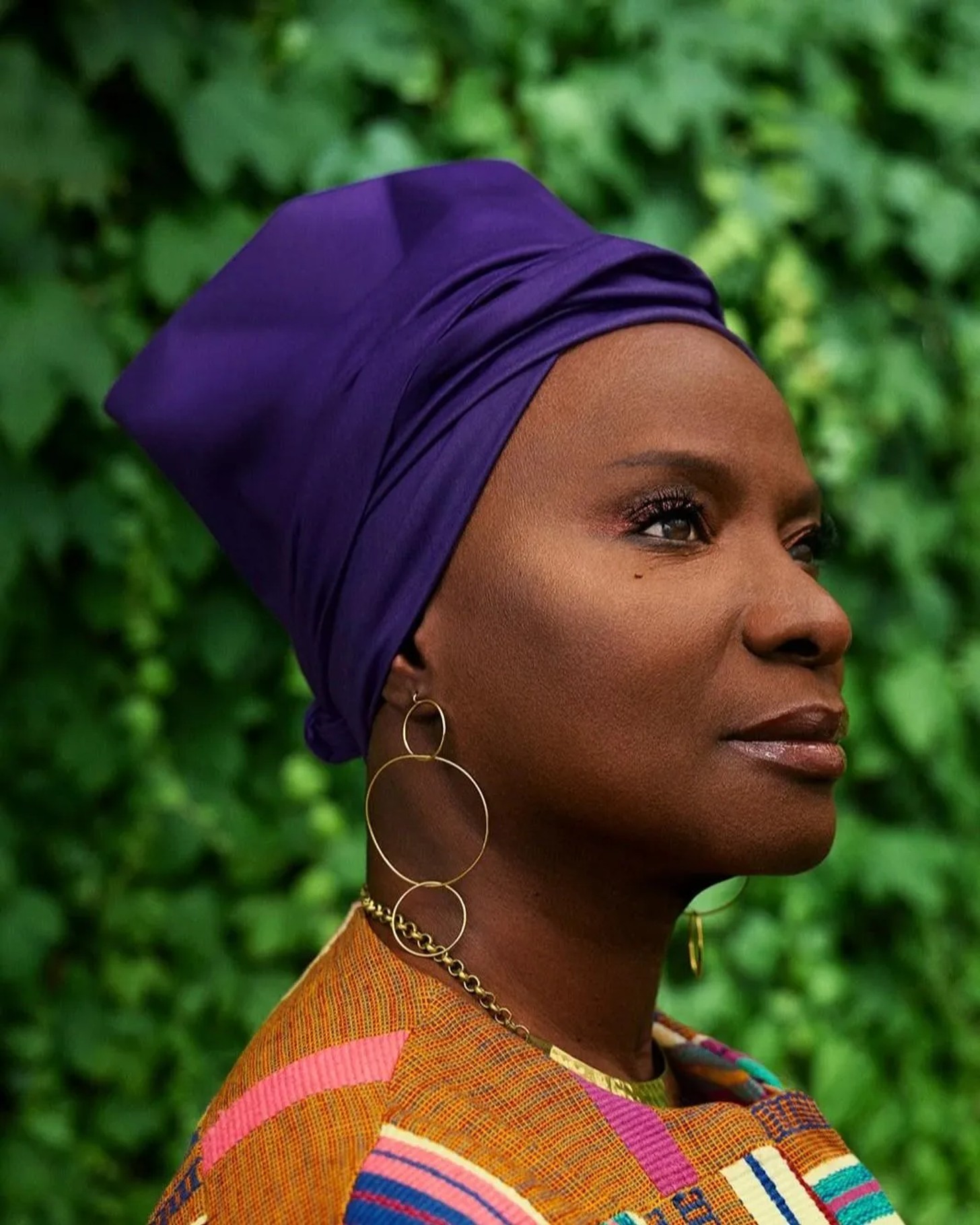
GLAMOUR: You’ve spoken about wanting to be James Brown when you were young. Where did that come from?
Angélique Kidjo: I grew up thinking I was a boy! I would tell my mother, “Mom, when I grow up, I want to be James Brown.” She would say, “No, you ain’t.” And I would say, “Yes, I can!”
I was always challenging my brothers. I’d tell them, “I’m going to beat you. Watch,” and I would beat them game after game. [Laughs.] Eventually, I went to my father and told him what my mother had said. He looked at me and said, “I think that’s a conversation you’re going to have to have with your mother.”
GLAMOUR: Music found you at six. When did you realise this was what you wanted to do with your life?
Angélique Kidjo: When my mother put me on stage at six, I was terrified. But when I came off, I felt empowered. I thought, “Wow, this feels so good.” I continued singing and, by nine, I was performing with my brother’s band in clubs. My father would pick me up at midnight, I’d come through the kitchen, sing my two songs and go straight to bed.
I released my first album in 1981, and my father produced my first concert in Togo. That concert really launched my career across West Africa.
GLAMOUR: You once wanted to become a human rights lawyer. What made you change direction and choose music instead?
Angélique Kidjo: A professor asked me why I wanted to study law, and I told him I wanted to become a human rights lawyer. I believe every human being, regardless of their skin colour or language, deserves a justice system that protects them. Everything I had learned about slavery, apartheid and colonisation made me feel strongly about that.
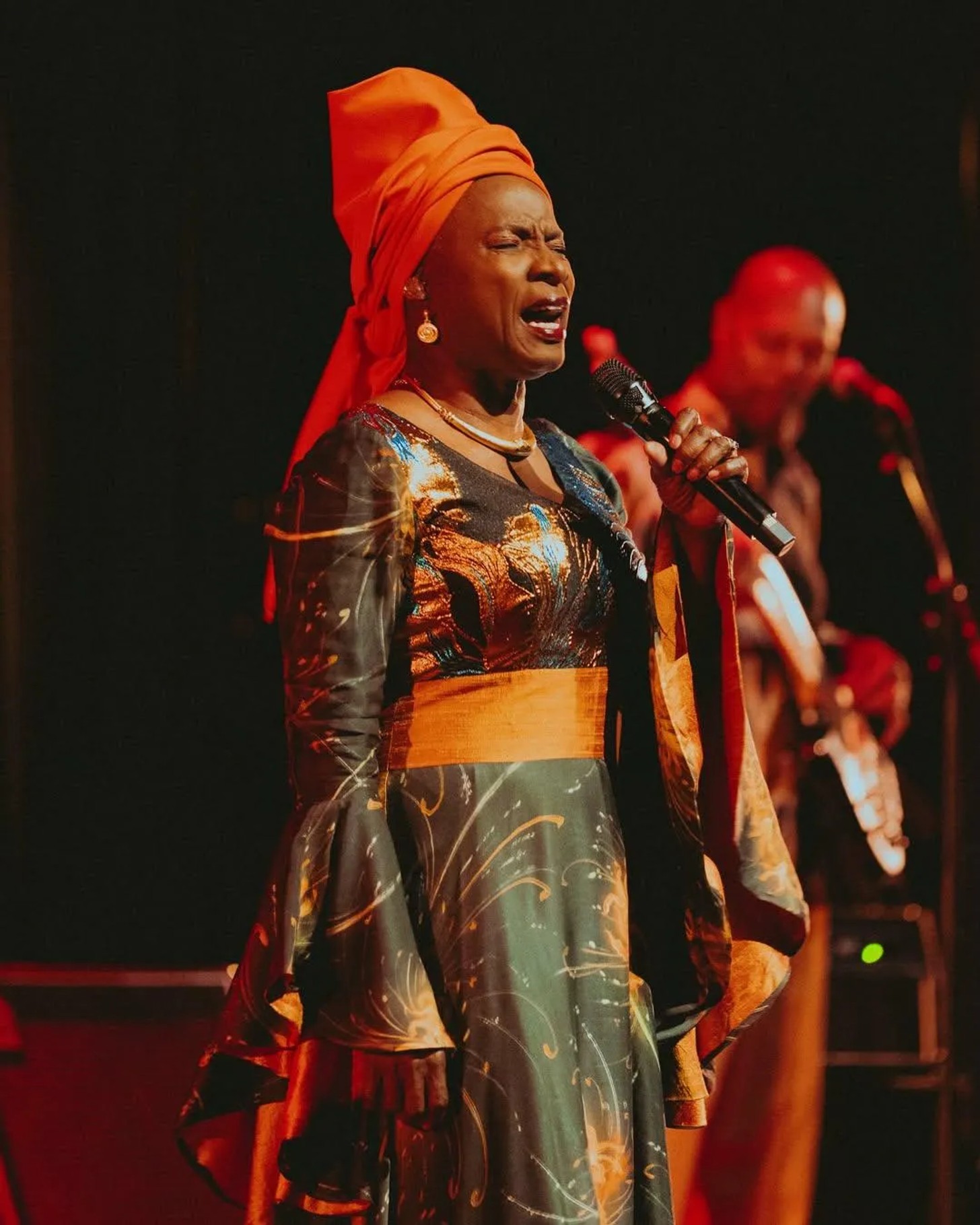
Then he told me I would need to study political science, and I said, “No, no, no. If there’s politics involved, I don’t want to do it.” [Laughs.] Eventually, I realised I could defend human rights better with my microphone, by singing around the world, than I could in a courtroom.
GLAMOUR: You have incredible stage presence. Where does that power come from?
Angélique Kidjo: My mother used to tell the actors in the theatre troupe she founded, “Before you step a foot on that stage, you have to be willing and ready to be naked.” I didn’t understand it at first, but eventually I embodied it. The stage is my sanctuary. It’s where I can give endless love without fear and receive it back by the tonnes.
I remember arriving at a show in Boston after our bus broke down. We got there only four hours before the performance and everyone was exhausted. I told the musicians, “Use your tiredness as power, as fuel.” Then I remembered my mother’s words. I walked onto that stage and gave everything I had. People who were there still tell me it was one of the best shows I ever performed.
GLAMOUR: HOPE!! features collaborations with artists including Pharrell Williams, Quavo, Ayra Starr and Davido. How did those collaborations come together?
Angélique Kidjo: HOPE!! took me the longest to make, five years. My mother passed away in 2021, and it was incredibly difficult because she was my backbone. A friend encouraged me to recognise that I had lost both my parents and that I no longer had them there to validate or support my decisions. She told me to find 10 words that represented the values my parents had given me and the artist I wanted to be, with no excuses and no apologies.
I wrote down words like kindness, hope, defiance, engagement and commitment. Those words became the foundation of the album. I then worked with my writing partner, Shungudzo, and we spent a week building the album around those ideas. The collaborations came naturally. I didn’t force them. Each artist brought their own vision, and in many ways, each collaboration reminded me of my mother.
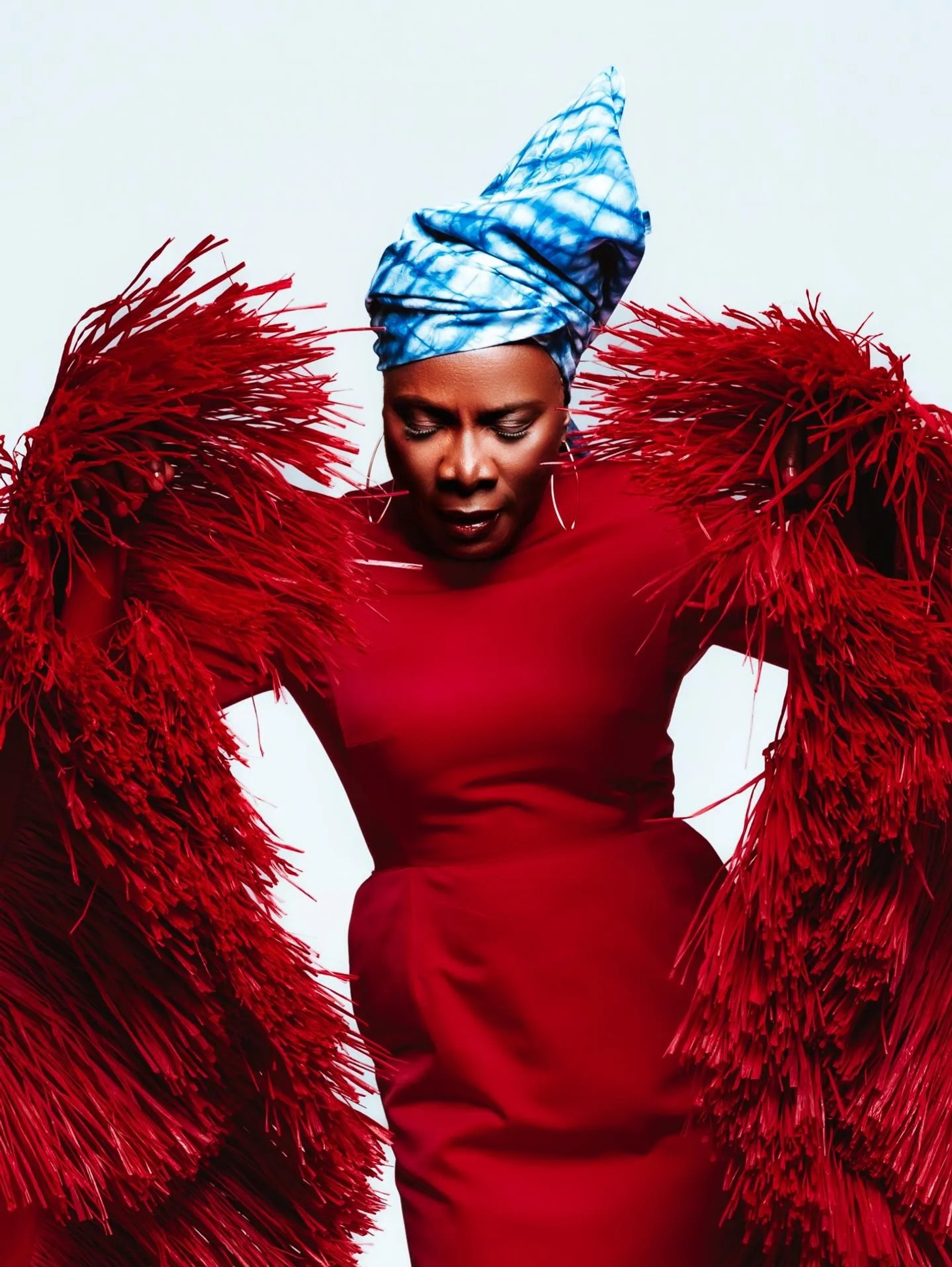
GLAMOUR: What does the word “hope” mean to you?
Angélique Kidjo: My mother always spoke about hope. It was one of her magic words. She knew the world could be racist and that racism, xenophobia and antisemitism are often used to create division and make money. But she always told us that kindness is the weapon we have. No one can kill kindness. It is a bulletproof vest. And hope is the enemy of fear. Those words stayed with me and became part of the foundation of the album.
GLAMOUR: With everything you’ve experienced and accomplished. Where do you draw your strength from, and what keeps you spiritually connected?
Spirituality is something we are born with. It’s part of our being. You don’t need anyone to tell you what is right or wrong, your awakened conscience is where your spirituality lies. We live in a noisy world that demands our attention 24/7, so we owe ourselves moments to regroup. Even 10 or 20 minutes of closing everything down, breathing deeply and reconnecting with an image or words that bring you peace can make a difference. I practise transcendental meditation. With the way I travel and work, I wouldn’t be able to do what I do without it.
GLAMOUR: You’re returning to South Africa to perform at Joy of Jazz. How does it feel to be coming back?
Angélique Kidjo: I’m so excited to come back to South Africa. It’s been too long. The last time I performed there was in 2010 for the FIFA World Cup. I did return to the country to film The Woman King, in Cape Town. So coming back now to perform is really special. I’m looking forward to being back and performing for South African audiences again.
GLAMOUR: What can audiences expect when you take the Joy of Jazz stage?
Angélique Kidjo:I want to share the music that has been part of my journey over the years, from my earlier albums to the new music from HOPE!!. Every album is a chapter of the journey. I don’t leave the previous music behind when I create something new. It’s all part of who I am and where I come from. So I’m looking forward to sharing that journey, the music from before, the new songs and everything in between.
GLAMOUR: You’ve always spoken so passionately about Miriam Makeba. What did she mean to you?
Angélique Kidjo: Miriam Makeba was the first person who really opened my mind and heart to what was happening in South Africa. She sacrificed so much, living outside of South Africa and calling for the boycott of apartheid. She gave so much of herself to that fight. For me, it resonates as a woman from Africa because we are willing to do so much for the future of our children.
GLAMOUR: What does South Africa represent to you today?
Angélique Kidjo: I think South Africa is a country that represents resilience. We’ve come from far, but there’s still a lot of work to do, so let’s continue doing it. We’ve had heroes and champions before us, and if there’s one place that shows what it means to stand for what is right, it’s South Africa.
Recent stories by:
Sindeka Mandoyi

Former Miss SA Mia le Roux ties the knot in Anel Botha wedding gown

Artist and entrepreneur Nelia Annandale on breast Cancer, survival and the importance of early detection

Olivia Dean is coming to South Africa for Milk + Cookies Festival 2027

South African children’s books worth adding to your reading list


