
Dumza Maswana has never had to go looking for music. It has been woven into his life for as long as he can remember, from the songs, stories and traditions passed down by his grandmother in the Eastern Cape to the churches where he spent his childhood singing. That early immersion in sound, language and storytelling would eventually become the foundation of an artistic career defined by a rich baritone, Xhosa storytelling and a deep connection to African musical traditions.
Since releasing his debut album Molo in 2016, Maswana has carved out a distinctive space within South African jazz and soul. The album earned him a SAMA nomination, while his music has gone on to receive further recognition, including a Mzansi Jazz Award for “The Letter”. His body of work includes Vumani, the live album Live at the Guild Theatre and Celebrating African Song, a project produced by jazz pianist Andile Yenana that pays tribute to his grandmother and the village that shaped him.

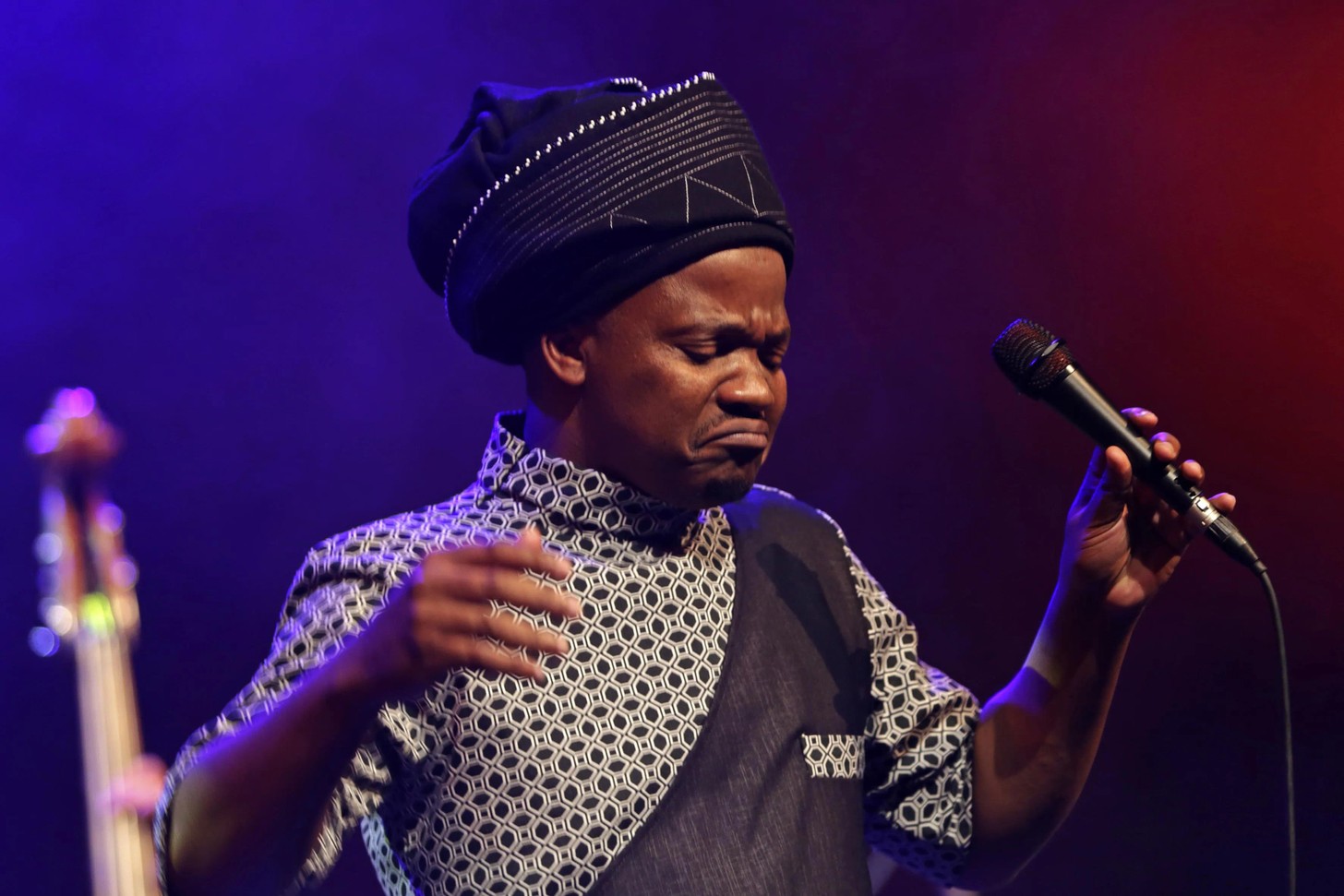
But Maswana's work has never been confined to recordings. His music brings together jazz, soul and indigenous African expression, while his performances draw on Xhosa language, traditional instruments, storytelling and the memories of the women who raised him. Celebrating African Song, in particular, sees him returning to songs and sounds he learnt growing up, with the uhadi and other traditional elements sitting alongside a jazz ensemble.
Now, as he prepares to return to the Joy of Jazz stage for the second time, Maswana is taking that rich musical history with him. He will perform his Orchestral Experience, bringing his songs into conversation with a jazz orchestra and creating a live experience that goes beyond simply performing a setlist.
Ahead of his return to Joy of Jazz, we speak to Maswana about the grandmother who first taught him to sing, why carrying isiXhosa books while travelling is important to him, the memories behind his traditional dress, the spiritual nature of performance and why, after all these years, music has taught him that “it’s good to be a feeling person.”
How did music find you?
I actually think I found myself in music because I've always been surrounded by it. I grew up with my grandmother, and she raised me with music. I'm not sure if she was aware at the time that she was grooming me to become the person I've become.
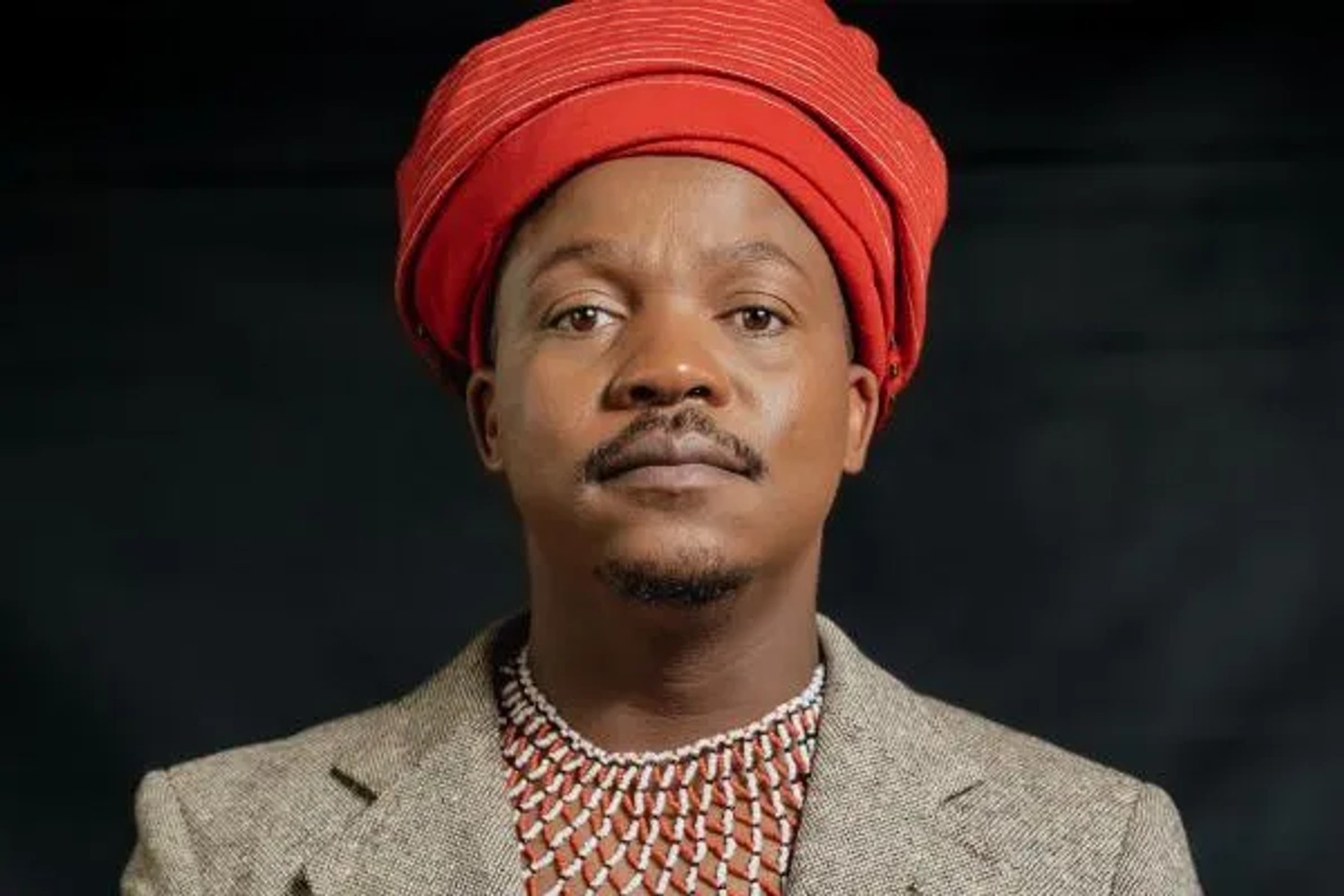
My grandmother was a storyteller, a singer and a composer. She would make up songs about anything. She taught me how to sing, what we call ukombele, as well as ukungqokola, which is singing with the throat.
I was also one of those children who was always in church, any church. I didn't have one particular church. As long as there was music, that's where you would find me.
Storytelling and language are also important in your work. You incorporate books into some of your performances. Where does that come from?
Looking back, I could read and write a little before I went to Grade 1 because my aunts were teachers. They taught me at a very young age, and I really enjoyed it. When I think about it now, I understand what that experience did for me later in life.
I heard stories and read stories. Even though, at the time, I was just reading words without necessarily understanding them, it became part of my experience. That's the experience I want to share with other people.
For me, it's deeper than just a book. My music is about the things I remember from when I was younger, the sounds, the rhythms, the conversations and even reading. I like taking all of that to the stage.
I'm also travelling a lot now, and whenever I travel, I meet people who read books in their own languages, and I do the same. I carry Xhosa books wherever I go. You don't find a lot of people reading in isiXhosa, so I want to show people that it's cool to know your language. I think that's something we need to continue encouraging.
Your heritage is also reflected in what you wear on stage. What does the Xhosa attire mean to you?
When I'm on stage, I believe that what I'm carrying doesn't necessarily belong to me. It has been passed down by the people who came before me. In my case, it was my grandmother, the grandmothers in the community and the mothers in the community.
I was that child who, whenever I met people on the road, would be asked to perform. I would imitate them, and they really helped create the person I've become.
Looking back, I realise that remembering those moments takes me to a place of happiness. It was innocent and beautiful. I wasn't thinking about what it meant at the time.
That's what happens when I dress now. It carries that feeling for me. It takes me back to that place and reminds me of the women in my life. It triggers beautiful memories. I always imagine those beautiful faces backing me like an orchestra when I'm performing.
Do you feel there is a difference between creating music and performing it?
I don't know if I know the difference because the main thing takes over anyway, which is the music.
When I'm making music, I know it takes time to compose a song. But when you're on stage, there is a difference because a song can mean something to me today and then, when I perform that same song the following week, it can have a completely different meaning.
Sometimes I just do what I know because it's so natural to me. I don't always have the language for it, but I know what I'm doing because it's in my blood. I can't always articulate what I'm doing because, most of the time, it doesn't feel like it comes from me. It just comes.
It's not something I plan. I don't sit down and say, "This is how I want the song to go." Sometimes the song writes itself.
You also play a traditional instrument. How does that shape your relationship with music?
Yes, I play an instrument that used to be played by women a long time ago. Today, anyone can pick it up and play it.
When I was growing up, it was something very special. But today, anyone who can make a sound or make sense of it can play it, and I think that's beautiful. It means the instrument and the tradition can continue to live on through different generations.
Your performances can have deeply emotional and spiritual moments. How do you respond when that happens in a room?
I don't always know what to do because sometimes it's emotion and sometimes it's spiritual, and there's a very thin line between the two.
@dumzamaswana With my music, I’m doing my part to preserve the memory of our people, the stories from the villages, the quieter stories, the ones too often overlooked. I want them to live beyond us and remain with the next generations. This music is my way of honouring where we come from, and making sure it is never forgotten.
I don't think I necessarily have to react. I just allow the music to do what it needs to do. I continue singing and leading because I'm a vessel. I should do what I do and allow people to respond to it however they need to.
You're returning to Joy of Jazz . What does that mean to you?
This is my second time at Joy of Jazz. I think the first time was after the festival returned following the pandemic. I remember the theme was Africa, and they booked a lot of South African artists. I was fortunate to be there.
What amazes me this time is that I'm going back with no new album. My last album was in 2022. It means they really understand what's happening on the ground. They're giving opportunities to people who really mean it.
It's not necessarily about having a new album; it's about the work that we continue to do. You can have one album and, if people really listen to it, you can continue doing the work.
What can audiences expect from your Joy of Jazz performance?
I'm bringing the Orchestral Experience. My songs backed by a live jazz orchestra, That's the energy I'm bringing to Joy of Jazz. I've performed this show many times, including at the Market Theatre and other theatres, and it's been amazing.
Jazz is attracting a new generation of young artists and audiences. What does it feel like to be part of that movement?
It makes me very happy because we're not doing this for relevance. We're doing it because we love it. If you're at the forefront, it means there is relevance in what you're doing. It means people are hungry for what you're doing. I can't even say it's because I'm well marketed, because I'm not. There are quite a lot of people who don't know about me. So to be given such a big platform means everything to me. Sometimes you don't know that there are people listening, watching and growing because of your work.
Someone recently told me that one of my songs was part of the reason he made certain decisions in their life, and that I was one of his heroes. I was like, "What do you mean?"
You don't always know who's listening and watching. What I am doing isn't always cool. It is necessary. I'm glad that I can be given a platform to express those ideas.
Finally, what has music taught you about yourself?
I think it has taught me that it's good to be a feeling person. I'm a feeling person. I don't only express; I also absorb. I absorb feelings, whether they're in the room or coming through music. That's why I can sometimes feel what is happening during a performance. Music has taught me that it's okay to feel and it's okay to react. Sometimes it's words, sometimes it's rhythm, sometimes it's a sound. It's not always just one element.
Recent stories by:
Sindeka Mandoyi

Megan Thee Stallion shares her Victoria’s Secret show workout routine, and we’re taking notes

Cardi B’s Tiny Desk performance proves her star power is undeniable

Manana performs ‘Remember Me’ with Cynthia Erivo at the Hollywood Bowl

Best morning workouts to start your day with more energy

Uncle Waffles set to perform at Gallo 100 centenary music festival in Cape Town
GLAMOUR Recommends
Joy of Jazz set to dazzle with star-studded three-day line-up in Johannesburg
Africa Month Spotlight: Zawadi YaMungu channels ancestral spirit through song
Top 3 Jazzy spots to visit in Johannesburg
Lumanyano Mzi’s homecoming tour to mark his debut album " Ithemba Elitsha" and a new musical chapter
A one-of-a-kind experience: Cape Town Jazz Train captivates the city
South Africa’s biggest music festivals 2025: Lauryn Hill, Esperanza Spalding, Summer Walker and more on stage
Celebrate Heritage day with music, art and food
GLAMOUR’s Digital Content Producer shares her Top 7 favourite albums of 2025
The spirit of Bra Hugh Masekela lives on at the new Hugh Jazz Club in Braamfontein


