
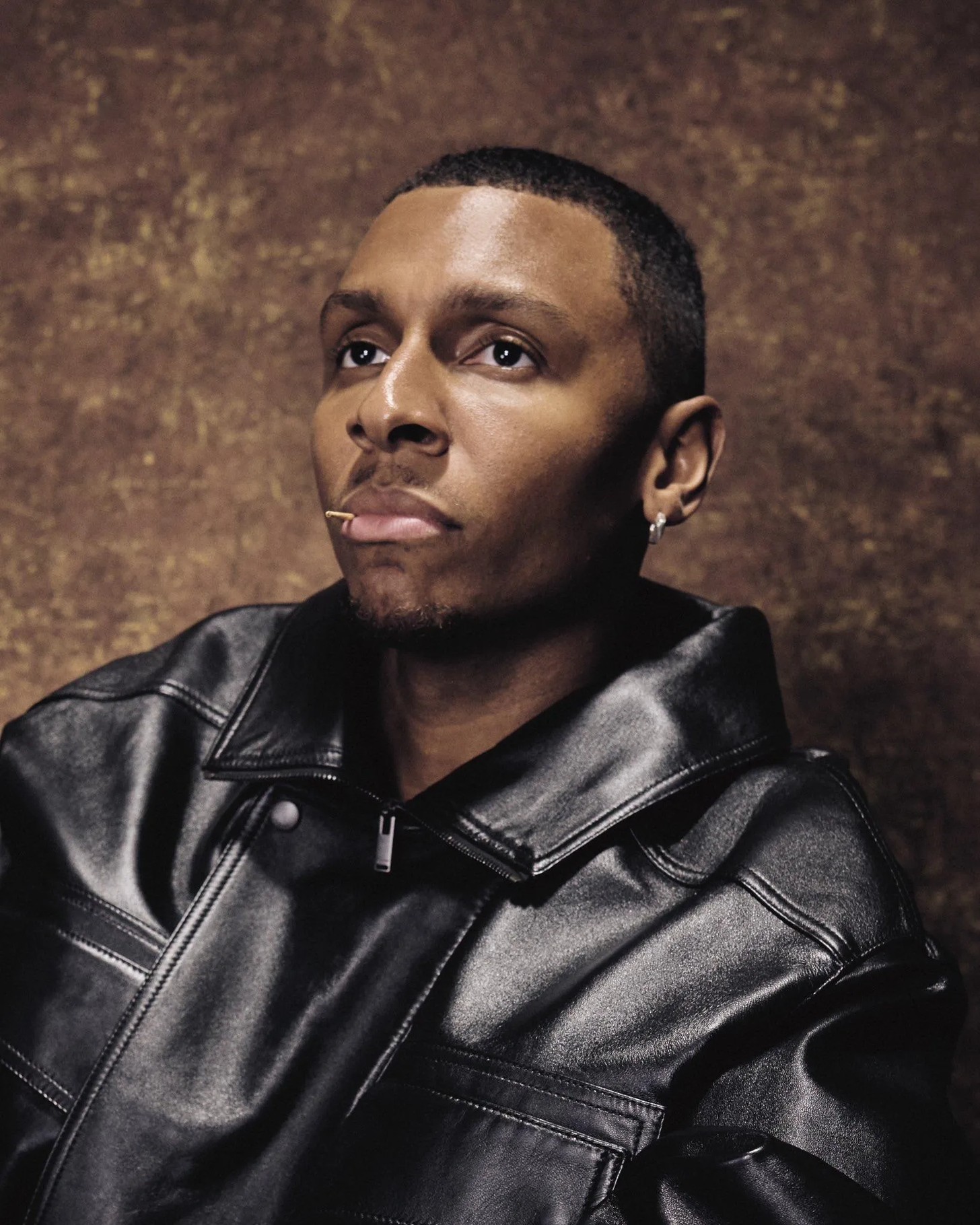
For more than a decade, Masego has built a career on defying expectations. The Grammy-nominated singer, songwriter, producer and multi-instrumentalist has effortlessly blurred the lines between jazz, R&B, soul and hip-hop, creating a sound that's become uniquely his own. But with Fix Your Face, the global star strips everything back. Instead of hiding behind impeccable musicianship, he's inviting listeners into the most vulnerable chapter of his life.
The album explores love, identity, healing and the emotional weight of becoming, all while reaffirming why Masego remains one of the most compelling artists of his generation. It's also a reminder that, despite the speed of today's music industry, some albums are still meant to be experienced from beginning to end. As he puts it, "I hope people take away that Black excellence is real. I hope they see that male vulnerability is important, that musicianship is still cool, and that albums still matter."

Speaking to GLAMOUR's Sindeka Mandoyi, Masego reflects on the women who shaped him, the freedom he found while recording in Jamaica, his enduring connection to Africa, collaborating with Musiq Soulchild, and why embracing vulnerability has become the greatest creative challenge of his career.
GLAMOUR: Congratulation on your new album. "Fix Your Face" feels like a journey through the mind, body and spirit, and the sequencing of the tracks plays an important role in telling that story. Was that intentional?
Masego: Thank you, absolutely. I’m one of the last nerds when it comes to album sequencing because I really put a lot of thought into the track order and the way everything blends into the next thing.
I wanted the album to feel like an intentional listening experience. The first tracks and the last tracks should be communicating with each other. I wanted to give real, serious detail to every part of this album, so I appreciate that you heard that. It was definitely intentional.
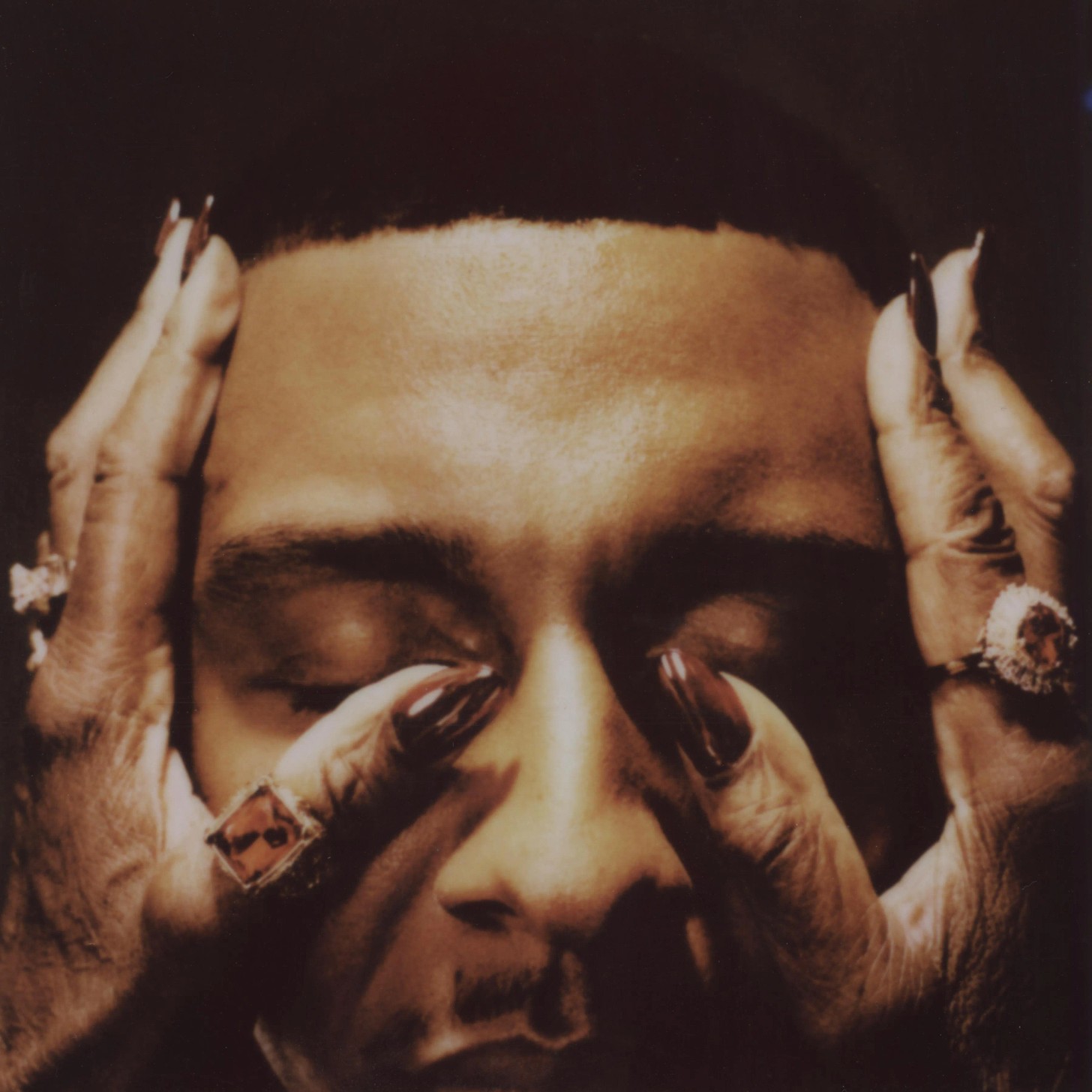
GLAMOUR: You open up about different chapters of your life on this album, and the transformation is even physical—you cut your hair and you've been going to the gym. Did creating Fix Your Face require you to revisit childhood memories and past experiences?
Masego: Well, first I had to go to the gym. I think that became the therapy environment for me. In those spaces, where my mind was a bit more settled, I got to think about my journey — starting out wanting to be a basketball player and an athlete, and then becoming a musician.
I kept comparing those two versions of myself. When I was 16 and playing basketball, I wanted to be the best. I wanted to improve my skill set and expand my perspective. When I started making this album, I asked myself: What was I like when I felt invincible? I wanted to bring that mindset into becoming the best musician and artist I could be. So there was a lot of reflection and nostalgia throughout the process.
GLAMOUR: The title Fix Your Face immediately grabs your attention. Why did you choose it, and what does it represent?
Masego: I think it creates a space where all of your emotions are finally allowed to exist. When someone tells you to "fix your face," you're usually being asked to compartmentalise your feelings. You can't cry here. You can't show your real emotions. You have to get to work. You have to keep moving. Those emotions never really get acknowledged.
It reminds me of collecting old publishing royalties that were never paid. You're suddenly finding things from years ago that have just been sitting there waiting.
That's what this album became for me. I pulled together emotions from different stages of my life and finally gave them a stage. Fix Your Face became that place where all of those feelings could exist.
GLAMOUR: Women have always been at the heart of your music—Wonder Woman from the album being a perfect example. Who are the women who have shaped you, both personally and creatively?
Masego: First, God. I think God’s a woman, so I’m going to start there. Then my mother. You’ll actually hear her voice on the album. In my culture, women often aren’t given as much power within the church system, yet my mother was a powerful figure. I grew up watching someone go against the odds — in spaces where women usually weren’t pastors, weren’t expected to speak up, and were often given less responsibility.
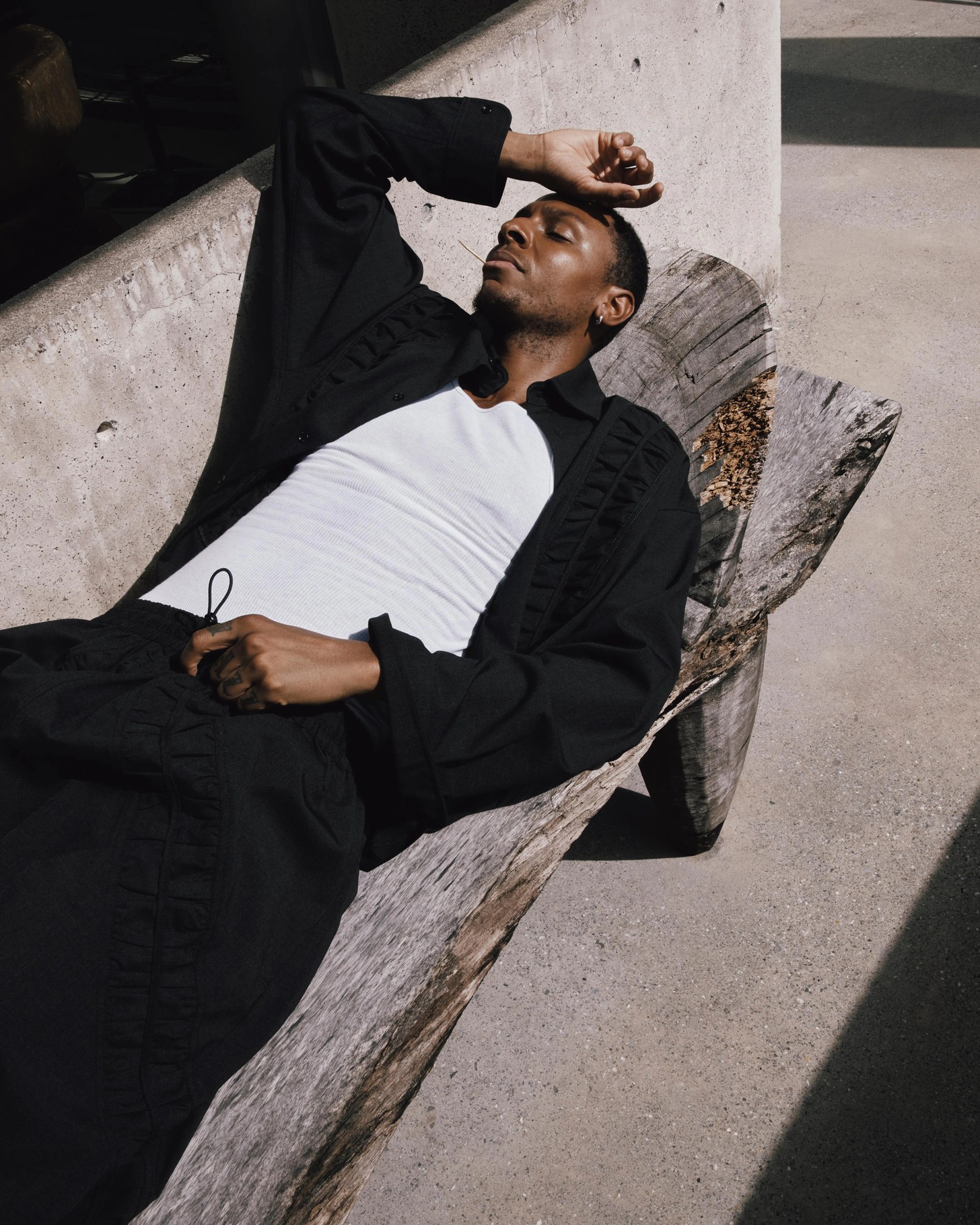
Seeing my mother lead taught me not to be intimidated by a boss lady, by a smart woman, or by a woman who has something to say. That perspective naturally carried over into how I relate to women.
Outside of my family, I’m constantly inspired by artists like Lauryn Hill, Chaka Khan, SZA, and Tems. I admire their boldness and the intention they bring to their art.
GLAMOUR: Can you tell us about "Dotted Lines"? I really love that song. It's layered, dancey and sexy, but it's also incredibly vulnerable. What's the story behind it?
Masego: Thank you. We made that song in Jamaica. I remember the day clearly. My musicians — Emtech, Jordan and Forrest — and I were having a conversation as men about the difference between being in a healthy environment and being in an unhealthy one, and about how badly we wanted to be in the healthy environment.
I wanted the song to be personal but also universal. My musicians were talking about specific relationships and toxic situations they wanted to be free from. The idea of signing the dotted line became a metaphor for officially leaving one thing behind and officially entering a place where we could grow.
That could be a relationship, a new job, or any kind of life change. I wanted to keep the meaning open so listeners could apply it to their own lives.
When I first heard the music, it felt melancholy, encouraging and sexy all at once, and that balance became just as important as the individual lyrics.
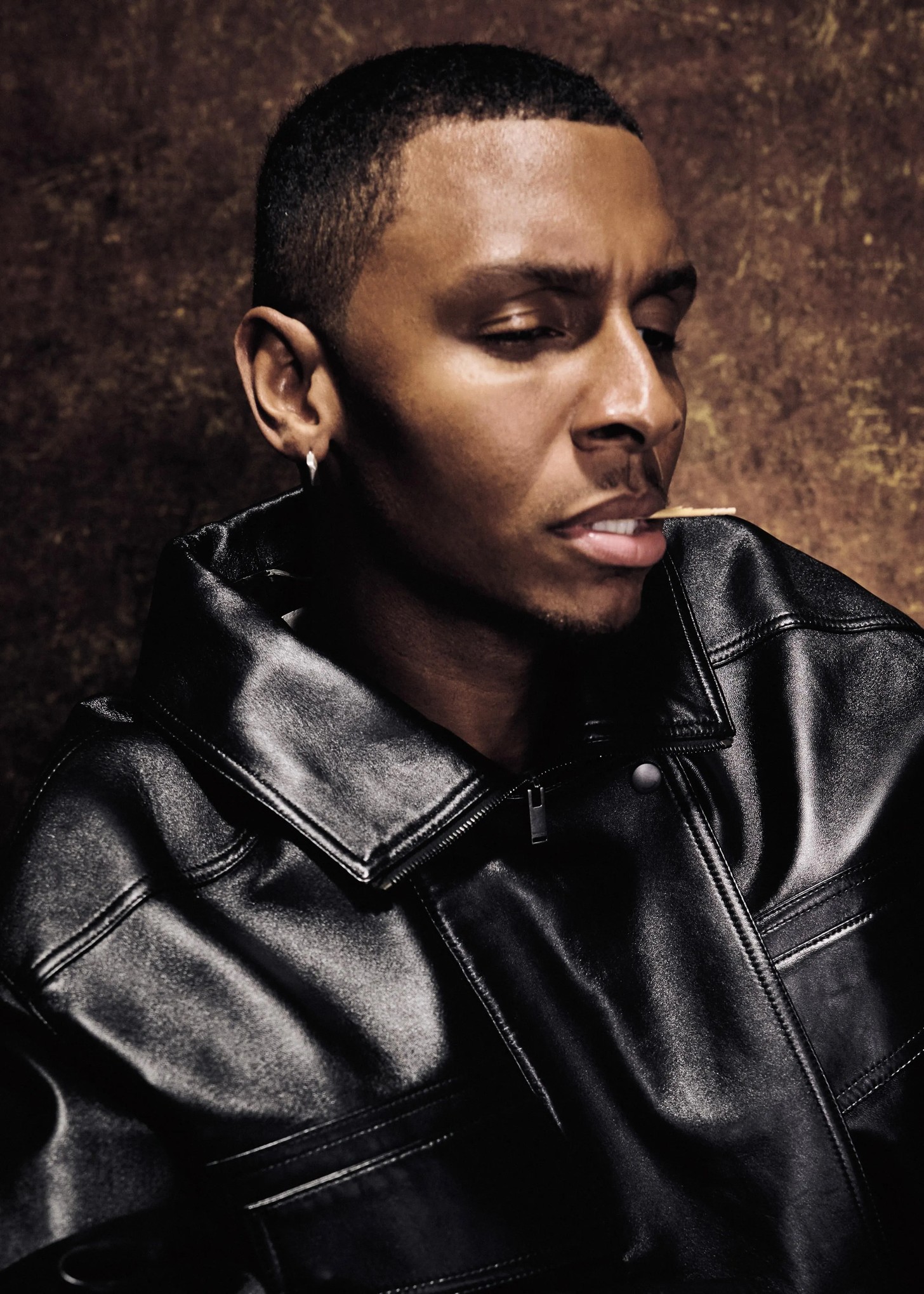
GLAMOUR: Seeing Musiq Soulchild on the album was such a welcome surprise. How did that collaboration come together?
Masego: My mother is from Georgia, and Musiq and I connected through that Atlanta connection. We'd been talking for years—sometimes about music, sometimes about culture, sometimes he was mentoring me, and sometimes we were just joking around.
When I was working on this album, I was trying to figure out vulnerability. I felt like he was much further along in that journey than I was, so I reached out to him.
He basically said, "I'll show you." We got into the studio, and he showed me how he approaches vulnerability in songwriting. I've always admired his conversational style of writing, and I was studying that to improve my own pen.
Honestly, I’m surprised we finished the song because most of the session was spent joking on each other and having fun. But that’s what made it feel natural — it was just two friends creating together.
GLAMOUR: "Breathe" was released on Juneteenth and quickly resonated with listeners. With so much happening around the world, including here in South Africa, what did you hope the song would say to people?
Masego: I think the goal was to give people the chance to be human and to remove the transactional relationship we have with one another. I think we take the fame thing too far sometimes—putting celebrities and even people in our own lives on pedestals.
We have to consider other people's perspectives and give them the grace to deal with whatever they're going through. "Breathe" was my personal story about what I was experiencing and trying to navigate, especially not feeling very safe within the music business.
@masegoofficial I’d like to share with you my new song “Breathe”
♬ original sound - Masego
I know I'm very good at producing money and producing viewership, but as a man, I wanted more respect. It was a very personal song that ended up becoming a single because so many people connected with it.
It actually wasn't my choice to release it as the first single, but I have some very smart people around me and in my family who felt it was the right decision.
GLAMOUR: You rap a lot more on Fix Your Face. Where does your love for hip-hop come from?
Masego: That's a great question. No one has ever asked me that. I love freestyle rap. I used to have a subscription to URL TV and watched battle rap all the time. I was obsessed with Smack DVDs and battle rap culture for as long as I can remember.
I've always loved beats made from scratch. I was inspired by people like Reggie Watts and what J Dilla did with sampling. I don't even remember exactly who introduced me to hip-hop, but once I found it, I became obsessed.
I was always freestyling at the lunch table in school over J Dilla beats, drumming on the desk with my knuckles. I had perfect attendance when it came to lunchtime freestyles.
I fell in love with the cadences, the storytelling, the charisma—everything about hip-hop. It's something I've always wanted to bring into the rhythm-and-blues space that I've found myself in.
GLAMOUR: You mentioned earlier that you recorded "Dotted Line" in Jamaica. Beyond that track, how did being there shape the sound, creative process or overall direction of Fix Your Face?
Masego: We started the album in Jamaica, and we finished it in Jamaica. That was really important because I wanted to keep the connective tissue of the project intact.
Jamaica, Ghana and South Africa are all places that reset me. They're places where I feel very in tune with myself. I feel super Black, I feel balanced, and I realised through this process that whenever something feels out of balance in my life, I'm going to fix it somehow. Sometimes that's through food, sometimes it's a video game, sometimes it's a place.
I'd much rather reset and rebalance somewhere like Jamaica or elsewhere in the diaspora. Jamaica was incredibly inspiring simply because of the environment. I was eating better food, and honestly, that alone can help you make an album.
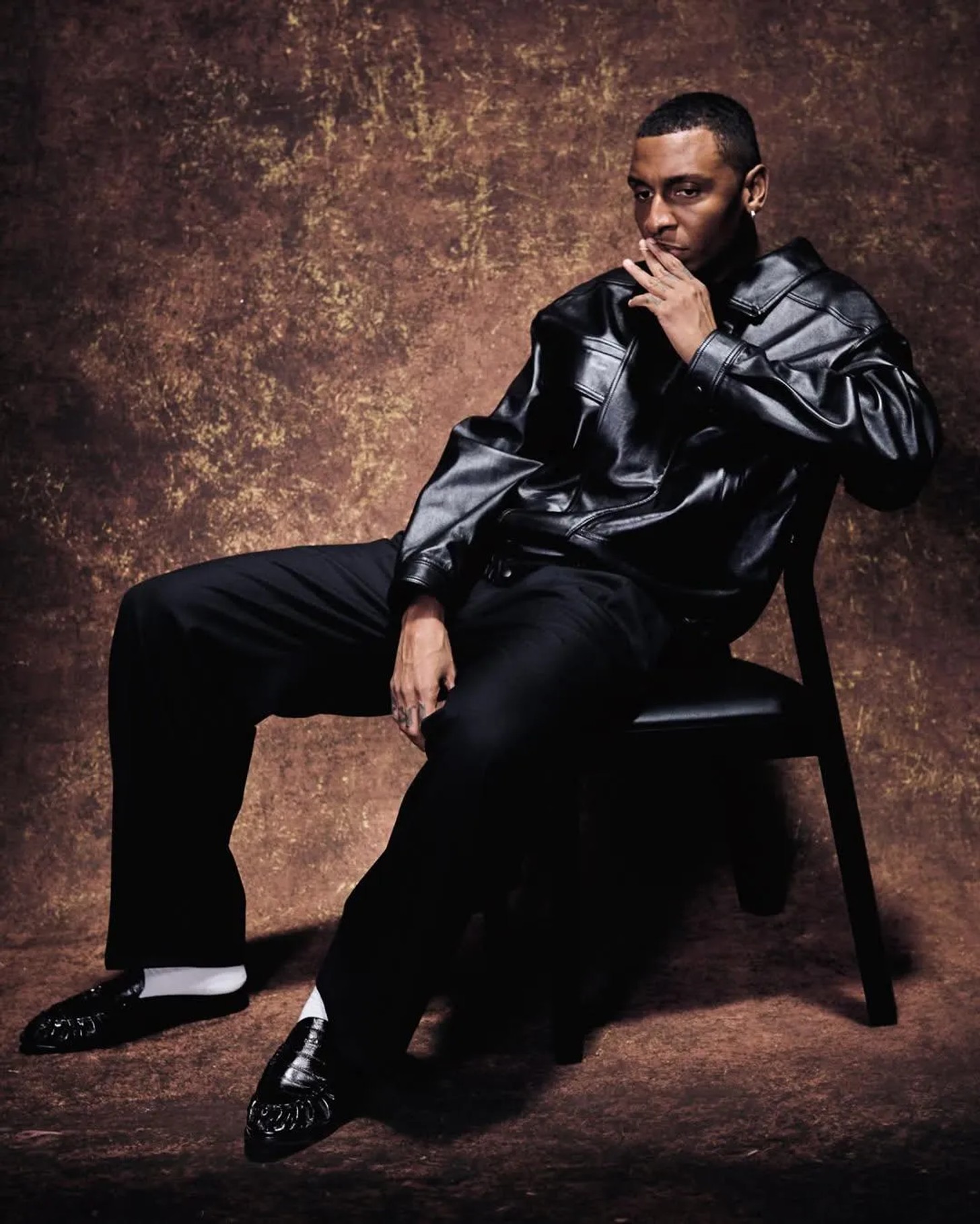
GLAMOUR: Can fans expect the visuals to tell the story of the album as well?
Masego: Absolutely. I probably love visuals just as much as I love music. I actually have a camera sitting next to me right now. To me, cinematography elevates the music—they speak to each other. I have so many detailed plans for the visuals, just like I did for the music, because I want them to add another layer to the story for people who may not fully understand it through the songs alone.
The "Ta'Dow" video is a perfect example. If you only hear eight minutes of musicians jamming, that's cool. But when you see the creative process behind it, it gives you context that makes you appreciate the music even more. Sometimes a narrative visual can bring someone into a song in a way the music alone can't. So I'm always a fan of creating proper visuals, and Cam Hicks and I are working on every visual possible.
GLAMOUR: Your love for Africa has always felt genuine. You don't just visit the continent—you've embraced it, celebrated it and even referenced it in your music. What keeps drawing you back?
Masego: I like to stay in a state of childlike wonder. I'm always curious about places, and I never believe the first thing I hear. If someone tells me something about a place in Africa, I'd rather go and experience it for myself than simply believe what I've been told.
I think that's where it started. I'm also a history guy. I want to understand why we are the way we are, and I'm always trying to find Black people wherever I travel. I grew up as a military kid, so I've travelled internationally for most of my life, and there's always a certain comfort in arriving somewhere and finding people who look like you.
Eventually I thought, "If I'm travelling this much, why not go to where Black people are?" I wanted that emotional experience of seeing all my people at once. So it's a combination of curiosity, history and connection..
Even though our cultures are beautifully different, we're still connected through the experience of being Black. My saxophone has taught me that we can all relate through soul, through stories and through feeling. Over the years I've become better at explaining why Africa means so much to me, but ultimately I'm just following the feeling.
GLAMOUR: Looking back, did you revisit your previous albums while making Fix Your Face? If so, what did you take from them?
Masego: Honestly, I rarely listen to my own music. I'll randomly hear one of my songs somewhere, and it makes me laugh because it reminds me of where I was in life when I made it. But I'm not actively listening to my own catalogue because there are too many other artists I'm a fan of. I'm somewhere further down the queue. I'd rather listen to other people first.
GLAMOUR: Were there any artists who inspired the project?
Masego: Absolutely. I studied Stevie Wonder, Lauryn Hill, D'Angelo and Amy Winehouse, particularly from a songwriting perspective. I paid attention to how they approached emotion. It almost felt like they were writing the last text message they'd ever send or performing something so personal that you wondered whether you were even supposed to hear it.
I tried to study vulnerability almost like it was a science experiment. How do these people write so openly with their hearts? At the same time, I realised that although I knew many of these artists by name, I hadn't actually listened to some of their albums from beginning to end. It was beautiful to experience those bodies of work in full.
GLAMOUR: Was there a song that was particularly difficult to write—one that required you to work through a lot of emotions before you could finish it?
Masego: I think "Charlie Brown" was the hardest. It forced me to admit that my understanding of love had changed as an adult.
That's a daunting experience because you build your identity around one definition of love, and then life teaches you something completely different. Suddenly you're rebuilding yourself around a new truth. That was uncomfortable to navigate. So... I added some drums to make it fun. (Laughs.)
GLAMOUR: What do you hope people take away from this album?
Masego: I hope people take away that Black excellence is real. I hope they see that male vulnerability is important, that musicianship is still cool, and that albums still matter.
GLAMOUR: Speaking of albums, we now live in a streaming-first world where people rarely buy music the way they once bought CDs or cassettes. What's your take on how streaming has changed the way we value music?
Masego: I just want people to go outside. I love what you were saying about physically going to get a song. I want the value of music to go back up. The people who make music from their hearts deserve a lifestyle that reflects the love and craftsmanship they put into it.
I love vinyl. There are vinyl records about 10 feet away from me right now. I have CDs sitting next to me too. I appreciate the detail that goes into music.
@masegoofficial I’m just now awake to what’s what. 6/19
♬ original sound - Masego
I understand that everyone is trying to make money, and I respect that. But I think things have become a little out of balance. Artists deserve to be compensated for their work, but it feels like it's becoming too much about the money and not enough about the art.
There's also too much standing between the music and the listener. Ideally, music should go from God, through the artist, to the people. It should be that simple.
Instead, there are too many middlemen taking a piece before the music reaches its audience. I'd love to see more of that disappear so music can return to people in its purest form.
GLAMOUR: What did this project teach you about yourself?
Masego: I learned that I love bravado and I love jokes. That feels a lot safer than vulnerability.
Vulnerability honestly makes me feel like I want to throw up. I'd probably rather be a comedian because it seems much easier. But just like sports, I realised I'm choosing to do the difficult thing for the greater good. I didn't enjoy running up and down a basketball court either, but I wanted the stamina to last the whole game.
It's the same with vulnerability. I want to practise it throughout this career so that my personal life becomes easier to navigate too.
Recent stories by:
Sindeka Mandoyi

Why blue-light glasses are suddenly the coolest fashion accessory

6 South African female friendships and sisterhoods we’re obsessed with

Love Is Blind South Africa: Here’s why Dineo and Solo Langa are the perfect hosts

Pink Tax Explained: Why women pay more for everyday products in South Africa

10 Things we’re romanticising this Spring
GLAMOUR Recommends
GLAMOUR Exclusive: Inside TxC's rise to the top of South Africa's Amapiano scene
The Polygamist: South Africans react to Netflix’s most talked-about new series
GLAMOUR Exclusive: Mmabatho Montsho on Marxism & Period Pains and the hidden cost of menstruation
Rorisang Mohapi-Grootboom leads Kwa Baba: Inside the gripping first episode
Moliy announces “Baddies love Moliy,” her highly anticaped new mixtape
Africa Month Spotlight: Hamamat Montia is reclaiming shea butter as Africa’s “medical gold”


