
Before children understand complex concepts such as heritage, identity or representation, the world around them is already teaching them what those ideas mean.
They learn through simple, daily acts such as the stories told at home, the meanings behind their names, family recipes, the languages spoken around them, the way their grandparents talk about the past, songs and phrases in their home languages, the clothes worn and songs sung at celebrations, the books placed in their hands and old family photographs.

In South Africa, specifically, ‘heritage’ is often spoken about as something we celebrate once a year on 24 September, when we dress in traditional clothing that reflects where we come from. But heritage is, in fact, the collection of stories, traditions, memories and daily practices that help us understand who we are and where we belong.
For children’s author and founder of For Little People Thabisile Sambo, books are one of the simplest ways to keep those connections alive. “Children start forming a sense of who they are long before they can explain it in words,” says Sambo. “The stories they hear and the characters they see all contribute to that. When a child recognises their hair, name, family, culture or even something as small as the food they eat in a story, it tells them that they too belong.”
That belief shapes the stories For Little People chooses to tell, as a local publishing house established around the idea that children should be able to see themselves reflected in the stories they read. Sambo has previously shared on intentionally seeking out books and toys that reflected her own daughter, and how that eventually led her to start creating bedtime stories herself.
But representation, she says, should never mean separation. “A good children’s story should allow one child to recognise themselves while giving another child the chance to discover someone whose life may look completely different from theirs. That also forms part of heritage. It is knowing who you are without believing that your way of being is the only way.”
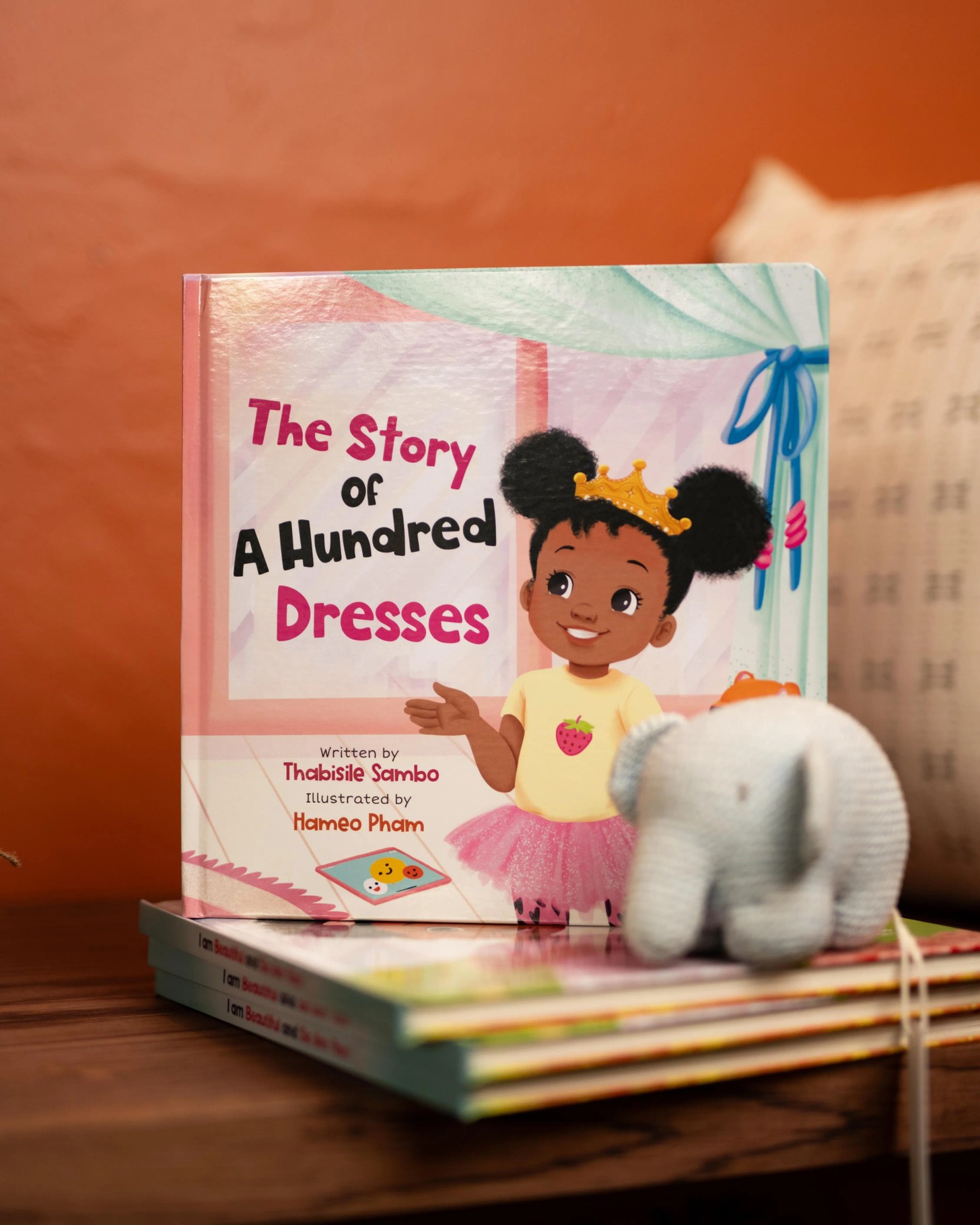
That thinking comes through strongly in The Story of a Hundred Dresses, one of For Little People’s three titles currently on shelves countrywide. The interactive book follows Layla as she plays with her animal friends, while introducing young readers to basic numeracy and visual recognition. But also woven into the counting are colours, patterns and clothing associated with five South African cultures.
For Sambo, that combination was intentional. “With The Story of a Hundred Dresses, I didn’t want culture to feel like a lesson children had to sit through. I wanted it to be part of the fun,” she says. “A child may think they are simply counting dresses, looking at colours and enjoying the pictures, but at the same time they are being introduced to different South African cultures.”
The book reflects an approach that is increasingly important in children’s publishing – allowing culture to fit seamlessly inside a story instead of presenting it as something distant or ceremonial. That matters because, for many children, books are one of their first ways of discovering the wider world.
A child can recognise something familiar in a character and feel affirmed. On the next page, they may encounter clothing, names or traditions they have never seen before – and both experiences are valuable. “Heritage should give children roots and leave them curious to learn more,” says Sambo. “We want children to be proud of where they come from, but we also want them to grow up interested in other people. A child should be able to say, ‘This is who I am,’ and still be excited to ask: ‘Tell me who you are.’ That is perhaps one of the most useful ways parents can think about Heritage Month.”
Instead of treating ‘heritage’ as something to explain to children in abstract terms, parents can simply make it part of everyday family life.
Below, Sambo suggests a few simple habits families can carry well past Heritage Day:
- Tell the family stories. Children often love hearing what their parents and grandparents were like when they were young. Those ordinary stories are part of their heritage too.
- Explain their names. Tell children who chose their name, what it means and why it was important.
- Make books part of cultural discovery. Choose stories in which children can recognise themselves, but also books that introduce them to other South African experiences.
- Invite older generations into the conversation. Grandparents and other relatives often carry family history that may never be written down unless someone asks.
- Let ‘heritage’ live in everyday life. Language, music, hairstyles, recipes, games and family traditions can all become opportunities to tell children more about where they come from.
“And perhaps Heritage Month presents parents with an opportunity to not only dictate why children should be proud of who they are, but to also share stories that help them understand why. Let’s remember that children first have to encounter culture and traditions regularly before adopting them,” concludes Sambo.


