
There is something compelling about a woman who refuses to be defined by a single pursuit. For Bertha Amuga, the worlds of fashion, law and social advocacy are not separate ambitions but different expressions of the woman she is becoming.
Based in London, the Nigerian-born model and fashion designer moves between creative and academic spaces, bringing a distinct appreciation for African heritage into contemporary fashion while pursuing her legal studies in the United Kingdom. Her interest in design is rooted in the richness of West African culture, with an eye for pieces that honour tradition without being confined by it.

But beyond the world of fashion, Bertha is equally passionate about the lives and opportunities of women and young people. Through Amuga’s Hope Foundation, which she established to support vulnerable communities, she is working to make education, mentorship and empowerment more accessible to those who need them most.
Her journey is still unfolding, but one thing is clear: Bertha is interested in more than occupying spaces. She wants to contribute something meaningful to them. And whether she is exploring her creative instincts, engaging with questions of justice or championing the next generation of women, she is doing so with an understanding that success means little if it cannot create possibilities for others.
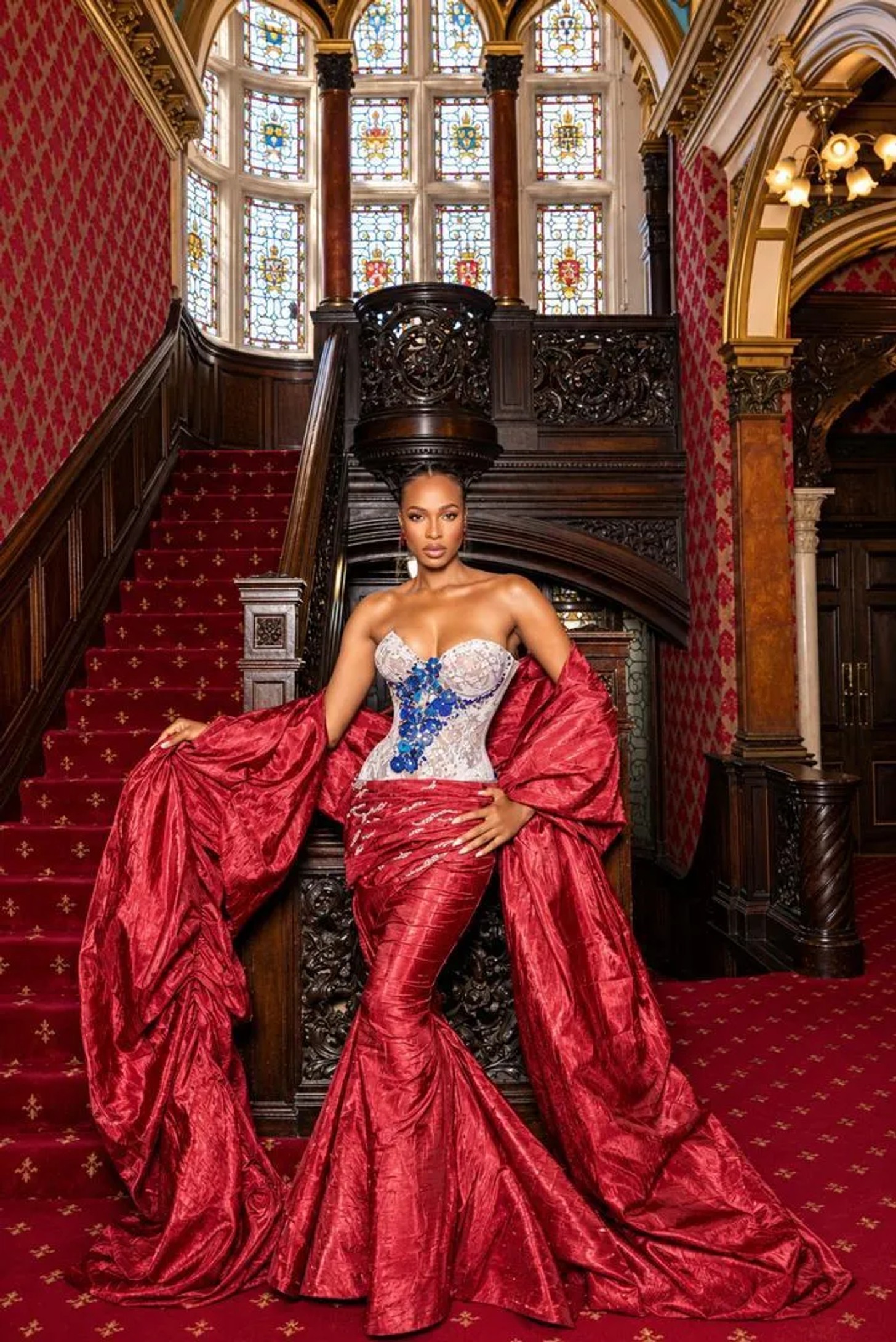
Glamour: What did winning Miss Africana United Kingdom mean to you personally, particularly as the first woman to hold the title?
Bertha Amuga: Winning Miss Africana United Kingdom meant more to me than I think I could properly express at the time. There was the excitement, of course, but beneath that was a feeling of responsibility. It was a reminder that I could embrace where I come from, be proud of my African identity and still find my place in a very international space.
Being the first is a beautiful thing, but it also comes with a certain uncertainty. There is no one before you to show you how things should be done. You have to figure out what the title means through your own actions. I was very conscious that I wasn’t just representing myself. I was also helping shape what the platform could become for the women who would come after me.
I have never wanted the crown to be something I simply wore. I wanted it to mean something beyond the photographs and appearances. If another young African woman can look at my journey and feel that she doesn’t have to compromise who she is to be accepted or successful, then that means a great deal to me.
Glamour: How has the experience shaped your understanding of leadership, influence and the responsibility that comes with visibility?
Bertha Amuga: Before this experience, I probably understood influence more in terms of the opportunities it creates. I now see it differently. Being visible is one thing; understanding what to do with that visibility is another.
There are moments when you realise that people are paying attention, sometimes even when you don’t know they are. A young girl might hear you speak at an event, follow your journey or see something you have done and begin to imagine possibilities for herself. I think that is where the real responsibility lies.
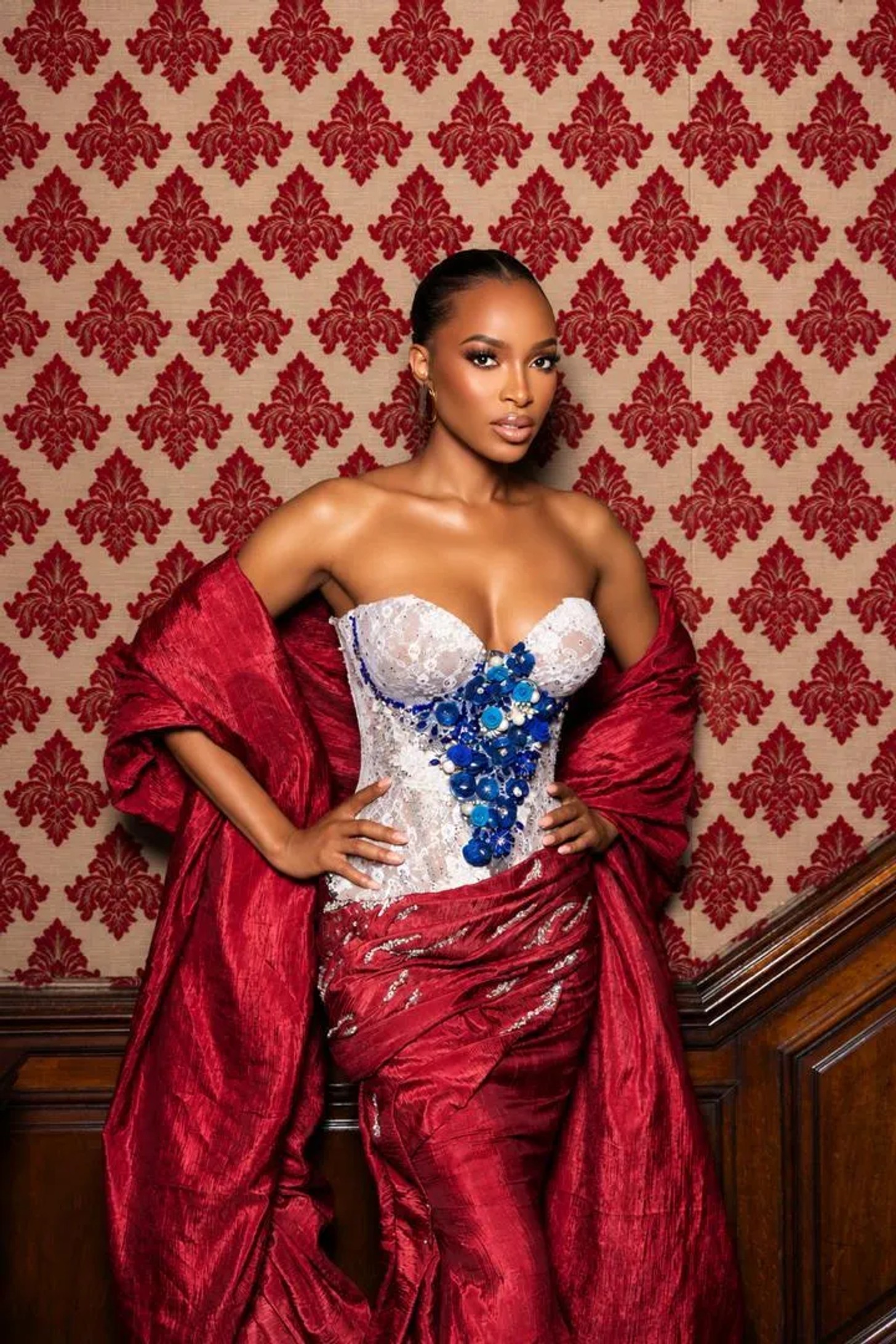
I have also learnt that leadership isn’t always about being the person at the front of the room. Sometimes it is about making sure someone else gets an opportunity to be in that room in the first place. It is about listening, being accountable and being willing to do the work even when there is no recognition attached to it.
I want to be remembered for more than being seen. I want the things I have been able to do with my platform to have made a difference in someone’s life.
Glamour: You are navigating both African identity and British culture. How intentional are you about the way you represent yourself, and what do you think the world still misunderstands about African women?
Bertha Amuga: Living in the UK and being connected to the African continent has made me more conscious of identity. You begin to understand that you don’t have to choose one part of yourself over another. I can appreciate the opportunities and experiences that come with living in Britain while remaining deeply connected to my African heritage.
I try to reflect that in how I dress, how I speak and how I carry myself. I love African fashion, our textiles and the stories behind them. But representation goes beyond what you wear. It is also about how you show up intellectually, professionally and socially. I want people to see the many sides of an African woman.
I think one of the biggest misconceptions is that African women are often presented through a very narrow lens. We are either defined by hardship or celebrated purely for our beauty, fashion and cultural aesthetics. Both perspectives leave out so much.
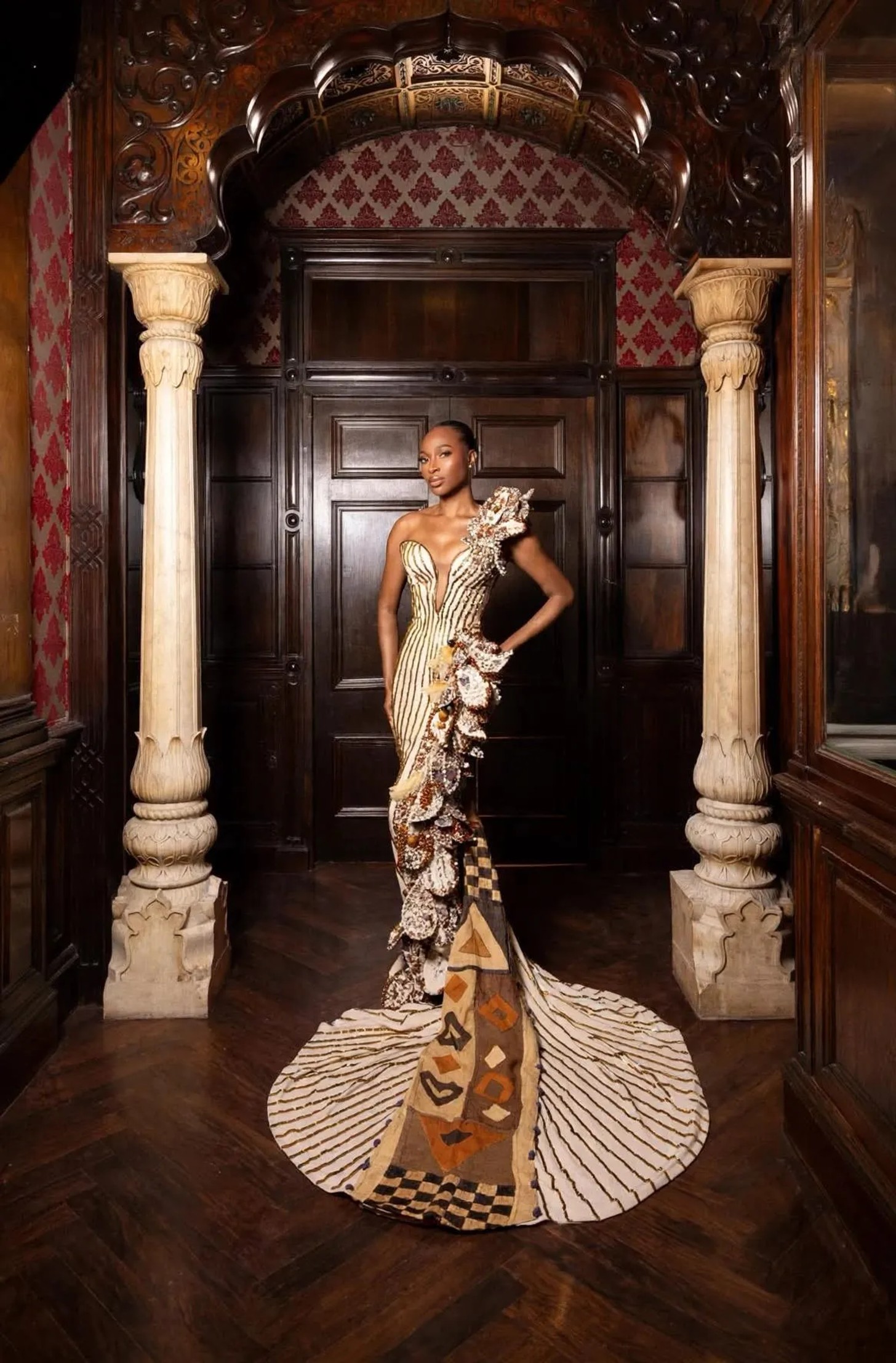
African women are thinkers, professionals, artists, entrepreneurs, mothers, leaders and so much more. We can be deeply connected to our traditions and still question certain things. We can be soft and ambitious, fashionable and intellectual, traditional and progressive. None of these things cancels out the other.
I don’t think African women need to become something else to be understood by the world. I think the world needs to make more room to understand who we already are.
Glamour: You have interests in high-fashion modelling, fashion design, law and advocacy. Were these always part of the plan, and how do they come together to define you today?
Bertha Amuga: I wish I could say I had everything figured out from the beginning, but I didn’t. I have always been curious, and I have never been particularly good at limiting myself to one interest.
Fashion and modelling came from my love for creativity, beauty and self-expression. I enjoy the way fashion allows you to communicate something about yourself without necessarily having to say a word. Over time, that interest grew into a desire to create and design.
Law came from a different place. I have always been interested in people, society and the structures that determine how we live. I wanted to understand how decisions are made, how rights are protected and what happens when those systems fail people.
Advocacy brings these interests together in a way that feels personal to me. It gives me a reason to look beyond my own ambitions.
I have had people ask me which of these things I intend to focus on, and I understand the question. But I don’t see them as competing interests. They challenge different parts of me, and I enjoy that. I am still discovering what I can do with all of them, and I think there is something quite freeing about allowing yourself to evolve.
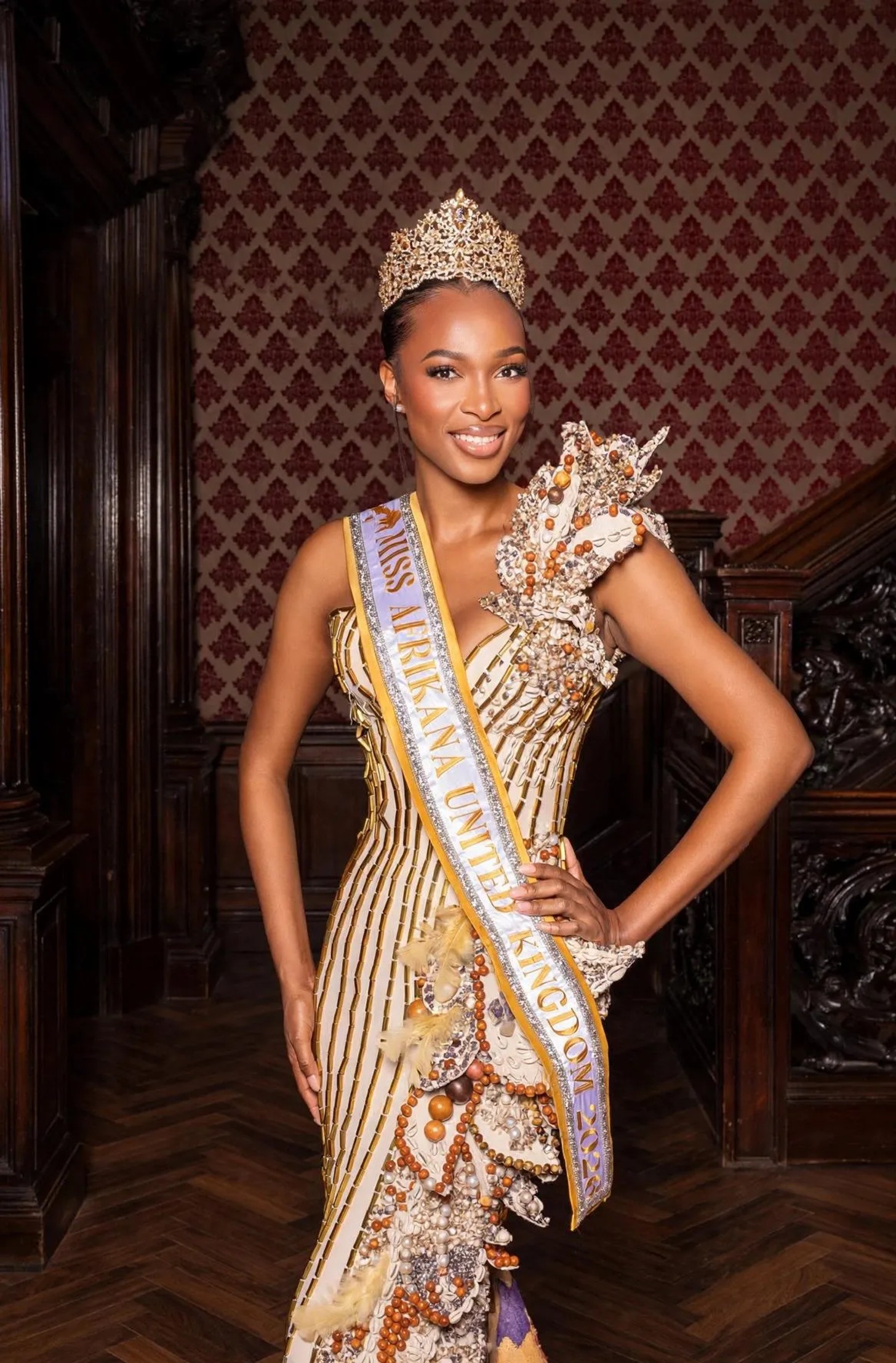
Glamour: As someone interested in fashion design, how important is preserving cultural identity in your work? Do you think African designers are telling their own stories on the global stage?
Bertha Amuga: It is very important to me because I don’t think you can separate fashion from the stories that give it meaning. Our fabrics, patterns, colours and silhouettes carry history. They tell us something about where we come from, how our people lived and what they considered beautiful.
When I design, I want to be able to draw from that history without feeling restricted by it. I am interested in creating pieces that feel contemporary and international but still have a clear sense of identity. I don’t believe African fashion has to look a particular way to be recognisably African.
I think African designers are doing some incredible work right now. There is a growing confidence in the way we present our craftsmanship and tell our stories. We are seeing African aesthetics occupy more space in international fashion conversations, and that is encouraging.
However, I still think there is a conversation to be had about ownership and creative control. Sometimes there is pressure to make our work more palatable to international audiences, rather than allowing those audiences to appreciate it on its own terms.
I would love to see a fashion industry where an African designer can draw from their culture, experiment freely and be celebrated for the originality of their vision. Our stories deserve to travel, but they should remain ours in the process.
Glamour: What has studying law taught you about power, justice and the barriers women and vulnerable communities face? Has it changed the way you approach advocacy?
Bertha Amuga: Studying law has changed the way I look at the world. You begin to understand that so many of the things we experience as individuals are connected to much larger systems. Sometimes what looks like a personal disadvantage is actually the result of policies, institutions or structures that have failed certain groups of people.
It has also taught me that having good intentions is not always enough. You can genuinely want to help someone, but if you don’t understand the structures that created their situation, you may only be addressing the immediate problem.
That has influenced how I approach advocacy. I still believe strongly in compassion, but I am also more interested in asking what happens after the intervention. How do we make sure a girl stays in school? How do we help a young woman become financially independent? What protections exist for women who are vulnerable to exploitation or abuse? And who is responsible for ensuring those protections work?
These are questions that require more than awareness campaigns. They require education, accountability and sustainable solutions.
I am still learning, and I don’t pretend to have all the answers. But law has given me a different set of tools with which to approach the things I care about.
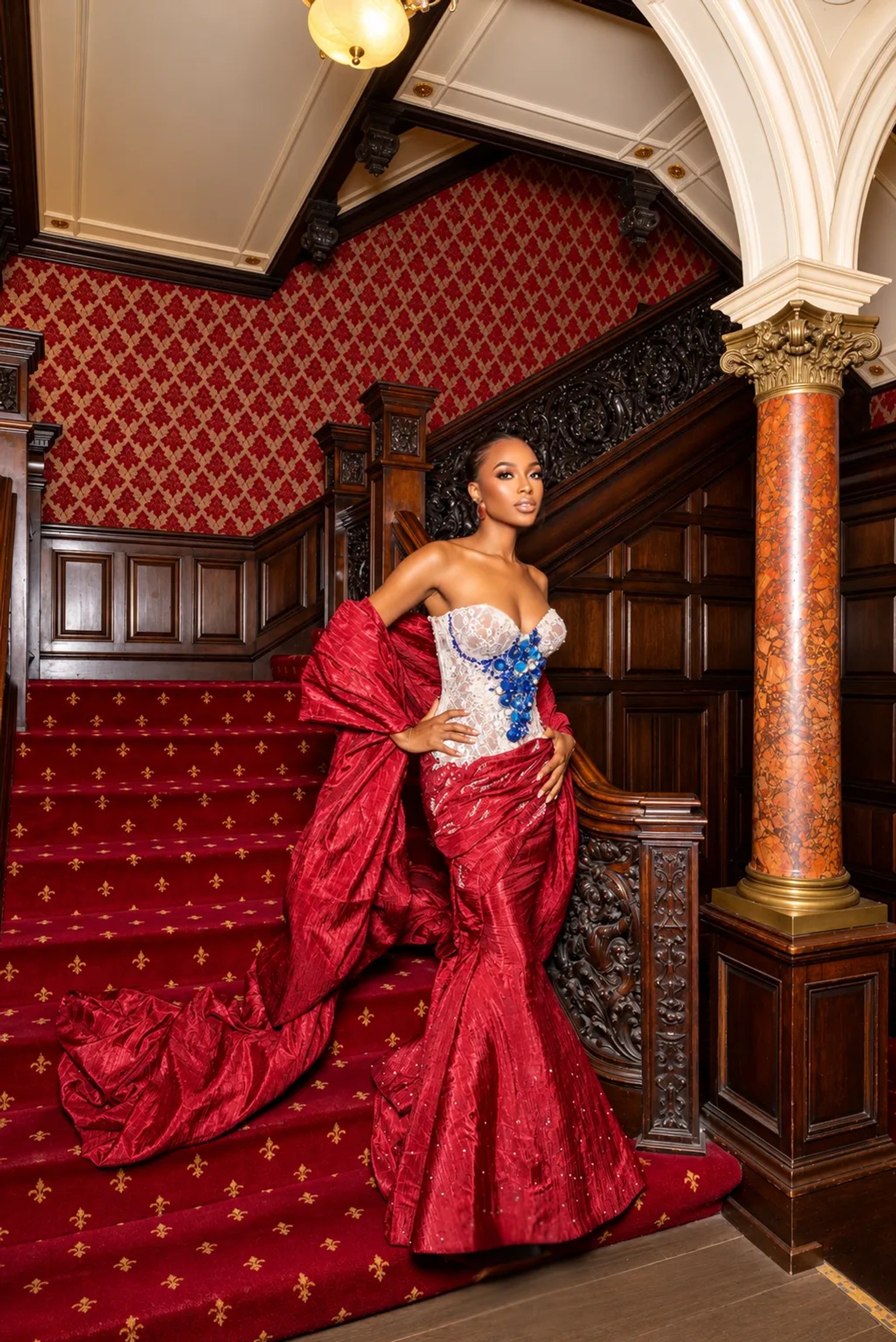
Glamour: What inspired you to establish Amuga’s Hope Foundation, and what kind of change do you ultimately hope to create through it?
Bertha Amuga: Amuga’s Hope Foundation is very personal to me. Through the organisation’s work back home in Nigeria, as well as my volunteering experiences in care environments here in the UK, I have had the opportunity to encounter people whose circumstances are very different from mine.
One thing that has stayed with me is how much potential can be lost simply because someone doesn’t have access to the right opportunities. I have seen how a lack of educational resources, mentorship and financial support can affect the choices available to young girls and women.
Sometimes, what makes the difference is having someone who believes in you, gives you the right guidance or helps you access an opportunity you might never have found on your own.
That is the kind of foundation I want Amuga’s Hope to be. Our work is focused on supporting vulnerable women and young girls through education, practical skills, mentorship and empowerment. I am particularly passionate about addressing teenage pregnancy, supporting teenage mothers and helping women build the confidence and financial independence to shape their own futures.
For me, the goal isn’t simply to provide temporary assistance. It is to create opportunities that can change the direction of someone’s life in a lasting way.
I would love for us to grow into an organisation that can point to real stories of transformation, women who have gone on to build businesses, complete their education, support their families and become sources of encouragement to other women. That would mean everything to me.
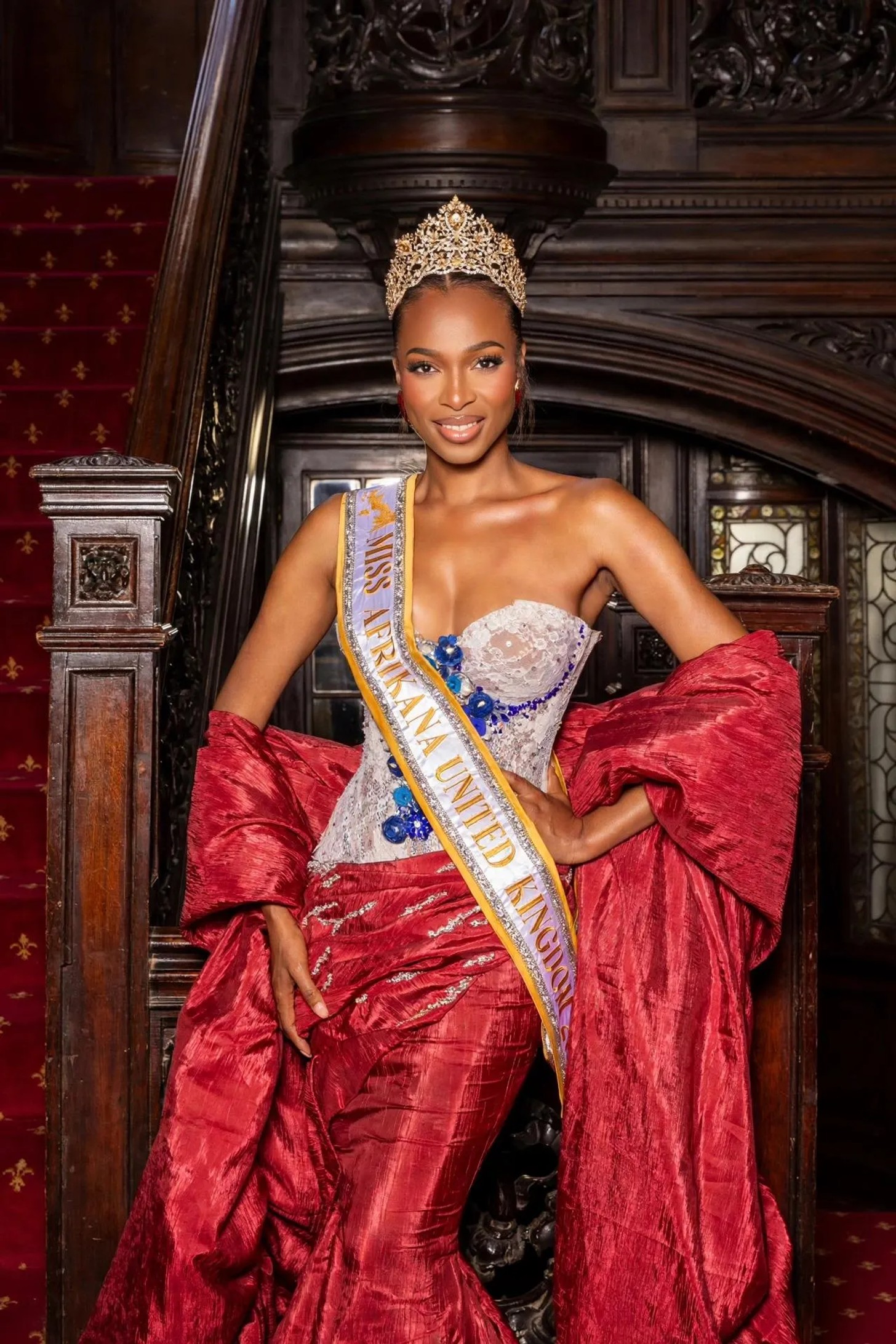
Glamour: Pursuing so many ambitions must come with personal sacrifices. Have there been moments of self-doubt, and how do you find the strength to keep going?
Bertha Amuga: Absolutely. I think sometimes people see the finished picture and assume the journey has been much easier than it actually is. They see the photographs, the magazine features, the crown and the opportunities, but they don’t necessarily see everything happening behind the scenes.
There are days when I have to move from studying law to a modelling commitment, then find time to work on something for the foundation. There are late nights, early mornings, missed social occasions and moments when I wish I could simply slow down. Trying to give your best to different parts of your life can be exhausting, and I have had moments when I wondered whether I was taking on too much.
I have also learnt that I don’t have to get everything right all the time. There is a difference between being ambitious and expecting yourself to be superhuman. I am learning to give myself room to rest, to make mistakes and to grow without feeling that I am falling behind.
What keeps me going is remembering why I started. I know what I want to contribute, and I know that there are things I haven’t even begun to do yet.
As I look towards the possibility of bringing home the first Miss Afrikana International crown, I am excited about what that next chapter could mean. But more than the title itself, I am interested in the doors it could open and the people I could reach.
I want to build a life that is meaningful, not just impressive on paper. And I hope that, years from now, when I look back, I can say that I was brave enough to pursue the things that mattered to me, even when the path wasn’t always clear.
Credits:
Designers: Alo’ye official /Komeh_swish
Photographer: Fashitect
Glam: Kaikollectionldn


