
Lukhanya Pooe has built his creative world around a simple idea: take the things that make people laugh, recognise themselves and feel part of a culture, then turn them into animation. As the creative mind behind TimonsDreams, he brings together anime culture, gaming references, sharp humour, drawing and storytelling to create digital work that has found an audience far beyond its origins.
Established in 2023, TimonsDreams has grown into a multi-platform brand with more than one million followers, 56 million-plus combined views and an engagement rate of 24.6%. But behind the numbers is an animator whose relationship with the craft began long before he considered it a career. He remembers copying anime characters simply because he liked how they looked, before creating his own characters and putting them into situations designed to make his friends laugh. That instinct remains central to his work today. “If it makes me laugh before anyone else has seen it, it's worth making,” he says. His approach is rooted in the everyday, from being broke and annoyed with your friends to being the only person who did not get the memo. The characters can be fantastical, but the emotion underneath has to be familiar.

That ability to turn highly specific references into universally recognisable moments has become one of the defining features of TimonsDreams. His work draws heavily from anime, gaming, manga, sports, culture and crossover fandoms, while his audience spans TikTok, Instagram and YouTube. His YouTube platform alone has generated more than 30 million views, while viral TikTok videos have surpassed 15 million views.
Yet he is also conscious of the realities behind building a creative career online. After having monetisation removed from his platforms twice, he learned to think beyond a single social network and treat his creativity as a business. “The advantage moved from owning equipment to having taste and being willing to do it for years before anything happens,” he says. That perspective also shapes how he thinks about African storytelling.
For Lukhanya, creating an African voice in global animation is not simply about placing African characters or settings on screen. It is about who gets to make the creative decisions, how people speak, what they find funny and which everyday experiences become worthy of being documented. He argues that creators should not dilute the specificity of their stories in an attempt to make them universal. “The specific stuff is what travels,” he says, pointing to the global reach of anime without losing its cultural identity. He is particularly interested in the ordinary and often overlooked parts of African life, the moments between friends, family and communities that can be funny, awkward and deeply recognisable. Now, with TimonsDreams positioned to expand into animation, comics and long-form storytelling, he is thinking beyond individual viral moments and towards a broader entertainment brand.
His advice to young creatives is equally practical: start with whatever is already in your hands, publish before you feel ready, learn to draw, write and edit, and understand the business side of creativity. Ultimately, however, his ambition remains surprisingly straightforward. “I set out to make people laugh,” he says. “But if my work makes it a bit more normal that someone with my background can make something the whole world watches, without changing what they make in order to get there, that's the contribution,” he adds.
Here, he talks animation, African storytelling, creative independence, building a sustainable career and why the next generation of African creators may no longer need to ask permission to tell their stories.
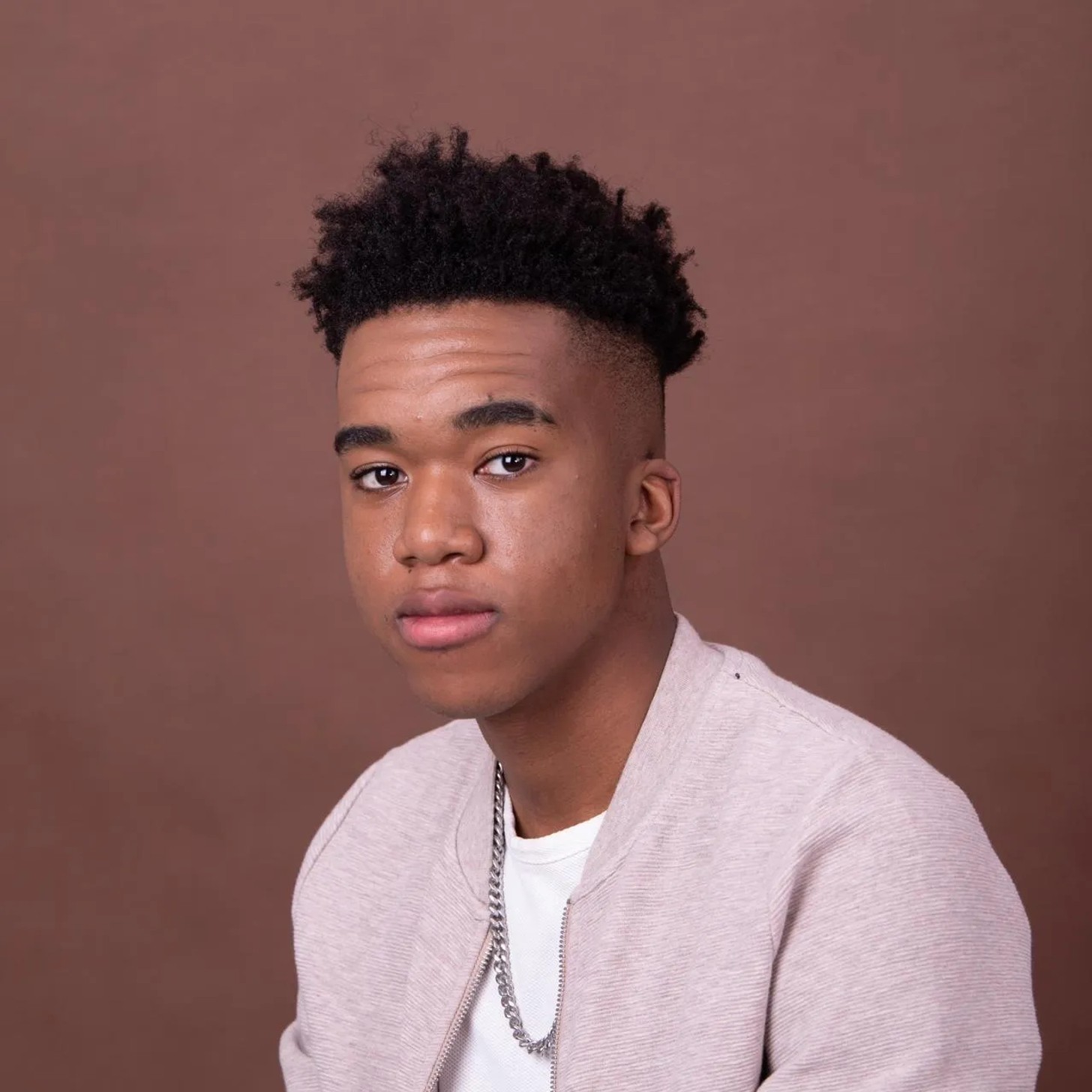
Glamour: Take us back to the beginning. What first drew you to animation, and when did you realise this could become a career?
Lukhanya Pooe: I was copying anime characters out of shows long before I thought of it as anything. I just liked how they looked. Then I started making my own and putting them in stupid situations to make my friends laugh. The career part happened much later and mostly by accident. I posted something, a lot of people watched it, and I kept going. It took years before I could say it was a job without feeling weird about it.
Glamour: Your journey has taken you through different stages of the creative industry. What have been some of the biggest turning points in your career so far?
Lukhanya Pooe: The first video that went way past my own followers. That taught me the work could travel without me pushing it. Then getting my monetisation pulled with no explanation, twice, after being invited into the programme in the first place. That one mattered more, because it forced me to stop treating one platform as the whole business. And more recently, starting to build my own characters instead of only using ones I grew up watching.
Glamour: Animation requires creativity, patience and technical skill. What has become an animator taught you about yourself?
Lukhanya Pooe: That I'm more stubborn than I am talented. I'm self-taught, so everything I know came from doing it badly for a long time first. It also taught me I'm competitive in a way I didn't realise. If someone puts out something great it genuinely bothers me, and then I go work.
Glamour: At its heart, animation is storytelling. What makes a story worth telling to you?
Lukhanya Pooe: If it makes me laugh before anyone else has seen it, it's worth making. Past that, the situation underneath has to be one people already recognise. Being broke, being annoyed at your friend, being the only one who didn't get the memo. The characters can be anything. The feeling has to be something you've actually had.
Glamour: Animation allows creators to build worlds that might be impossible to capture through traditional filmmaking. What do you think the medium makes possible for storytellers?
Lukhanya Pooe: You're not limited by budget or physics or what you can point a camera at. If I want a character to destroy a planet because someone ate his food, that costs me a few hours. In live action that's a studio. It also means one person can make something that used to take a whole team. That's the part that changed everything for people like me.
Glamour: How important is it for African stories to be told by African creatives, particularly when those stories are reaching global audiences?
Lukhanya Pooe: It matters for the obvious reason, which is that people tell their own stories better than people guessing from the outside. You can feel it immediately when something was made by someone who's actually been there.I'd say that's true anywhere. It's just been more of a problem here, because for a long time other people were doing the telling.
Glamour: When you think about an African voice in global animation, what does that mean to you beyond simply having African characters or settings on screen?
Lukhanya Pooe: It's less about what's on screen and more about who's making the decisions. A story can have African characters and still be shaped entirely by people outside it. The voice is in the humour and the timing and the way people actually talk to each other. That comes from whoever's making it, not from the setting.
Glamour: Africa is home to thousands of cultures, languages and storytelling traditions. How can animators draw from that richness while creating stories that still resonate universally?
Lukhanya Pooe: I think people get this backwards. They try to make something universal by making it general, and general is where things get boring. The specific stuff is what travels. Anime is extremely Japanese and it's everywhere in the world. Nobody sanded it down to make it work. My own rule is that if a joke needs you to know the reference, it isn't a good enough joke. The reference can be as specific as you like, as long as the feeling underneath it is one anybody's had.
Glamour: What aspects of African culture, history or everyday life do you think animation has yet to fully explore?
Lukhanya Pooe: The ordinary stuff. Most of what gets made is historical or folklore, and it's always the epic version. I'd rather see the everyday. Normal people being funny and irritating to each other. That's what I make, and I don't think much of it has been touched.
Glamour: Animation can be used for entertainment, but also for education, advocacy and social change. What role do you think animation can play in addressing issues that matter to African communities?
Lukhanya Pooe: It works because people don't feel like they're being taught. You can put something in front of someone as a joke and it goes in sideways, where a lecture would bounce straight off. I don't make message-driven work myself. But I've watched what actually lands with my audience for years, and it's never the thing that announces what it's doing.
Glamour: Can animation change the way people understand a subject or see themselves? Have you experienced a story that made you see something differently?
Lukhanya Pooe: Yes, and you can tell when it happens. The best comment I get isn't "that was funny, " it's "how did you know." That's someone recognising themselves. For me it was watching shows where the outsider was the main character. When you've just moved to a new country and you're the new kid again, that does something to you.
Glamour: With technology making animation tools increasingly accessible, how do you think the industry is changing for young African creatives?
Lukhanya Pooe: The barrier used to be money and access. Now it's mostly patience. You can make and publish something from a phone. What hasn't changed is that you still have to be good, and there's far more competition now because everybody else has the tools too. The advantage moved from owning equipment to having taste and being willing to do it for years before anything happens.
Glamour: For young people who want to pursue animation but may not have access to formal training or expensive equipment, where would you encourage them to start?
Lukhanya Pooe: Start with whatever is already in your hand. I taught myself on free tools and bad drawings. Post before you're ready. Real feedback only comes from real audiences and you cannot get it in private. And get good at more than one thing. A decent artist is common. Someone who can draw, write and edit is rare, and that combination is what actually gets you noticed.
Glamour: Beyond technical ability, what skills or qualities do you think the next generation of animators needs to develop to build sustainable careers?
Lukhanya Pooe: Treat it like a business earlier than feels comfortable. Learn how to answer an email, how to price yourself, how to say no to something that isn't worth it. And don't build your whole house on land you don't own. I've had platforms take money back with no explanation. If one account disappearing would end you, that's the thing to fix before anything else.
Glamour: What do you hope your work contributes to the future of African animation? When people look back at this generation of African animators, what would you like them to say we helped build?
Lukhanya Pooe: I'd be lying if I said I set out to build African animation. I set out to make people laugh. But if my work makes it a bit more normal that someone with my background can make something the whole world watches, without changing what they make in order to get there, that's the contribution. I'd want people to say we stopped asking permission and stopped explaining ourselves, and just made things good enough to travel on their own.


