
The second edition of First for Women's Her & Now report finds South African women stretched thin by systems built without them in mind, launched this Women's Month alongside the announcement of a second season of The Anele Podcast: Her & Now.
Last year, First for Women asked South African women one question, how are you feeling? More than four thousand women answered, and their honesty became the inaugural Her & Now report, a study that put language to something many women had only ever carried quietly. It named the exhaustion sitting beneath so much celebrated resilience, and the guilt so many women feel simply for wanting rest.

This Women's Month, First for Women returns with a harder question, tracing that feeling back to its cause. More than six thousand South African women have now taken part in the Her & Now research programme since 2025, sharing both quantitative data and qualitative testimony in their own words. The second edition, titled A World Built for Someone Else, asks whether the products, services and institutions around women are lightening the load they already carry, or simply built on the assumption that women will keep coping regardless.
That same spirit of listening carries into September, when The Anele Podcast: Her & Now returns for a second season. Season one took the findings of the inaugural report and gave them a voice, sitting real women down to talk honestly about what the data revealed. Season two picks up where this year's report leaves off, turning fresh research into fresh conversation once again.
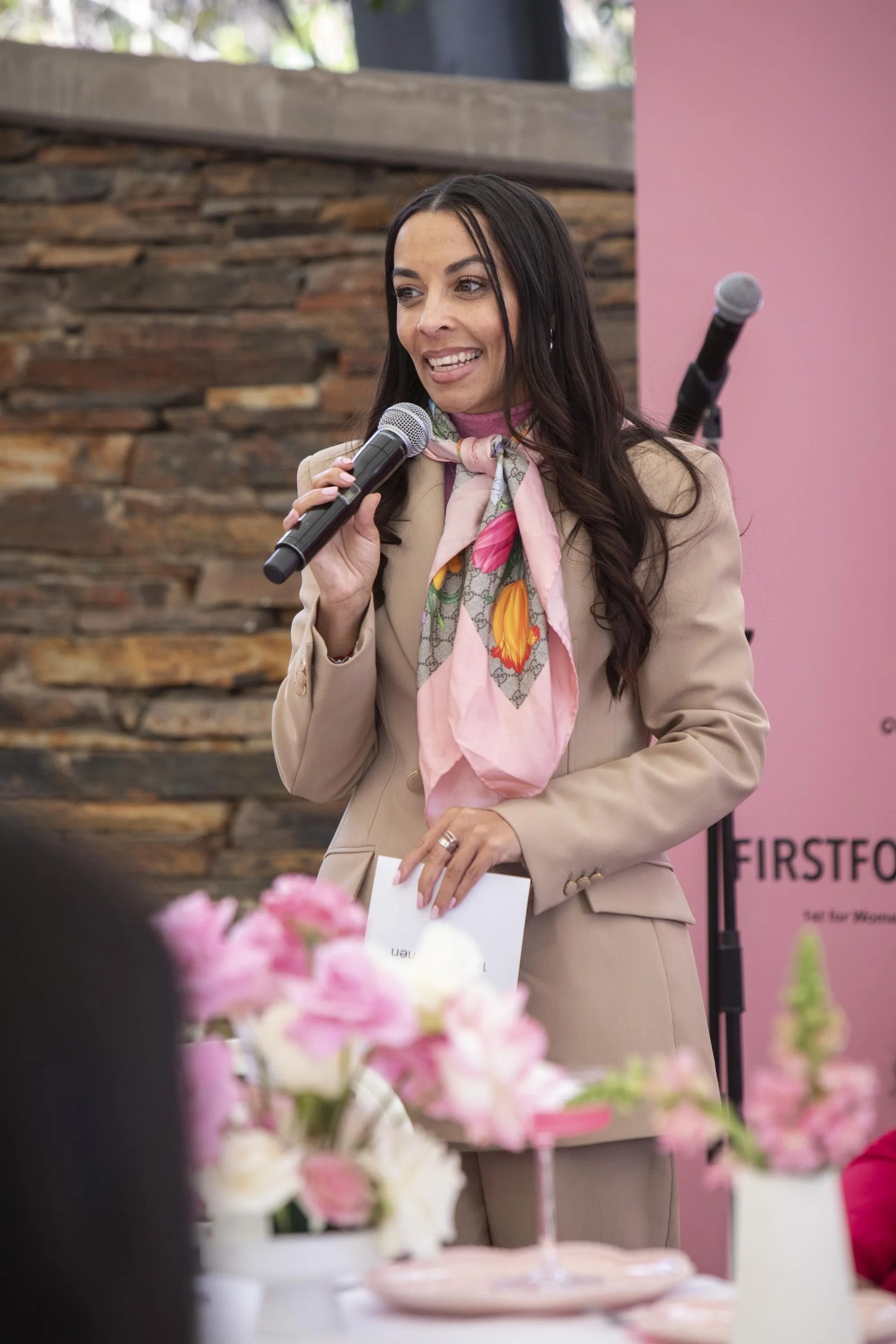
“Season one changed the way I listen,” says Anele Mgudlwa, host of The Anele Podcast: Her & Now. “I read the numbers in that first report, and then I sat across from women who had a lived experience of every one of them. Something shifts when a stranger says the exact thing you have been carrying alone, and I watched women in that room realise they were not the only ones. Season two carries that forward, and getting to do it again means everything to me.”
A world that treats her as an afterthought
The report opens with a simple test. In the sectors meant to serve women most - do women feel considered, or overlooked? The answer was consistent. 38% of women named government services as the place they feel most like an afterthought. When something does not work for them, most women do not wait for it to change. 56.4% simply switch providers or find an alternative, and a further 33.1% work around the problem on their own, a pattern that hits single parents hardest, since switching takes time and flexibility many do not have.
The report also found a clear counter example. Asked where they feel completely seen, women overwhelmingly named the local hairdresser and the neighbourhood spaza shop, not for their scale, but for the opposite. These are the places that remember a name, a circumstance, a school run, without being asked twice. The gap between that experience and a call centre or a bank queue is, the report argues, a matter of design choice rather than resources.
A safety standard built for someone else's neighbourhood
Only 6% of South African women said they felt safe after dark in last year's report. This year's research tested what has changed, and found that after dark, fear becomes close to universal. 90.1% of women say they never or rarely feel safe walking alone once the sun goes down, a figure that barely shifts between rural and urban areas.
What did shift, in a way the report calls counterintuitive, is who feels safest during the day. It is women in wealthier, better-lit, more heavily patrolled suburbs and cities who consistently report feeling the least safe and least considered, while women in rural villages, farms and informal settlements describe a tighter web of people who walk together, watch each other's children and share a single boom gate. Formal safety systems, the report finds, have not caught up to either version of that reality. Safety also has a price. 79.5% of women say safety concerns have cost them money, and higher earners spend considerably more in real terms even though lower income women are forced to make that trade-off far more often.
A financial system built around a payslip she has never had
Money remains the single biggest source of stress for South African women, and this year's research went looking for its arithmetic. 32.8% of women say they often run short before the end of the month, and 47.9% have had to borrow from family or friends in the last year simply to get by. Single parents carry a disproportionate share of that strain.
Asked what financial product they wished existed, the same answer surfaced again and again across hundreds of open responses. Credit and savings tools that judge affordability on real cash flow, not a fixed monthly payslip, with repayment dates that move with real pay days instead of penalising a woman for money that arrives three days late. In the meantime, women have built their own systems to fill the gap. The stokvel, in every variation imaginable, is the financial hack women describe most often when asked what keeps their household going and when a financial product does fail her, half of all women turn to family first before any formal lender.
A household that assumes a partner who shares the load
Even where a partner is present in the home, and by definition could be sharing the work, 75.8% of women say they still handle the cooking and cleaning largely alone, and 69.2% say the same of laundry specifically. A partner's income clearly changes how the financial burden is shared, given that 47.6% of women are already the primary or an equal earner in their household. It does far less to change who keeps the household running day to day, and for single mothers, both the money and the domestic load fall on one person entirely. The report is blunt about what this means for products and policies. Anything built on the assumption of an equally sharing partner is built on an assumption that holds true for only a minority of the women it is meant to serve.
A day's worth of work that no one accounts for
36.0% of women spend five hours or more a day on unpaid domestic and care work, a figure that climbs to 48.4% among mothers of children under five. That labour goes almost entirely unrecognised. 77.3% of women agree that neither government nor business has any real sense of how much time and money their unpaid work actually saves or costs. Asked what would happen if they simply stopped for a month, the answers make clear how much rests on this invisible foundation, from a family member's care going unmet to a household's income falling short.
The trust women extend to each other, and withhold from everyone else
Trust in the institutions women deal with daily runs low across almost every measure in the report, and it tracks income closely. Only 9.2% of women mostly or completely trust government and public services, a figure that opens into one of the widest gaps in the entire study once income is taken into account. Trust in other women tells a different story entirely. 39.3% mostly or completely trust the women in their own network, a figure that holds remarkably steady across every income bracket and community type, and 84.1% believe that meaningful change, when it comes, will come from women themselves rather than the institutions meant to serve them.
“Everything we build at First for Women starts with a question. What does safety actually mean for the woman living this specific life?” says Jill Mulligan, Senior Manager, 1st for Women Insurance. “We cannot cover a woman properly, or protect her, without first understanding her days in detail, the risks she navigates and the load she carries quietly. This report gives us that understanding in her own words, and season two of The Anele Podcast: Her & Now carries it further, into her voice.”
"We're not here to celebrate women's resilience - that's1st for Women’s Senior Manager of Insights and Research Initiatives not the conversation, says Dr Reitumetse Mpholle, . “We're tired of being labelled resilient, because it forces us to keep coping even on the days we're not okay. The real takeout of this report is that we need to redesign the reality women live in. We're not asking for everything to be built around us, just to be accommodated. Every institution now understands women a little better. The next question is how we design a world where women can actually thrive and grow. Because when women grow, the ripple effect on the whole family and community is bigger than anyone expects."
Read together, the report's chapters return to the same finding from several different angles. South African women are not struggling because they lack resilience or resourcefulness. They are struggling because the systems around them were built for a version of life that most of them do not live, and where that version does not match reality, the gap becomes a cost women absorb quietly, in rands, in hours and in the constant work of navigating a world that was not built around them.
First for Women exists for exactly this reason. As an insurer built specifically around South African women, it offers safety and emergency benefits shaped around the realities this report describes, and donates a portion of every premium toward the fight against gender based violence through the First for Women Foundation.


