
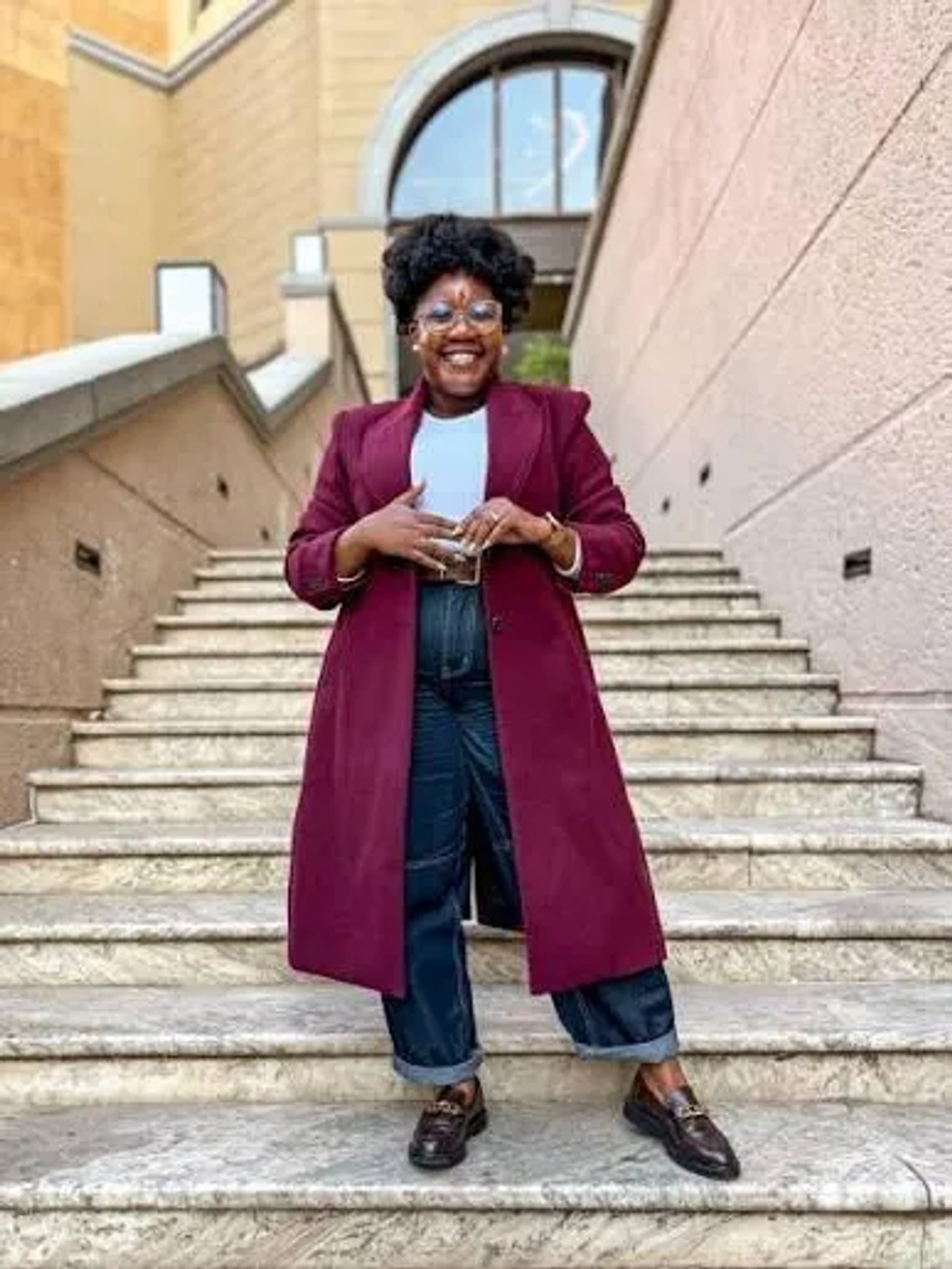
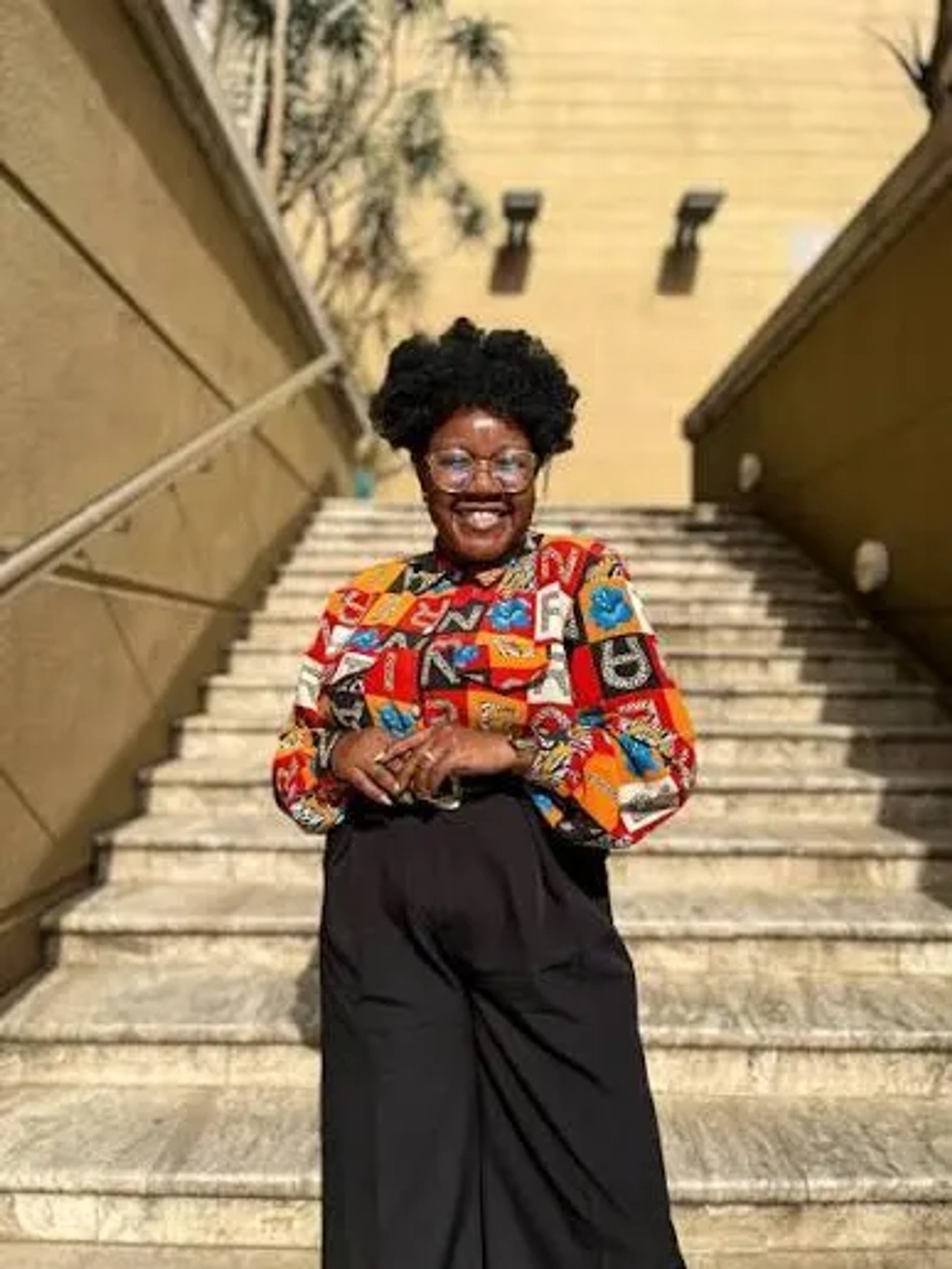
In an age dominated by fast-paced digital media, Hloniphile Mzangwais quietly constructing spaces where books, culture, and community converge. From working within publishing to building a vibrant online presence, she has dedicated herself to championing contemporary African literature.
Hloniphile’s latest initiative, the 1632 Book Club based in Tembisa, takes this mission offline, creating a sanctuary where local youth can read, imagine, and step into new possibilities. We sat down with Hloniphile to discuss her journey, the importance of literary visibility, and how storytelling shapes identity. Here, she lets us in on her approach to amplifying African stories, founding the 1632 Book Club in Tembisa, and making reading an accessible, transformative experience for young people.

GLAMOUR: Take us back to the beginning…What was it about books and reading that first captured your imagination, and how did that early love evolve into the work you’re doing today?
Hloniphile: I grew up in Tembisa, where reading was accessible to me, but the number and variety of books available was limited. Even with that reality, books introduced me to worlds beyond my immediate surroundings and allowed me to imagine lives, places and possibilities I had not yet encountered. Over time, reading became more than a personal interest, it became a way of understanding people, navigating emotions and interrogating the world. That relationship eventually led me into publishing, literary content creation and most recently, founding 1632 Book Club. What began as a love for stories has become a commitment to helping others discover their own.
GLAMOUR: You’ve moved from being a reader to working in publishing and now creating literary content. How has your relationship with books changed as your career and perspective have evolved?
Hloniphile: Working in publishing transformed my understanding of books. As a reader, I was primarily concerned with the stories themselves but working in the industry introduced me to the people, processes and decisions that determine which stories reach readers. Creating literary content has added another dimension, I now think about how stories are received, discussed and remembered. Books have become both personal companions and cultural artefacts. I am increasingly interested in what they reveal about identity, power, belonging and society. My relationship with literature has therefore evolved from consumption to participation, I want to read stories, interrogate them and help them find their audiences.
GLAMOUR: What does it mean to you to be a digital creator focused specifically on books and African literature at a time when so much of our cultural consumption happens online?
Hloniphile: For me, digital literary creation is an opportunity to make reading visible, accessible and culturally relevant in spaces where people already spend their time. Books may be the central part of my inspiration but my content and expression is beyond books, it’s culture, fashion, my love for coffee and celebrating blackness. Social media allows literature to move beyond the traditional boundaries of bookstores, libraries and academic institutions, reaching readers through conversations, voiceovers, reviews and personal reflections. I read widely but my particular interest in African literature comes from the importance of seeing our experiences, complexities and contradictions represented in the stories we consume. I want my platform to remind people that African literature is not peripheral to world literature, it is an essential part of the human conversation, deserving of attention, criticism and celebration.
GLAMOUR: African literature is incredibly rich, yet there are still many stories and authors that don’t receive the visibility they deserve. What do you think we gain when we intentionally seek out and amplify African stories?
Hloniphile: When we intentionally seek out African stories, we reclaim the authority to narrate ourselves. Literature allows us to encounter our histories, languages, relationships and social realities beyond the narrow representations that often dominate global narratives about the continent. It also challenges the assumption that African experiences are singular. Our literature contains tenderness, political resistance, humour, grief, ambition, desire and contradiction. Amplifying these stories creates opportunities for recognition across generations and cultures, while allowing readers to encounter experiences different from their own. Visibility matters because stories influence what societies remember, whose humanity they recognise and whose possibilities they consider worth imagining.
GLAMOUR: What role do you believe social media can play in creating a new generation of readers, particularly among young people who may not traditionally see reading as something for them?
Hloniphile: Social media can serve as a bridge between young people and books by making reading feel less intimidating and more connected to everyday life. A thoughtful honest review, an engaging voiceover or a conversation about a character can create the curiosity that leads someone to pick up a book. We must also move away from presenting reading exclusively as an academic obligation. Reading can be pleasurable, communal, emotionally restorative and intellectually liberating. Digital platforms allow young people to encounter books on their own terms, but the ultimate goal should extend beyond online engagement. We must create opportunities for them to access books, develop critical thinking and build lasting relationships with reading.
GLAMOUR: Your content seems to be about more than simply recommending books, it’s about using literature to start conversations. What type of conversations do you hope your work encourages?
Hloniphile: I hope my work encourages conversations that extend beyond whether a book is enjoyable or well written. I am interested in what stories reveal about the societies we inhabit, the relationships we negotiate and the identities we construct. Literature can help us examine gender, family, migration, class, culture, grief, love and belonging without reducing these experiences to easy conclusions. I want readers to feel comfortable questioning characters, challenging ideas and recognising their own contradictions. Most importantly, I hope these conversations cultivate empathy without discouraging critical thought. A book should not merely give us something to consume, it should give us something meaningful to consider.
GLAMOUR: Was there a particular book, author or story that fundamentally shifted the way you saw yourself or the world around you?
Hloniphile: My relationship with African literature has continually expanded my understanding of how stories shape identity and belonging. Reading writers such as Ngũgĩ wa Thiong’o has deepened my appreciation of the relationship between language, culture, history and power. Books such as So Long a Letter by Mariama Bâ also demonstrate how intimate experiences can illuminate much larger questions about society, womanhood and tradition. What stays with me is not necessarily one definitive moment of transformation, but the cumulative effect of encountering different perspectives. Every meaningful reading experience gives me another lens through which to examine myself, other people and the world we share.
GLAMOUR: You’re currently growing a book club in Tembisa. What inspired you to take the conversation offline and create a physical space for young people to come together around books?
Hloniphile: 1632 Book Club grew from a desire to cultivate a reading culture among young people in Tembisa and create opportunities for them to discover stories that expand their imagination beyond the limitations of township life. Digital platforms are powerful, but I believe there is something irreplaceable about gathering physically, sharing interpretations and listening to perspectives different from our own. Establishing the club at a local library felt particularly meaningful because libraries represent the possibility of knowledge being a shared public resource. I want 1632 book club to become a welcoming space where young people can read, think, question and connect, discovering that literature is not something they must experience alone.
GLAMOUR: You’ve spoken about wanting young people to be able to dream and travel beyond the limitations of their background. What have books taught you about possibility, and why is that message particularly important to young people?
Hloniphile: Books have taught me that our immediate circumstances do not have to determine the boundaries of our imagination. Through literature, we can encounter different professions, cultures, histories and ways of living before we have the opportunity to experience them ourselves. This does not mean that imagination alone dismantles structural inequalities or makes material limitations disappear. Rather, it allows us to conceive of possibilities we might otherwise never consider. For young people growing up in communities such as Tembisa, that distinction matters. I want them to understand that where they come from is part of their story, but it does not have to be the limit of what they can become.
GLAMOUR: Access to books can be a challenge in many communities. What have you observed about the relationship between access and a culture of reading, and what would you like to change?
Hloniphile: Access is fundamental to cultivating a reading culture. We cannot consistently encourage young people to read while overlooking the practical realities that determine whether they can obtain books. Cost, availability, relevant titles and welcoming reading spaces all influence the relationship people develop with literature. Through my engagement with libraries and the development of 1632 Book Club, I have become increasingly conscious of the importance of making existing resources more visible and accessible. I would like to see stronger connections between libraries, schools, publishers and community initiatives, alongside greater investment from our municipalities and Department of Education, in diverse, contemporary African literature. Reading should not be a privilege determined by household income.
GLAMOUR: What do you hope a young person walks away with after attending one of your book-club sessions beyond having read a particular book?
Hloniphile: I hope every young person leaves with a stronger sense of intellectual confidence, the understanding that their thoughts matter, their questions are valuable and their interpretations deserve consideration. I want them to discover that reading is not about producing the correct answer or impressing someone with sophisticated language. It is about learning to think independently, listen attentively and engage thoughtfully with ideas. Beyond that, I hope the club offers a sense of belonging. Young people should encounter a community in which curiosity is encouraged, differences are respected and ambition is nurtured. If they leave believing that their futures can contain more possibilities than they previously imagined, we have accomplished something meaningful.
GLAMOUR: There’s something powerful about creating a community around reading. What have the young people you’ve encountered taught you about their relationship with books, aspiration and storytelling?
Hloniphile: Building 1632 Book Club has reinforced for me that cultivating a reading culture requires more than simply telling young people that books are important. We must create environments where reading feels inviting, relevant and socially meaningful. Young people need opportunities to discover stories that speak to their experiences, but they also need stories that introduce them to unfamiliar worlds. I am particularly interested in creating spaces where they can express their thoughts without feeling that they must already be knowledgeable readers. Their participation, questions and perspectives are central to the community I hope to build. A reading culture grows when young people are invited to participate, not merely instructed to read.
GLAMOUR: Do you think we underestimate the role that reading can play in shaping confidence, imagination and identity, particularly for young people growing up in environments where their circumstances can sometimes define what they believe is possible?
Hloniphile: Absolutely. Reading is often discussed in terms of literacy, academic performance and educational outcomes, all of which matter. However, its contribution to identity and imagination deserves equal attention. Books allow people to encounter different versions of themselves, recognise experiences they may have struggled to articulate and imagine lives beyond the immediate evidence of their circumstances. They also develop the capacity to question, interpret and form independent opinions. For young people whose environments may impose narrow expectations on their futures, literature can widen the horizon of possibility. It cannot resolve every material limitation, but it can help cultivate the intellectual confidence to question what has been presented as inevitable.
GLAMOUR: As someone who sits at the intersection of publishing, culture, digital media and community-building, where do you see the biggest opportunities to grow South Africa’s reading culture?
Hloniphile: I believe one of our greatest opportunities lies in connecting the publishing industry more deliberately with the communities it hopes to reach. Publishers, digital creators, libraries, schools, bookstores and book clubs can work together to make books more visible, accessible and relevant to diverse audiences. Social media can generate interest, but that interest must be supported by affordable books and opportunities for sustained engagement. I also believe we need to celebrate African literature beyond commemorative months and established literary circles. Reading should become part of our everyday cultural lives. By investing in young readers, supporting local writers and creating community-centred literary initiatives, we can build a reading culture that is both inclusive and sustainable.
GLAMOUR: What is the bigger vision for the Tembisa book club? If we revisit this conversation a few years from now, what would you love to have built?
Hloniphile: My vision for 1632 Book Club is to build a sustainable literary community in Tembisa that nurtures readers, critical thinkers and young people who feel empowered to imagine different futures. I want the book club to grow through regular reading sessions, meaningful discussions, literary gatherings and partnerships with libraries, publishers, authors and other cultural institutions. In time, I would love to expand access to books, introduce young people to more African writers, encourage them to read widely and create opportunities for them to develop their own voices through writing and storytelling. Ultimately, I hope 1632 book club becomes more than a book club but a community rooted initiative demonstrating how literature can cultivate intellectual curiosity, connection and possibility.
GLAMOUR: What would you say to someone who tells you they “aren’t a reader”, especially a young person who has yet to discover a book that could change their relationship with reading?
Hloniphile: I would tell them that perhaps they have not yet encountered the book, format or story that speaks to them. Being a reader is not an identity reserved for people who finish dozens of books, use sophisticated vocabulary or possess extensive literary knowledge. Reading can begin with a short story, a poem, a compelling memoir or a novel that reflects something you have experienced but never quite understood. You do not have to force yourself to love every book, and you do not have to become someone else to belong in literary spaces. Sometimes, discovering reading begins with discovering a story that makes you feel seen, curious or wonderfully changed.
Recent stories by:
Thobeka Phanyeko

Founder and Creative Director of Lin Couture, AmaLinda on her mother’s enduring legacy, and how her passion for design led to the birth of her luxury brand

Children's Month: Empower your little one with financial literacy

From Waitress to Franchise Owner: Terri Coetser on backing herself, building success and knowing her worth

Rising South African Artist, Miiss Makoti on authenticity, faith, and healing through music


