
Breastfeeding doesn’t begin and end with World Breastfeeding Week. For many mothers, the journey is deeply personal, evolving through pregnancy, birth, work, family life and the changing needs of both mother and child. But with breastfeeding can come an overwhelming amount of advice, expectation and, sometimes, misinformation.
Breastfeeding is often spoken about in absolutes: when to start, how long to continue, when to stop. But motherhood rarely follows a prescribed timeline. For Dr Ferini Dayal, a doctor, surgeon and mother, the decision to continue breastfeeding while pregnant was not one she had planned in advance. It evolved naturally as her relationship with her daughter grew. Rather than viewing pregnancy as an automatic endpoint to breastfeeding, she looked at the evidence, considered how her pregnancy was progressing and listened to her own body and her child. “I chose to continue for as long as it remained healthy and comfortable for both of us. I’m still breastfeeding currently,” she says.

As conversations around breastfeeding continue beyond World Breastfeeding Week, Dr Dayal believes the focus should move away from rigid expectations and towards informed, compassionate support. Breastfeeding during pregnancy is an area surrounded by questions and misconceptions, and while every pregnancy and breastfeeding journey is individual, pregnancy alone does not necessarily mean breastfeeding has to end.
Here, she unpacks the evidence behind breastfeeding during pregnancy, the myths mothers are often told, the nutritional and emotional considerations, tandem feeding, and what needs to change culturally to better support breastfeeding mothers.
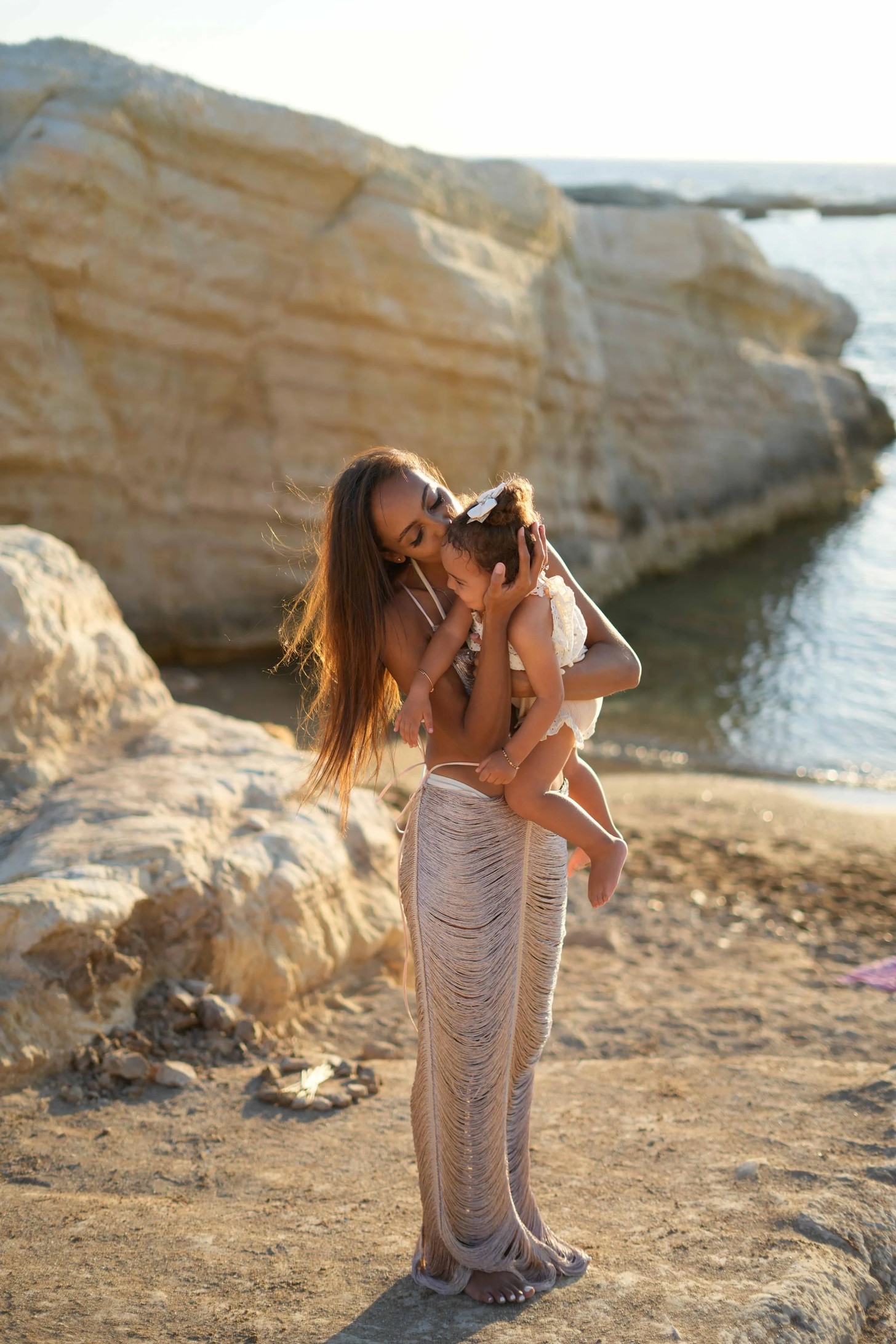
GLAMOUR: Did you always plan to continue breastfeeding during pregnancy, or did your decision evolve over time?
Dr Ferini Dayal: I did not plan to breastfeed during my pregnancy. It evolved as I grew with my daughter and our relationship blossomed too. My approach to motherhood has always been to remain informed, but also to listen to my body and my child, importantly, to trust my maternal instinct.
When I became pregnant and was still breastfeeding, I looked at the evidence, considered how my pregnancy was progressing and, importantly, observed what felt right for us. Breastfeeding was still a source of comfort, connection and security for my child, and I didn’t feel that pregnancy alone, or negativity against the concept, was a reason to take that away. So my decision evolved very naturally. I chose to continue for as long as it remained healthy and comfortable for both of us, and I’m still breastfeeding currently.
GLAMOUR: Is it generally safe to breastfeed while pregnant, and are there circumstances where it isn't recommended?
Dr Ferini Dayal: For most women with a healthy, uncomplicated pregnancy, breastfeeding during pregnancy is considered safe.
One concern mothers often hear is that breastfeeding releases oxytocin, which can cause uterine contractions. While that is physiologically true, in a normal pregnancy the uterus is generally not sufficiently sensitive to these levels of oxytocin for breastfeeding to initiate labour.
However, pregnancy is never one-size-fits-all. Women with significant bleeding, signs or a history of preterm labour, cervical insufficiency, certain multiple pregnancies, poor maternal weight gain, or other high-risk obstetric circumstances should discuss continued breastfeeding individually with their obstetric or maternity team. The important distinction is that pregnancy itself is not automatically a reason to stop breastfeeding. Many cultures around the world encourage breastfeeding up to three or four years of age. It is a beautiful way for our children to connect, to learn self-regulation, and for their central nervous systems to feel safe. The benefits of breastfeeding are endless, and for myself and my daughter it has been a safe haven in many ways.
GLAMOUR: How does pregnancy affect breast milk, and what changes might mothers and their breastfeeding child notice?
Dr Ferini Dayal: Pregnancy hormones can have quite a significant effect on breastfeeding.
Many mothers notice their milk supply decreasing, particularly as pregnancy progresses. The taste and composition of the milk can also change, and later in pregnancy the breasts begin transitioning towards producing colostrum for the new baby. Interestingly, sometimes the breastfeeding child notices these changes before the mother does. They may feed for shorter periods, ask to breastfeed more or less frequently, or occasionally self-wean because the taste or supply has changed. For younger children who still depend heavily on breast milk nutritionally, a reduction in supply is something that should be monitored more carefully.
GLAMOUR: What nutritional considerations are important for mothers who are pregnant and breastfeeding at the same time?
Dr Ferini Dayal: You are asking a tremendous amount of your body. You are growing one child while continuing to nourish another. I think the focus should be on adequate nourishment rather than restriction. In my home, we focus on sourcing food that is organic, meat that is pasture-raised, and we steer clear of processed food. We make sure we have sufficient calories, protein, healthy fats and carbohydrates, alongside good hydration and a varied, nutrient-dense diet.
Particular attention should be paid to nutrients that are important during pregnancy and lactation, including iron, folate, iodine, calcium, vitamin D, vitamin B12 and omega-3 fatty acids. Individual requirements vary, so supplementation should ideally be discussed with a healthcare professional, especially where there are dietary restrictions or deficiencies. And I think we sometimes forget something very simple: mothers need to be fed and cared for too.
How we feed our gut affects our brain — the gut-brain connection. I often speak about this on my platforms, @drf_dayal and @themamamovement, and how we nourish our bodies affects and changes the entirety of the functionality of our brain and body. As much as I can be, I do my best to ensure everything we put into our bodies is chosen intentionally, from a source that is aligned with those principles. Whether it be pasture-raised meat from @lafarms or Nguni meat, our fresh produce from local farms such as Jodev, Ganico, or spaces like Jackson’s, I spend time to ensure our nutrition is chosen with intention.
GLAMOUR: What are some of the physical and emotional challenges mothers may experience when breastfeeding during pregnancy?
Dr Ferini Dayal: This will differ for each mama, but one of the biggest physical challenges documented is nipple tenderness. Pregnancy can make the breasts and nipples incredibly sensitive, so something that was previously comfortable can suddenly become uncomfortable or even painful. There can also be fatigue, nausea, reduced milk supply and sometimes breastfeeding aversion or agitation — where a mother suddenly experiences an intense feeling of irritation or discomfort while feeding.
Emotionally, that can be difficult because mothers can feel guilty about those feelings. But it doesn't mean that you love your child any less. Pregnancy changes your body enormously, and mothers should give themselves permission to create boundaries around breastfeeding if they need them.
GLAMOUR: For mothers who are considering tandem breastfeeding after birth, what should they know before making that decision?
Dr Ferini Dayal: Tandem feeding can be a beautiful experience, but it isn't something a mother has to commit to, before her baby arrives. After birth, the newborn's nutritional needs come first. The newborn should have unrestricted access to the breast, particularly during those early days when colostrum is so important and milk supply is being established. An older child can then continue breastfeeding alongside the newborn if the mother wishes.
Some mothers find tandem feeding incredibly helpful for maintaining connection with their older child during what can be a huge transition, and to assist in the transition for their older child in welcoming a new baby. Others find feeding two children physically or emotionally overwhelming. Both experiences are completely valid. There is no prize for breastfeeding in a particular way. The goal is a nourished baby, a supported mother and a family arrangement that is sustainable.
GLAMOUR: What are some of the biggest myths or misconceptions about breastfeeding during pregnancy?
Dr Ferini Dayal: Probably the biggest myth is: if you become pregnant, you have to stop breastfeeding. For most healthy pregnancies, that simply isn't the case.
Another misconception is that breastfeeding will somehow deprive the unborn baby of nutrients. The maternal body is remarkably adaptive, although adequate nutrition becomes especially important when pregnancy and lactation overlap. And perhaps another myth is that there is one perfect duration of breastfeeding that every mother should achieve. Breastfeeding is deeply individual. Evidence can guide us, but the decision ultimately needs to consider the mother, the child and their circumstances.
GLAMOUR: Have your own experiences as a pregnant, breastfeeding mother changed the way you counsel your patients?
Dr Ferini Dayal: Absolutely. Medicine gives us evidence, physiology and guidelines. Motherhood gives the above context. If being a doctor, surgeon and mother has taught me anything, it’s that our maternal instinct is our built-in system to navigate motherhood, and we need to trust that.
Experiencing pregnancy while breastfeeding has made me appreciate how deeply emotional these decisions can be. A breastfeeding relationship isn't simply about nutrition — it can represent comfort, regulation, attachment, routine and connection. It has made me much more conscious of the language we use with mothers. Rather than immediately telling a woman what she should do, I think our role as healthcare professionals should be to explain the evidence, identify genuine risks, understand her circumstances and then support her in making an informed decision.
GLAMOUR: Many women feel pressure to stop breastfeeding when they become pregnant. What would you say to mothers facing that decision?
Dr Ferini Dayal: I would say: don't make the decision from fear or pressure. Make it from information. If your pregnancy is healthy, speak to a healthcare professional who understands both pregnancy and breastfeeding and discuss your individual circumstances, and trust your mom community. Be part of one. I’ve created a safe space called The Mama Movement (@themamamovement) exactly for this purpose: a space with professionals: lactation specialists, doctors, homeopaths, birth specialists, gut health specialists and more from around the world, to support and guide moms. And then listen to yourself and your child.
If continuing breastfeeding feels right and is medically appropriate, you don't need to stop simply because you are pregnant. Equally, if your body is telling you that you need to reduce feeds or wean, that does not erase everything breastfeeding has already given your child. Motherhood should contain far less guilt and far more support.
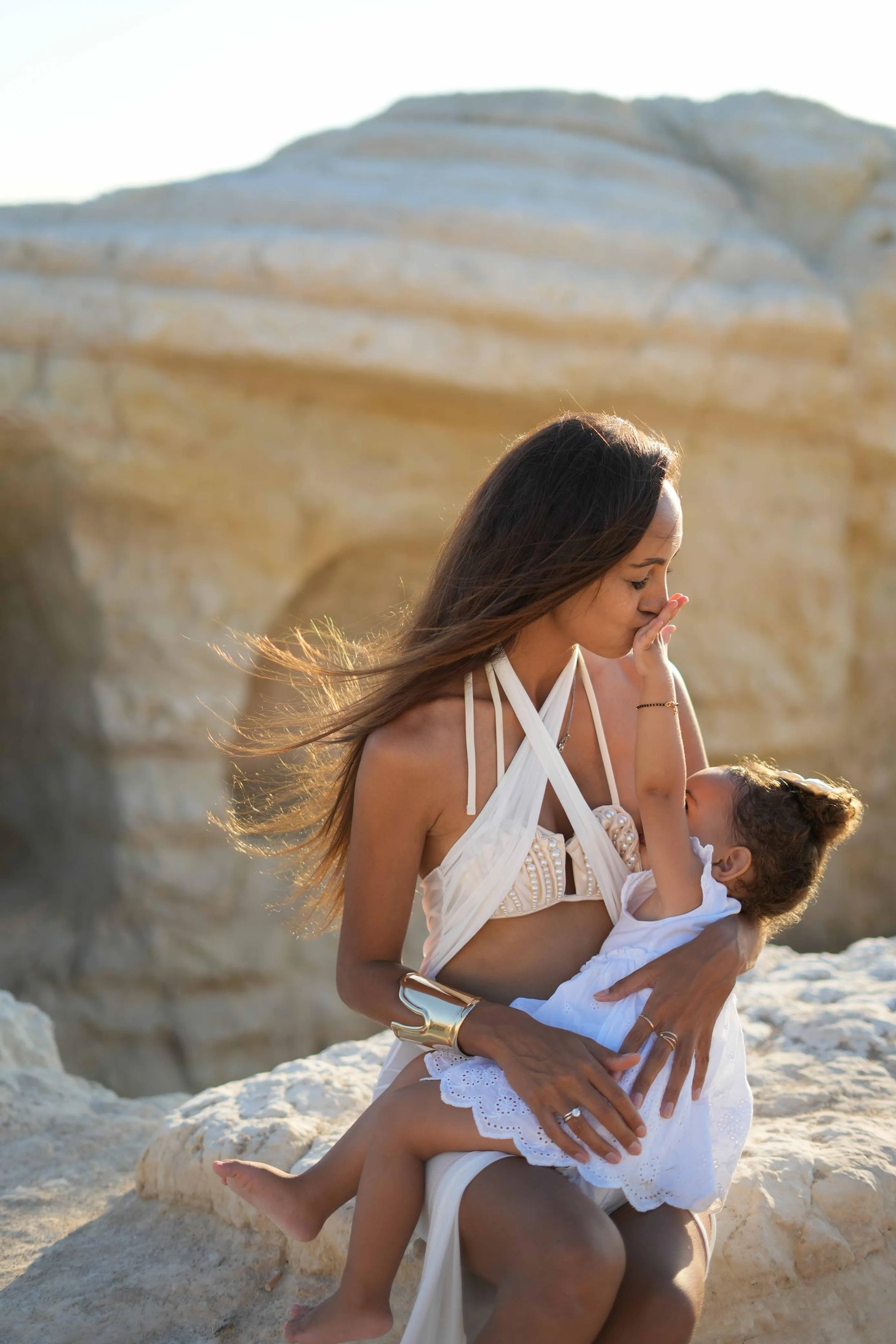
GLAMOUR: What role can partners, families, employers and healthcare providers play in better supporting breastfeeding mothers?
Dr Ferini Dayal: A huge one. We often talk about breastfeeding as though it is solely the mother's responsibility, when actually successful breastfeeding is heavily influenced by the environment surrounding her. Partners and families can support mothers practically — making meals, bringing water, taking over other responsibilities, protecting her rest and simply encouraging her.
Healthcare professionals need to provide consistent, evidence-based advice rather than conflicting information. Employers need to recognise that returning to work should not automatically mean the end of breastfeeding. Mothers need appropriate time, privacy and facilities to express and store breast milk. If we genuinely want women to breastfeed, we have to create environments that make breastfeeding possible.
GLAMOUR: During Breastfeeding Awareness Week, what is the one message you hope every mother hears?
Dr Ferini Dayal: You do not have to prove your motherhood through how you feed your baby. Breastfeeding has extraordinary benefits and deserves to be protected, normalised and supported. But behind every breastfeeding journey is a woman with her own body, circumstances and story. Some mothers breastfeed for days, some for months and some for years. Some exclusively breastfeed, some combination feed, and some are unable or choose not to breastfeed. My hope is that we move away from judgement and towards informed, compassionate support because mothers deserve both good information and grace.
GLAMOUR: What changes would you like to see to create a more breastfeeding-friendly culture for families?
Dr Ferini Dayal: I would love breastfeeding to become something we don't need to defend.
I would like to see better antenatal breastfeeding education, easier access to skilled lactation support after birth, stronger workplace protection, more breastfeeding-friendly public spaces and healthcare professionals receiving more comprehensive education around lactation. But culturally, I think the greatest change would be recognising that supporting breastfeeding means supporting the mother.
We cannot tell women that breastfeeding matters and then send them back into environments where they are exhausted, unsupported, expected to work without adequate expressing breaks, or made uncomfortable for feeding their child in public. If we want healthier mothers, babies and families, breastfeeding cannot simply be promoted, it has to be practically supported.
I’m grateful that the world is moving towards this support and I hope that it continues.
Recent stories by:
Thobeka Phanyeko

Beyond International Day of the Girl Child, empower your daughter with financial literacy

Women in Charge: Annelene Dippenaar on Leadership, Inclusion and the Business of Real Impact

This is how you can avoid a low credit score

Motivation Monday: This is how you can shift from Financial Anxiety to Financial Clarity


