
Discover the inspiring journey of Tracy-Lee Rosslind, who began her modelling career at just nine years old. From navigating the challenges of the entertainment industry to advocating for representation and empowerment, Tracy's story is a testament to resilience and purpose.
GLAMOUR: You started in the industry at a very young age. At the age of 10 on TV I believe. Can you share what that experience was like at such a young age being exposed to the world of entertainment?

TRACY: When I was nine years old, I was honestly quite a reckless little tomboy. So after falling out of yet another tree and gaining yet another scar, my mother decided to enrol me in a holiday modelling programme run by Topco Models in Tokai. It was basically a modelling course that taught you runway and photoshoot training, what should be in your model bag, set etiquette, etc. During the programme, you were also eligible to potentially win a contract with Topco Models, which I subsequently ended up winning, and so started my journey into professional modelling with Topco Models. At the time, Lindsay Shuttleworth and Karen Burt, who owned Topco Models, really took me under their wing. They were monumental in helping shape my trajectory within the modelling and entertainment industry, especially during an era where there were not many girls of colour being platformed in those spaces the way we see today.
Prior to that, and during that era too, I was also involved in pageantry and was even crowned Miss Tinkerbell a few times, and later went on to host Miss RSA Junior with Colin Moss in the late 90s. I was also lucky enough to be part of the Theatre Cats programme, which was run by David Kramer, who was my drama teacher and stage coach within the programme, which was held at Artscape, back then known as the Nico Malan Theatre. It was honestly incredible being exposed to all these different set productions and creative environments at such a young age, especially considering the calibre of creators, publications and brands I was able to work with. Before I had even turned 13, I had already been featured in Vogue, had a segment done on my career by Top Billing, who actually came out to one of my sets to film an entire feature on me and my career at that point, worked with some of the top directors in the world, including the director of Home Alone, and had become the face of some of the biggest brands globally.
By that age, I had already starred in over 30 TV commercials, as well as covers, editorials, billboards and runway shows. In actual fact, when I was about 10 or 11 years old, I got to fly by myself for the very first time to do a fashion show just outside of Cape Town, which at that age felt like the biggest adventure in the world. It really opened me up to some amazing and wonderful experiences.But you cannot have roses without some thorns, and although the experience was majorly positive, I was still exposed to certain things that were maybe not always entirely child friendly. Looking back now, I am incredibly grateful for the way I was protected by Topco, as well as by my mother, who never left me alone for a single moment on set, backstage or in a dressing room.
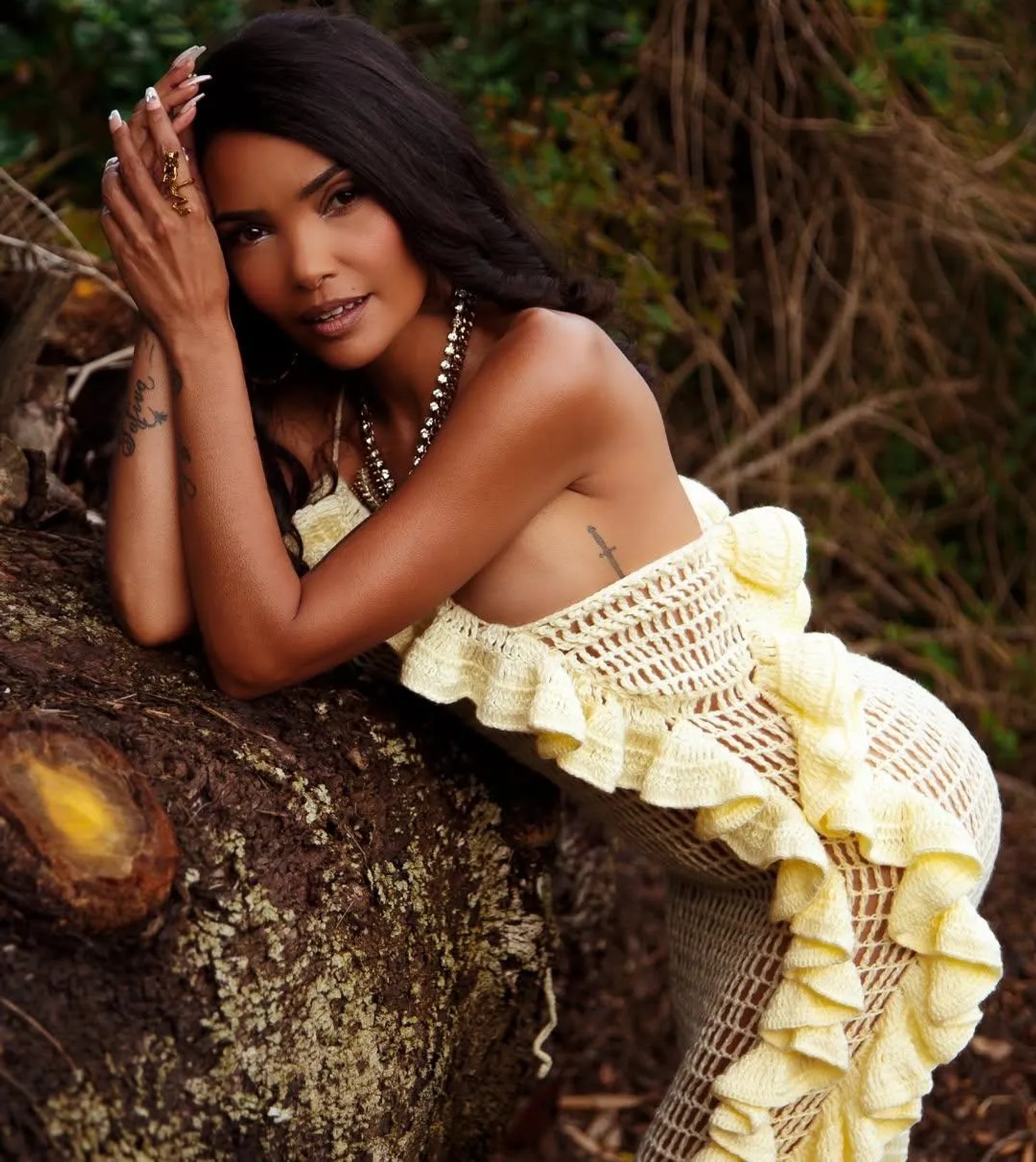
G: You were raised in a completely different era. It was not very common for coloured parents to encourage their children to follow their dreams in the entertainment industry. What did you have to do to convince them to allow you to pursue your passions?
T:I was extremely blessed to be born into the family that I was born into. Both my mother, Serena Rosslind, and my father, Derrick Rosslind, were political activists as well as entrepreneurs. My parents believed very passionately that one of the ways South Africa would truly become the powerhouse they always believed it could be was through business development and creating wealth through our own hands.
My father was a leather designer who even created looks for icons like Sipho “Hotstix” Mabuse. My mother was one of the first property developers of colour and owned one of the first coloured owned estate agencies in the Western Cape. In actual fact, in the late 80s, my mother was involved in one of the first low cost housing developments in the Western Cape and even named roads after my sister and I, so there is both a Tracy Road and an Amy Road. My family always geared us up for greatness, but equally for goodness too. So for me, my trajectory from birth was always going to be one rooted in entrepreneurship, creativity, independence and purpose.
My mother also fought very strongly for representation. She felt it was incredibly important that there were brown girls in those pageants, at those castings, on those modelling jobs and visible in malls on posters and campaign windows. During that era, that visibility was still very new. A lot of people assume that because my parents allowed me into entertainment, I must have had to convince them to let me pursue my dreams, but honestly, it was sometimes the opposite. My parents were often the ones convincing me that I was strong enough to continue. That without hard work and sacrifice, one cannot attain the heights one’s dreams can reach.
I experienced severe bullying and a great deal of trauma because of my modelling and television career at such a young age. Being one of the first often means carrying the weight of resistance, criticism and, during that era, the racism that came with carving out new spaces for others. My parents constantly reminded me that pioneers rarely walk easy paths, but that does not make the journey any less important. They taught me that as long as I remained true to myself, the legacy I wanted to create, and my ethics and integrity, my heart, mind and soul space, when in alignment, would lead me into all the right places.
My mother designed and styled all my pageant outfits and talent competition looks when I was younger, while my grandmother and my Aunty Ulpha made many of the garments by hand. At that stage I was also a dancer, so much of my world was built around performance, creativity and expression. My hair was always done by one of South Africa’s most noted hairstylists, Ierephaan, so I grew up surrounded by people of colour who carried incredible weight within their respective industries. No matter what they were doing, they strived to be the very best. That environment instilled something very powerful in me. It taught me that hard work breeds excellence. It taught me to strive to be the best at whatever it is I do, while still moving with ethics and integrity. I was raised to believe that your light should not only illuminate your own path, but also the path of everybody around you.
I was even given my very first wig by legendary stage actress and performer Sophia Foster because I was not allowed to cut my hair until the end of high school due to my contracts at the time. That became one of the earliest moments where I began experimenting with identity, transformation, style and self expression, which later became such a major part of my creative journey.I even ended up training models at Topco while I was still in primary school, including main board models who were already in their teens, and even that created further fallout and bullying within my school environment. But despite all of that, I always believed I was here to make a difference.
I do not think purpose always arrives wrapped in comfort or ease, and the path I chose was definitely not always easy, but it was absolutely the right path for me. Looking back now, I am incredibly proud of the space I helped create within the industry, and later within the digital and social media landscape too.

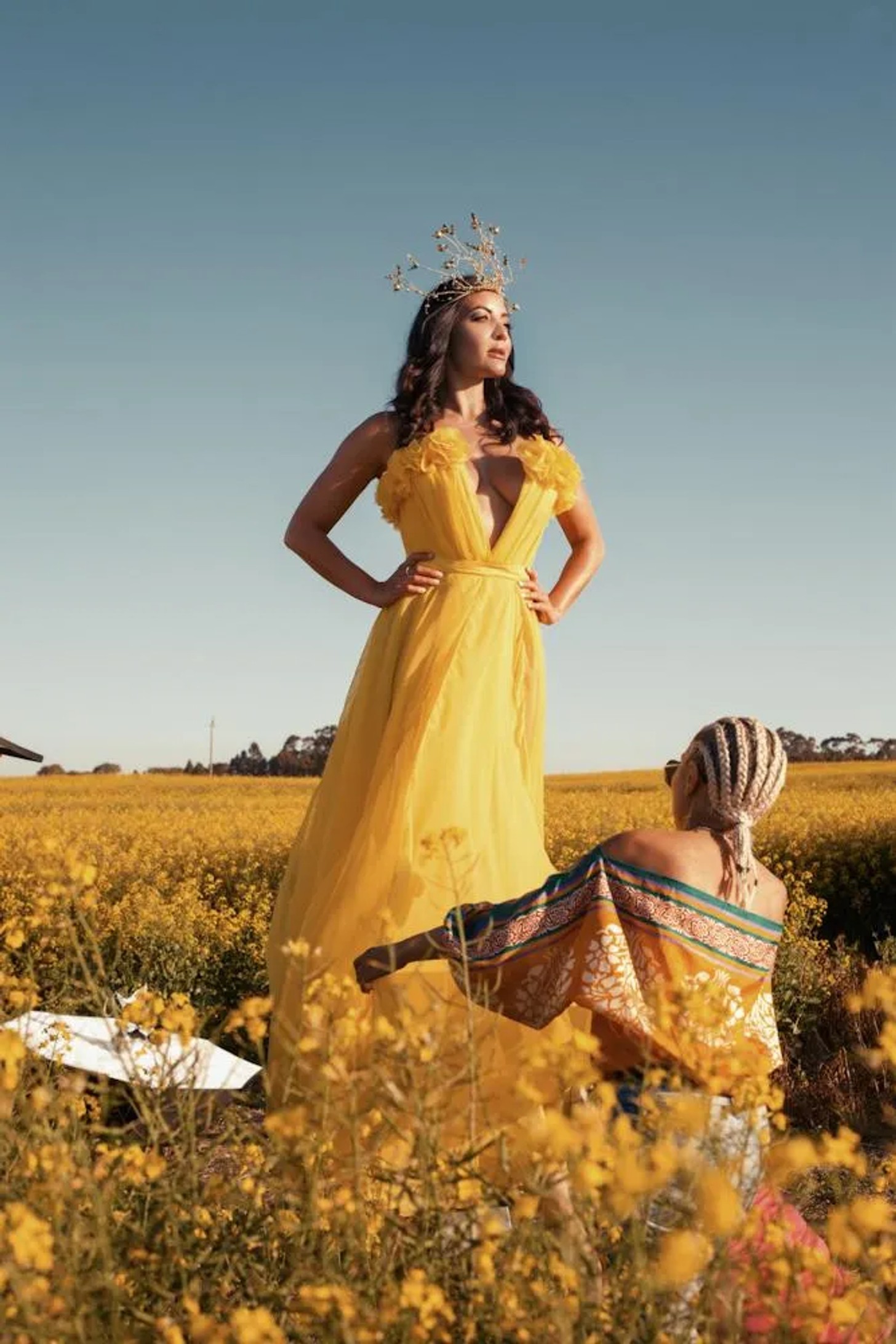
G: Of all the hats you wear, stylist, presenter, model, producer, creative director and business owner/entrepreneur, what brings you the most joy?
T:What brings me the most amount of joy is creating avenues for those coming after me to have easier access to achieving their greatness and their dreams, while positively propelling our industry forward. Whether that is seeing how putting somebody in a new look or a beautiful outfit can completely change the way they see themselves, increase their self esteem and open their eyes to new possibilities within the realm of their own lives and identities, or helping a brand create visibility and tell a story strong enough for others to feel seen, heard and connected to in a way that creates loyal consumers, meaningful community and long term brand longevity.I love helping create platforms, narratives and opportunities that allow people to step more fully into themselves.
As an entrepreneur, one of the greatest joys for me is being able to create spaces for my people to generate wealth, build sustainable futures and heal from the very traumatic pasts many of our communities have had to endure. I registered my very first company over 20 years ago, so entrepreneurship has always been deeply rooted in who I am and how I see the world. For me, success and the genuine joy and passion that my work brings me has never only been about personal achievement. It has always been about impact, legacy and creating pathways for others too. Something I have always said is, “I want to create revolutions, not trends.” That has always been the core of how I approach everything I do.
G: What have been some of your greatest achievements?
T: I have been incredibly blessed to experience so many beautiful milestones throughout my career. One of the most recent highlights was being awarded Stylist of the Year at the African Fashion and Arts Awards, which I also had the honour of hosting in Nigeria at the end of 2025. My company was also nominated for a Sustainable Green Award at the same awards, which felt incredibly meaningful because sustainability and conscious fashion have been such a major part of my work and advocacy for almost two decades.
At the end of 2025, I was also honoured to be a keynote speaker at the African Fashion Forum at Fame Week Africa, where I spoke on fashion, sustainability and the future of the industry. I additionally created the art installation backdrop for the African Fashion Forum itself, with sustainability and conscious consumption being central to the work.Over the years, I have been fortunate enough to be recognised by some of the biggest publications and brands globally. From Glamour, Cosmopolitan, Grazia, Vogue and Peacock Magazine in India, to becoming one of the earliest faces of Ackermans and its flagship store campaigns, as well as appearing across countless magazines, catalogues, campaigns and international brands throughout my career, there have been many moments that felt surreal, especially considering where I started.
I have also had the privilege of interviewing and working alongside some truly remarkable people. From styling some of Netflix South Africa’s earliest campaigns, to producing and styling Inglot Africa’s first digital to print campaign, I have been lucky enough to contribute to some really significant moments within the industry. Even within music, the combined view count of music videos I have styled has exceeded a billion views, which is something I still struggle to fully comprehend at times. But if I am being completely honest, some of my proudest achievements are not necessarily the ones attached to titles, awards or visibility. I am most proud of the role I have played in helping shape, connect and platform people within the industry. It has always meant so much to me to be able to create opportunities for others and to witness people I supported from the very early stages of their careers now stepping fully into their greatness and moving on these incredible trajectories of success. I am also a mother, and one of my greatest achievements will always be my daughter, Mia. I am incredibly proud of the human being and young woman she has become, and of the kindness, strength and heart she carries within her. That, for me, is a legacy far greater than any accolade. And ultimately, I think one of my greatest achievements has been longevity. To still be here after all these years, still evolving, still creating, still impacting and still remaining authentic to who I am, is something I never take for granted.


G: What advice would you give young coloured girls who would love to follow in your footsteps?
T:My advice would be this, my beautiful sisters, know in your marrow that you are powerful and that you already possess everything you need to pursue your dreams. Start. Start where you are, with what you have, and do it in the most positive, kind, gentle and ethical way possible. Everything else will begin to align in your favour.
Do not let the stereotypes that have been entrenched into our communities shape the way you see yourself, your people or your future. Strive to become a voice for upliftment and positive change. Strive to live a life where people can see those values in action through the way you move through the world. Do not be scared of hard work. Do not be scared of putting in the time, effort and practice that comes with mastering your craft, your art and yourself. Do not fear failing. I have failed more times than some people have ever even tried, and with each failure came a lesson that propelled me even further within my next opportunity. Nothing is for nothing. No time spent on the mat is ever wasted. So do not be scared to lose. Do not be scared to fail. Be more afraid of mediocrity, of stagnation and of never fully stepping into the purpose you were created for. Go out there and find mentors that can help increase your knowledge. Not all of us have the same resources, but I can guarantee that every one of us knows at least one person who can help uplift us, inspire us or guide us in some way. Whether that is within your community, your family, your school or amongst the people you admire, seek out those who can help propel your dreams forward.
Go out there and intern, work shadow and gather as much knowledge as you possibly can. To this day, I still collaborate, research and actively educate myself on what is happening within every industry and sector I work in. Greatness comes with hard work, time and sacrifice, but if you can find happiness within your passion and purpose, there is very little in this world that will feel more fulfilling. Protect your mental health and protect your soul space. No matter what anyone else may say to you, the only voice that truly matters is the one inside of you. Train that voice to speak to you with kindness, encouragement and belief. Let it inspire you to continue and give you enough hope and confidence to go further than you ever imagined possible. This is not a race. You are competing against nobody except the person you were five minutes ago. Everybody’s journey is different, so comparing yourself to others will only distract you from your own path and purpose.
No one is an island. We all live within community, and we need community in order to sustain ourselves, our passions, our dreams and our goals. We must move with ethics and consideration for others because the ecosystem we come from and the ecosystem we build from is the same ecosystem that will ultimately help sustain our dreams. We need to protect it, uplift it and nurture it in order for all of us to grow. Leave the crabs in a bucket mentality behind. We are here to uplift one another, support one another and shine positive light on one another. I would not be where I am today without my mentors and the people who came before me, which is why you will notice throughout my journey and interviews that I always acknowledge the people who helped shape my path. I hope the next generation does the same. Credit your mentors. Credit the people who helped shape you and create pathways for you. There is real power in acknowledging those who helped build your legacy alongside you. I truly believe we all have the power to heal our traumas, rewrite our narratives and help ourselves attain the future our ancestors always knew we deserved.
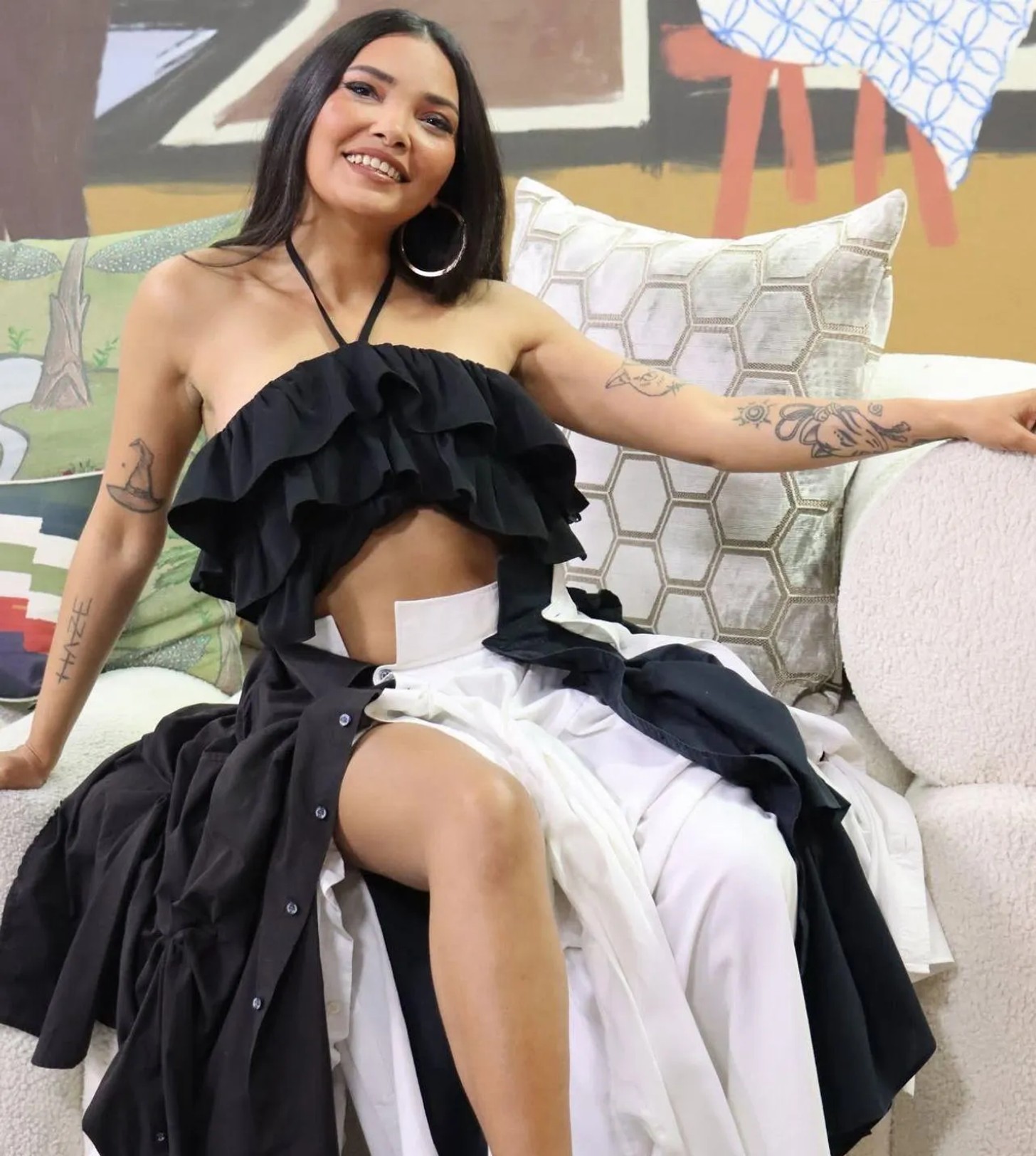
G: As a coloured woman do you feel a sense of responsibility to represent your race well?
T:Yes, 100%. And as much as sometimes that responsibility can feel heavy, it is also one that I believe we do need to take on, especially because we are still living within a relatively fledgling democracy. I still remember apartheid vividly. I lived through the end of it.
Because of that, I believe it is extremely important that coloured men and women showcase themselves in their most powerful, multidimensional and positive light, so that we can help inspire people out of the trenches they were historically left in and remind them of what is possible for themselves too. Representation is not just about visibility. It is about shifting psychology, aspiration and self belief.In all honesty, one of the reasons I started one of South Africa’s first YouTube shows, Girls at Play TV, back in 2009, was because I was deeply disappointed and, quite frankly, angry at the type of representation coloured women were receiving in mainstream media, particularly on television. We always seemed to be portrayed through the same lens, from the same socioeconomic spaces and with the same narratives attached to us. It was never a true reflection of the diversity, intelligence, beauty and complexity that the coloured community actually embodies.
So I created Girls at Play TV to showcase coloured women in all their different forms, aesthetics and identities. Women who spoke multiple languages, held degrees, travelled the world, ran businesses, partied and enjoyed life, but also woke up early to train, work and build meaningful futures for themselves. Multifaceted women who were beautiful, intelligent, powerful and anchors within their communities. That is the coloured community I know. That is what I wanted to see reflected in media. In actual fact, if you look at the history of my styling and aesthetic, you will notice that I have been putting brown girls in fairytale dresses since the very beginning of my career. That was intentional. Growing up, I rarely saw coloured girls positioned as princesses, muses or dream girls within fashion and beauty spaces. I grew up surrounded by the beautiful dreamscape campaigns of brands like Anna Sui and all these whimsical, fantasy driven fashion visuals, and I remember desperately wanting to see brown girls adorned in that same softness, beauty and magic.
Over time, that became more than just an aesthetic choice. It became part of my activism. It became one of the pillars of my creative identity and one of the ways I chose to challenge representation within fashion, beauty and media.It is also the reason that for over a decade now, whenever I attend major red carpets or public events, I often adorn a teardrop on my face as a form of protest against the ongoing violence that has plagued the Cape Flats for decades without enough meaningful intervention or change. So yes, I will forever be a proud representative of my coloured community.

G: What has been the most significant advice you have received? How has that helped shape you?
T:One of the most significant moments of advice and inspiration I ever received actually happened when I was about six years old, shortly after Nelson Mandela was released from prison. I was lucky enough to attend a gathering that was held by family and fellow comrades in celebration of his release. When I met him, he asked me what it was that I wanted to be when I grew up. At the time, I wanted to be many different things, and I remember looking at him almost unsure of how to answer because my dreams felt so expansive. And he simply said to me, “You don’t have to choose one thing. You can be anything you want to be now.” That moment opened something inside my mind that never closed again. It made me realise that I did not have to limit myself to being only one thing. It gave me permission to fully embrace being multifaceted.
So when people would later tell me that I was doing too much, or stepping into too many different industries and spaces, I never really viewed it that way. I understood that all the various sectors I was working within were connected to the greater entrepreneurial and creative ecosystem I was intentionally building for myself from the very beginning of my career. People often live by the phrase, “Jack of all trades, master of none,” but I eventually reworked that into my own personal mantra: “Master of all trades. Don’t talk to me about Jack.” I have always been willing to put in the hours, discipline, study and sacrifice required to truly understand and master the spaces I enter.
That conversation stayed with me throughout my entire life. It taught me that there is power in embracing every layer of who you are and that sometimes the most revolutionary thing you can do is refuse to shrink yourself into only one identity.
G: Who were the women that inspired you? The ones you looked at and said I want to be just like her?
T:I was very blessed to grow up surrounded by truly iconic women, so I had many different female influences that I could learn from, absorb from and look up to while trying to shape myself into the best version of who I could become. My mother, Serena Rosslind, was one of the most important influences in both my life and in shaping the kind of woman I wanted to become. She taught me that a woman never has to sacrifice her femininity, sensuality, softness, playfulness or joy in order to dominate in business or succeed within male dominated spaces.
From the moment I was born, my mother included me in witnessing her build her empire. I was literally in a carrier underneath her desk during meetings as a baby. I grew up watching her move through boardrooms and business spaces with such confidence, elegance and power. I can still vividly remember her leaving for work every morning looking like something out of Ally McBeal or The Devil Wears Prada. The stiletto heels, the fitted leather suits, the dresses, the glamour, the force. Both my mother and father really taught me the power of fashion, presentation and presence. My grandmothers were also incredibly influential women in my life. Both were powerful in their own right and both were firsts in many of the things they achieved throughout their journeys. I was additionally surrounded by remarkable women like Glenda Rosslind, Ulpha Robertson and Sophia Foster, women who were not only trailblazers within their industries, but also deeply committed community builders. They showed me that true success is not only about feeding your own family and soul, but also about uplifting and feeding the communities around you.
My mother also started an organisation with her friends called Women With Will. They were a phenomenal group of women who did charitable work, community upliftment and also threw some of the most extraordinary events and gatherings. Looking back now, that was probably where my love for event curation, production and creating experiences first began. Watching the level of detail, creativity and excellence these women brought into every space they entered had a massive impact on me. But beyond the events themselves, they also showed me the immense power of women supporting women and building together collectively. I was also part of an all female conglomerate called Cherry Creek Trading, where I was one of four younger girls surrounded by 46 powerful women working across sectors like mining, agriculture, transport, housing, film and the creative industries, making up a collective of 50 women within the company. Yet again, it reinforced for me the incredible power of the feminine and what women are capable of building when they come together with purpose, vision and determination.
Growing up constantly surrounded by women who were carving out their own lanes, creating opportunities for themselves and fearlessly building new worlds gave me a deep sense of safety in originality. It taught me very early on that there is power in blazing your own trail, walking the road less travelled and becoming as authentic and original as possible within your own journey.
G: When you reflect on your career and what the landscape of fashion and entertainment was back then and compare it to the world we live in today. What are the marked differences?
T:Things have definitely taken a dramatic turn from back when most productions were still being shot on actual film. During that era, you really had to possess a deep understanding of your craft, your angles, your movement and your abilities because there was far less room for error. You did not have the luxury of taking hundreds or thousands of images to hopefully land the perfect shot. Sometimes you only had a handful of frames to capture the moment correctly. In many ways, digital has made aspects of the industry more accessible and more forgiving, which has also opened the doors for so many more people to enter creative spaces. And honestly, one of the most beautiful changes has been seeing far more diversity and representation across fashion, beauty, television and media. I absolutely love seeing people who were historically excluded from certain spaces now unapologetically taking up space within them. There is something incredibly powerful and healing about witnessing that shift happen in real time. I also think social media and digital platforms have radically changed the way creatives are able to build communities, network globally and create visibility for themselves without always needing traditional gatekeepers. Back when I started, access to opportunities was far more controlled. Now people are able to build entire careers, movements and brands from their own ideas and platforms, which is incredibly empowering.
Another major shift is that audiences are becoming much more culturally aware and interested in authenticity and origin. People want to know where inspiration comes from. They want to understand the cultural references, the stories and the identities behind the work. As we move further into a globally connected society, there is a much stronger appreciation for diversity of aesthetics, storytelling and lived experiences, which I think is beautiful. At the same time, I do think the pace of the industry has become far more intense. The digital age has created incredible opportunity, but it has also created immense pressure around visibility, relevance and constant consumption. So while access has expanded, I think protecting one’s mental health, individuality and authenticity has become more important now than ever before. But overall, I genuinely feel hopeful and inspired by the direction so many parts of the industry are moving in, especially when it comes to representation, accessibility and creative freedom.

G: Can you share about the business you recently started and why you chose to invest in this particular business?
T:Being in Nigeria at the end of 2025 was honestly a life changing experience for me. It completely expanded my understanding of the scale of opportunity, collaboration and innovation that is possible across the African continent, while also opening up incredibly powerful new networks and relationships for me entrepreneurially and creatively. Coming back to South Africa, I made the very intentional decision to solidify several new business ventures that aligned with the long term trajectory I envision for both my career and the greater African ecosystem I hope to help build. One of the biggest developments was the merger of my company, Haze Enterprises in South Africa, with The Hayche Network in Nigeria, founded by the incredible and award winning Aisha Yusuf, resulting in the creation of Hayche & Haze. Officially founded in Lagos in December 2025, the company was created with the intention of strengthening African collaboration, empowering female entrepreneurs, uplifting youth and building sustainable opportunities across the continent. Aisha is an extraordinary businesswoman as well as the Nigerian Ambassador for Peace, and our visions align deeply when it comes to creating meaningful infrastructure, opportunities and creative ecosystems that can positively impact future generations across Africa.
Another major venture has been entering the agricultural sector together with Mlu Mhlungu, where we have formed a new company focused on long term sustainability, growth and future development within the space. It is still very much under wraps for now, but something I am incredibly excited about. Agriculture is one of the most powerful sectors when it comes to economic growth, sustainability and community development across Africa, and I believe it will play a massive role in the continent’s future. I have also partnered with award winning South African artists Simhle Plaatjies and Nonkanyiso “Nonka” Mbonambi to create a new art and fashion company rooted in African storytelling, wearable art, fashion and cultural expression. Both women are incredibly respected creatives within the South African art landscape, and building alongside such powerful artistic voices felt like a very natural and intentional expansion for me creatively. There is also one more major venture currently in development, but that reveal will have to wait for another Glamour exclusive next year.
I chose to invest in these various sectors because I genuinely believe there is enormous growth potential and opportunity within the African landscape right now. Africa is rich in talent, creativity, culture, innovation and resources, and I believe the future of many industries will be deeply connected to African collaboration and infrastructure. What excites me most is not simply building businesses, but building systems that can create opportunity, sustainability, employment and long term impact for future generations. I have always believed that business should not only generate profit, but also generate purpose. I am also incredibly honoured to share exclusively with Glamour that I will once again be co hosting the African Fashion and Arts Awards for 2026, this time taking place in Abidjan, Côte d’Ivoire from the 4th to the 7th of November. Being able to continue building relationships and creative bridges across the continent feels deeply aligned with the greater vision I have always had for my work and purpose.
This is definitely a marathon and not a race, and I absolutely have a long term vision for everything I am building. At the centre of it all is the belief that Africa deserves ecosystems created by Africans, for Africans, while still speaking powerfully to the global landscape.
G: You have always been a champion of South African designs and sustainability. What and who fueled your passion?
T:That passion definitely began with my parents and the environment I was raised in. My mother and father had me dressed in custom made looks and local designs from the moment I was born. My father was a leather designer and actually made me a leather baby crawler when I was still an infant. He had also been making custom leather pieces for my mother since he first started courting her in the 70s, so creativity, craftsmanship and fashion were always deeply woven into the fabric of our family life. My mother would constantly dress me in pieces sourced from places like Greenmarket Square, while my grandmother and my Aunty Ulpha would make many of my clothes by hand. My maternal grandmother, my Ouma, would knit me the most incredible dresses and knitwear pieces as well. So I grew up surrounded by makers, creators and artisans. Before I even understood the concept of “support local,” my family had already instilled it in me through the way we lived. A large part of my family also worked within the factory ecosystem that once filled areas like Salt River and Woodstock during the height of Cape Town’s textile and manufacturing era. Because of that, I grew up understanding that fashion is not just about glamour or trends. It is an entire ecosystem connected to makers, machinists, textile workers, pattern cutters, retailers, families and communities.
That understanding ignited a ferocious passion in me for local fashion, sustainable fashion and locally manufactured clothing and textiles. I understood very early on that every time we support local design and production, we are supporting jobs, livelihoods, heritage, craftsmanship and economic sustainability within our own communities. As my career evolved, that passion only deepened. I became increasingly aware of the environmental and social impact of overconsumption and fast fashion, which further shaped my approach to styling, fashion and creativity. Sustainability for me has never simply been an aesthetic trend. It is deeply connected to ethics, responsibility, community and conscious consumption.A lot of my activism has also naturally filtered into my creative work. Whether through my styling, my art installations, my public speaking or the conversations I continue to have around conscious creation and consumption, I have always wanted to encourage people to think more intentionally about what they buy, how they consume and who benefits from those choices.
That is also why creating installations like Overflow for the African Fashion Forum at Fame Week Africa felt so important to me. It was an opportunity to visually unpack overconsumption, sustainability and the emotional relationship we have with fashion and waste within modern society. Ultimately, I think my love for South African fashion comes down to the fact that our creativity is unlike anything else in the world. South Africans have an extraordinary ability to create beauty, innovation and luxury out of limitation, and I think that resilience and originality is something incredibly powerful and worth championing globally.
G: Having worked with a variety of SA designers throughout your career, who are some of your favourite designers?
T:I have honestly had the privilege of working with some of the most extraordinary designers throughout my career, and my love for South African design runs incredibly deep. We have some of the most innovative, original and emotionally rich creatives in the world. But beyond just loving beautiful design, I have always deeply valued designers who truly understand the importance of stylists and who create mutually respectful and collaborative environments for fashion to flourish within. Fashion is such an ecosystem and no great visual moment is ever created entirely alone. So I have immense respect for designers and fashion houses that understand the power of collaboration and who genuinely value the people helping build and platform their brands alongside them. I also think loyalty is incredibly important within this industry. There are designers I have worked with since the very beginning of their journeys who have never forgotten the role I played in helping shape visibility around their brands, and who have continuously shown up for me in the most spectacular ways throughout my own career as well. Those kinds of relationships mean a lot to me.
So I would absolutely love to use this opportunity to acknowledge and celebrate designers and fashion houses such as BeachCult, Zeitgeist, Ruff Tung, Ruald Rheeder, Imprint, Victor K Couture, Whyte Wears, Zawadi and Sassy Chic, all of whom I have admired, worked alongside and supported throughout different stages of my journey. I am also a huge supporter of student designers and emerging creatives. Most of the time, you will find me dressed in original artworks created by what I believe is the future of South African fashion. There is something incredibly exciting to me about discovering new voices, new aesthetics and new ways of storytelling through fashion.
I am also a very strong believer in crediting creatives properly. If you look at my social media, you will notice that I make a conscious effort to tag and acknowledge every designer, stylist, artist and creative that contributes to a look or project. I think giving people their flowers and properly acknowledging their work is incredibly important, especially within creative industries where so much labour often goes unseen. Ultimately, what I love most about South African fashion is that it carries soul. There is history, resilience, culture, innovation and emotion woven into so much of what our designers create, and I think that is what makes our fashion landscape so special.
G: As a stylist, who was your favourite personality to style?
T: I have honestly been incredibly blessed to style some of the most iconic and inspiring people both locally and internationally throughout my career, so choosing favourites is genuinely very difficult. What I will say is that the people I enjoy styling the most are those who are fully confident in their own power and identity. The personalities who trust the creative process, who are willing to push boundaries, take risks and create impactful fashion moments are always the most exciting to work with. Fashion becomes truly magical when somebody fully surrenders to storytelling and transformation. Over the years, I have had the honour of styling campaigns for major brands such as Netflix, Catrice and Inglot, while also working with incredible personalities including Lynn Whitfield, Nadia Jaftha, Minki van der Westhuizen, Cindy Nell, Melinda Bam, Liezel van der Westhuizen, Sarah Jane Thomas, Ameen Harron, Carissa Cupido, P-Square, Don Jazzy, Denise Zimba, Ashleigh Herman, Nicole Bessick, Rhyle Rene De Morny, Lauren and Laura, amongst many others including Glamour Magazine’s own editor in chief Nontando Mposo
But beyond names and visibility, what has always mattered most to me is the energy of collaboration. Some of the greatest fashion moments happen when there is mutual trust between the stylist and the person being styled. Those are the moments where fashion moves beyond clothing and becomes emotion, art, storytelling and cultural impact. I also think one of the greatest honours as a stylist is helping somebody see a version of themselves they may not even have fully discovered yet. Sometimes fashion has the power to unlock confidence, healing, softness, strength or even fearlessness within a person, and being part of that transformation is something I never take for granted.
G: How important is reputation in this industry?
T:Reputation is incredibly important, not only within this industry, but within life in general. However, I also believe that even more important than reputation is knowing your own truth and standing firmly within it. You are never going to please everybody. No matter how kind, ethical or hardworking you are, there will always be people who misunderstand you, dislike you, or create narratives around you that are untrue. At the same time, there will be others whose lives you positively impact in ways you may never even fully realise. You will be the villain in some people’s stories and the saviour in others. That is simply part of being visible and part of walking a path that carries influence. What matters most is ensuring that your journey is rooted in ethics, integrity, accountability and honesty. I think it is incredibly important to acknowledge the people who poured into your journey, the people who opened doors for you, made your path easier, shared knowledge with you, or connected you to opportunities that ultimately shifted your trajectory. Nobody succeeds entirely alone, and I think there is real power in remaining grateful and transparent about that.
I also believe reputation should be built on consistency, professionalism, lived experience and genuine knowledge of one’s craft. In today’s world, visibility can sometimes create the illusion of expertise very quickly, but longevity always reveals the truth. Over time, people come to recognise who is truly dependable, who works hard, who treats others well, who shows up consistently and who genuinely cares about the ecosystem they are part of. For me personally, protecting my name has never been about perfection. It has been about moving through life and business in a way that allows me to sleep peacefully at night knowing that I have tried my best to move with integrity, kindness, accountability and purpose. At the end of the day, trends fade, popularity shifts and industries evolve, but character and consistency are what ultimately sustain longevity.
G: What do you believe is the secret to your success and how have you maintained longevity in this industry?
T:Honestly, I think a large part of the secret to my success lies in good karma and in the way that I have intentionally chosen to move through both my life and my career. From the very beginning, I have always tried to live and work in a way that creates positive impact, opens doors for others, connects people to new opportunities and builds stronger ecosystems within the industries I occupy. I have never entered collaborations, partnerships or business relationships with ill intention, and I think people can eventually feel and recognise genuine energy over time.
My legacy has never been rooted in simply achieving success for myself. It has always been deeply connected to ensuring that I am not creating negative disruption within the ecosystems I work in, whether that is fashion, entrepreneurship, television, film, production or digital spaces. I believe it is incredibly important to move through industries in ways that protect the people within them, uplift the communities connected to them and create healthier pathways for the generations entering those sectors after us. I also believe my longevity has come from the incredible network of people I have connected to, collaborated with and helped build throughout my journey. Unfortunately, not everybody acknowledges those contributions or reaches back to support the people who once supported them, and I do not believe that should ever be normalised within any industry. I think we should always strive to create cultures of acknowledgement, gratitude, collaboration and mutual upliftment, especially within creative spaces where community is such an essential part of growth.
That being said, the people who have shown up for me, protected me, collaborated with me and continued to pour back into me throughout the years have played a massive role in why I have been able to sustain such a long career. I started professionally within this industry when I was nine years old, which means I have spent more than three decades building, evolving, adapting and growing within these spaces. Longevity like that does not happen accidentally. It requires resilience, reinvention, discipline, consistency and a genuine love for one’s craft.
I have also never been afraid to evolve. I think one of the biggest mistakes people make is becoming too attached to one version of themselves or one era of success. I have always remained curious, adaptable and willing to learn new things, enter new spaces and study the changing landscapes around me. Most importantly though, I think success means very little if you cannot sleep peacefully at night knowing you moved through your journey with integrity, kindness and purpose. For me, true success has always been about impact, legacy and the positive footprints we leave behind in the lives of others.

G: Lastly, we know in life you cannot achieve great success without experiencing some of life’s lows. What have been your greatest lessons learnt during your challenging times?
T: There is a Japanese proverb that says, “Fall seven times, stand up eight,” and I think that saying has deeply defined my journey and the way I have chosen to move through hardship.I have lost a lot throughout the course of my life and career, and I have had to start over more times than I can count. But every single time I stood back up again, I did so with more wisdom, more power, more poise and a greater understanding of how I needed to move forward.
One of the biggest challenges I experienced was losing my entire haircare brand during the COVID pandemic, a brand that Glamour had so beautifully supported and featured at the time. That loss was incredibly difficult because it represented years of passion, vision and hard work. Around the same period, I also lost the majority of my styling archive, stock and assets for my House of Rosslind knitwear range in a devastating house fire. I had to rebuild from absolute zero again in 2020.I have also experienced the emotional and financial impact of not always being acknowledged or credited for my contributions within the industry. There have been moments where people I discovered, mentored or brought onto sets for the first time later moved forward without acknowledging the role I played in their journeys. I have experienced client poaching, crew poaching and situations where work I poured my heart and soul into was no longer connected back to my name. Those experiences can take an enormous toll, not only financially, but emotionally and mentally as well.
But one of the greatest lessons I have learnt is that bitterness is far heavier to carry than disappointment. Over time, healing taught me that my impact still exists regardless of whether every single person acknowledges it publicly or not. The pathways I helped create still exist. The doors I helped open still exist. The people I empowered still carry pieces of that empowerment into the world, whether they say it out loud or not. I have also learnt the importance of protecting my peace, protecting my energy and becoming more gentle with myself. For many years, I carried everything with enormous emotional weight because I cared so deeply about the people and industries around me. But growth has taught me that I cannot pour endlessly from an empty cup.
Most importantly, I have learnt that resilience is not about pretending things do not hurt. It is about allowing yourself to feel the pain, learn the lesson, heal through it and still choosing to rise again with softness, purpose and grace.At this stage of my life, I am still incredibly proud of the pathways I have helped create within the industry and within the broader cultural landscape. And no matter how many times life has required me to rebuild, I remain deeply grateful that I have always had the courage to begin again.
Recent stories by:
Tania Durand

South African designer Wanda Lephoto's first womenswear collection began with a memory of his sister

Paula Bee on 10 years of fashion, boundaries and representation

The Gucci codes driving Demna’s new era

Wedaad Lima on fashion, motherhood and marketing G-Star Africa

LFW: H&M brings Nick Knight, Labrinth and Alex Consani to its A/W 2026 London show
GLAMOUR Recommends
Discover Your Ideal Fit: The New G-Star Shape Collection
Celebrating African Accessories Designers: A Spotlight on Afrique Kod and KHOI
The standout coats of Autumn/Winter 2026: A fashion overview
Benito " Bad Bunny" unveils his 150-piece collection with ZARA
SAMW AW26 Sets a new benchmark for African Fashion under The Week of Fashion South Africa
Stunning red carpet looks from the 79th Annual Cannes Film Festival
The Cardigan: A classic winter staple
Gucci's Resort 2027 collection: A bold showcase by Demna in New York City


