
After more than 15 years shaping some of South Africa’s most recognisable beauty, fashion, wellness and lifestyle brands, founder of Elvee Consultancy, Lorinda Voges is entering a new chapter, defined less by doing more of what matters. For Women’s Month, she opens up about building a business from the ground up, the women who have shaped her, the power of meaningful representation.
For more than 15 years, Lorinda Voges has been one of the people behind the scenes making brands impossible to ignore. From Revlon, Elizabeth Arden, Tommy Hilfiger and Calvin Klein to championing South African founders, creators and emerging talent, her career has been built at the intersection of PR, culture, beauty, fashion and brand experience.

But her story is about far more than successful campaigns. She has spent her career learning what makes people connect with a brand and, increasingly, what makes them connect with one another. Her own journey began long before she entered the industry: at just 12, she was already running a school magazine and serving as her school’s head prefect of media. After starting her professional career in 2001, she went on to build brands, launch her own agency and eventually put her own initials on the door with Elvee Consultancy.
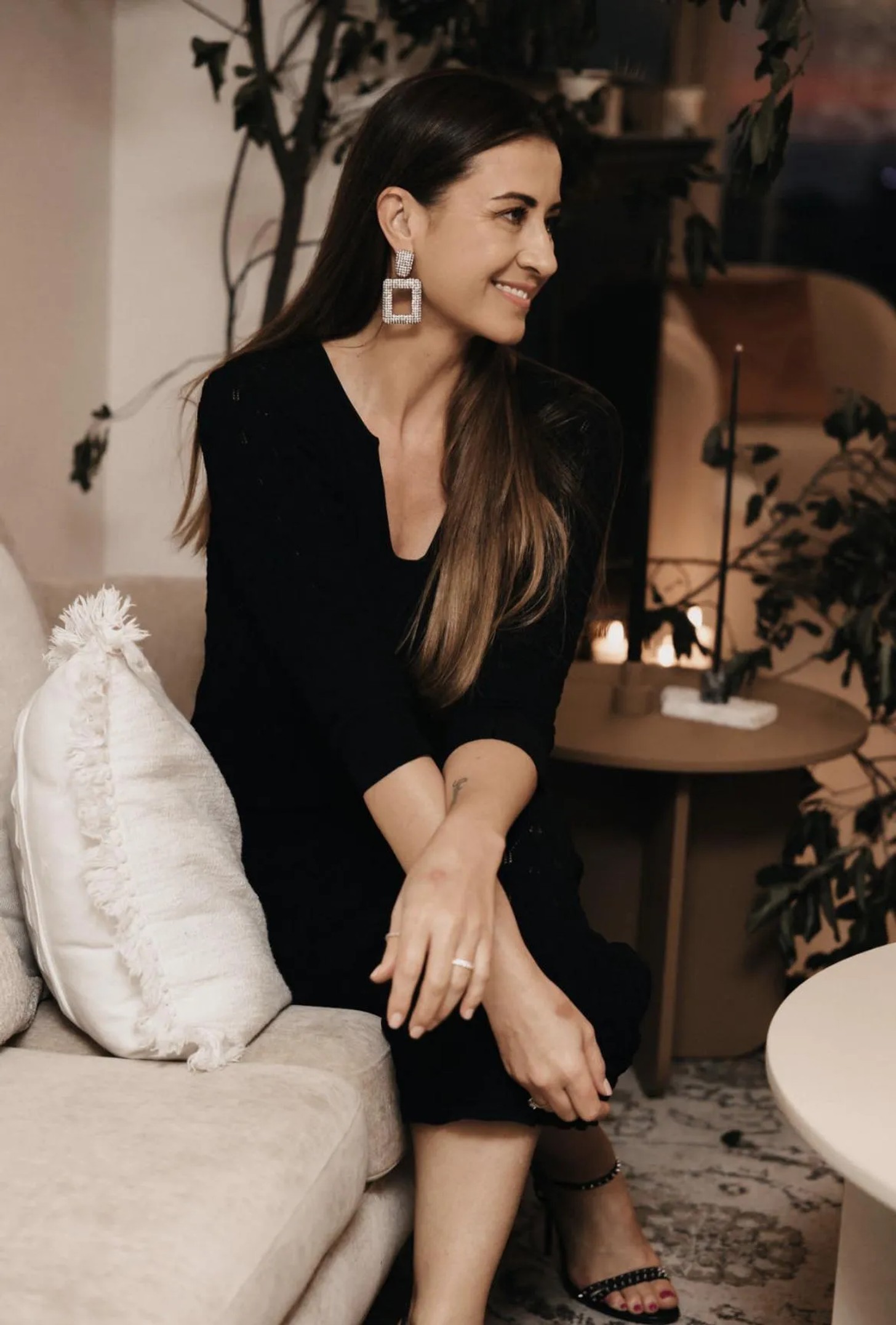
GLAMOUR: You’ve spent more than 15 years building some of the most recognisable beauty, fashion, wellness and lifestyle brands in South Africa. Looking back, what have those years taught you about what makes a brand truly unforgettable?
Lorinda: I think the brands we remember are the ones that make us feel something. You can have the biggest budget, the most beautiful campaign or the most famous face, but if there is no emotional connection, people move on very quickly.
Over the past 15 years, I have learnt that relevance cannot be manufactured. The most unforgettable brands understand the people they are speaking to, the culture they are participating in and the role they genuinely have permission to play in people’s lives.
That is particularly true in beauty and lifestyle. Hair can be deeply connected to identity. Fragrance can transport you back to a person or a moment. Makeup can change how someone feels when they walk into a room. The product matters, of course, but the meaning people attach to it is often what makes the brand stay with them.
I also think consistency matters more than we sometimes acknowledge. You do not build trust through one incredible campaign. You build it by showing up meaningfully, again and again.
GLAMOUR: You’ve worked with major international names including Revlon, Elizabeth Arden, Tommy Hilfiger and Calvin Klein, while also championing local entrepreneurs and talent. How has working across such different brands shaped your own approach to PR and brand strategy?
Lorinda: It taught me very early that there is no universal formula for relevance. A global brand arrives with heritage, equity, and often very clear international guidelines, but our responsibility locally is to understand how that brand becomes meaningful in the South African context. A locally founded brand may have a completely different challenge: it can be incredibly culturally connected already, but need help translating that into visibility, positioning and growth.
Working across both has made me very protective of authenticity. I do not believe in forcing every brand to follow whatever is trending at the moment. My first question is always: what is true to this brand, and where does that truth intersect with what people genuinely care about?
It has also taught me the value of collaboration. The best work rarely comes from one person having all the answers. It comes from bringing together the right media, creators, cultural voices, suppliers, clients and creative partners, and respecting what each person brings to the table.
GLAMOUR: At what point did you realise you wanted to take everything you had learned and build something of your own?
Lorinda: I think the independent streak was probably always there. My fascination with media and brands started incredibly young. At 12, I was already the head prefect of media at school and was running a school magazine, so, looking back, there was clearly something about storytelling, communication, and bringing ideas to life that had captured me long before I understood it could become a career. Professionally, my journey started in 2001 with Café Vacca Matta in Cape Town, where I worked in marketing and brand management. I assisted the team in building the business to four branches in South Africa within two years. From there, I joined Fashion TV South Africa as National Brand Manager, where I was involved in opening 11 branches in two years and had the opportunity to work with FTV International CEO Michal Adam on growing the brand’s presence in Africa.
Those experiences taught me an enormous amount about building brands from the ground up. I loved the pace, the creativity and the challenge of taking an idea and turning it into something people wanted to experience and be part of. But I also realised quite early that I had a very independent way of thinking and a strong instinct for how I wanted to build brands and relationships.
That eventually led me to start my own brand awareness agency in 2011. A real turning point came in 2013 when I worked on the South African launch of Tommy Hilfiger. That project ignited something different in me. I realised how much I loved the intersection of PR, events, media, influencer marketing, brand experience and culture. It opened the door to working with more international brands and ultimately shaped much of the work I still do today. So I don’t think there was a single moment when I suddenly decided I wanted to build something of my own. In many ways, I had been building towards it since I was 12 years old. I just didn’t know then what it would eventually become.
GLAMOUR: What did putting your own initials on the door and launching Elvee Consultancy represent for you personally?
Lorinda: It was incredibly personal, which is probably why I chose my initials. There is nowhere to hide when your own name, even in abbreviated form, is attached to the work.
For me, Elvee represented ownership. Ownership of the work, the decisions, the successes, the mistakes and ultimately the kind of business I wanted to create. It also represented trust in myself. I had spent so much of my career making other brands visible and helping other people believe in their ideas. Starting Elvee meant turning some of that belief inward and saying: I have learnt enough, I have built enough relationships, and I have something of my own worth building. I still feel that responsibility every time something goes wrong with Elvee’s name attached to it.
GLAMOUR: You’ve spoken about wanting Elvee to feel successful not just “on paper”, but behind the scenes too. What does success look like to you today compared with when you first started your career?
Lorinda: Earlier in my career, I probably associated success with momentum: being busy, being needed, having another project, another event, another opportunity, and constantly moving forward. There is something intoxicating about that when you are ambitious.
Today, my definition is much more layered. Of course, I want Elvee to be commercially successful and I want to produce exceptional work. But I no longer believe success should require you to disappear inside your business. Success now is doing work I am genuinely proud of, having clients who trust me, maintaining relationships that matter, being financially sustainable, and still having a life and a sense of self outside of the next deadline.
I have realised that peace and a balanced nervous system are also measures of success. So is having the ability to say no to something that is not right for you, even when you technically could make it work.
GLAMOUR: Much of your career has been rooted in industries where women are powerful drivers of culture and purchasing behaviour. What have you learned about women through the work you’ve done over the past 15 years?
Lorinda: That women are far more discerning than brands sometimes give them credit for.
Women notice when they are being spoken at rather than listened to. They know when empowerment is simply a campaign line and when a brand has genuinely made the effort to understand their lives. They also do not constitute a single neat demographic. A woman can be ambitious and exhausted, confident and vulnerable, a mother and a businesswoman, deeply interested in beauty and equally serious about everything else in her life.
I have also learnt how naturally women create community. We recommend things to one another. We share information. We tell our friends when something works. We celebrate each other, and increasingly we are demanding to see more honest and varied versions of womanhood reflected back at us.
Brands that respect that complexity build much deeper relationships with women than brands that reduce them to a target market.
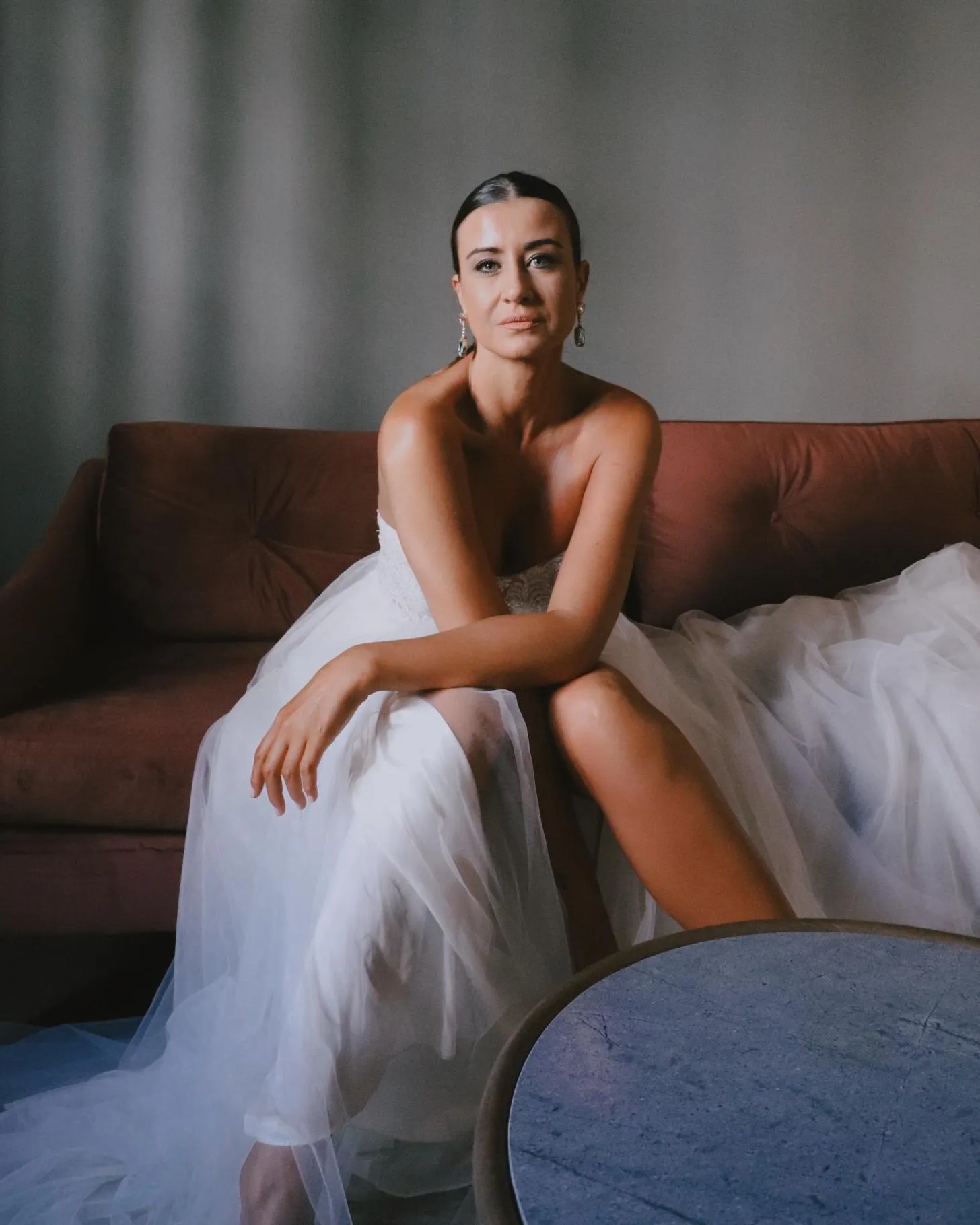
GLAMOUR: You’ve described beauty as being about much more than a product, that hair can be identity, fragrance can be memory and makeup can be confidence. Where do you think brands sometimes get it wrong when speaking to women?
Lorinda: I think the biggest mistake is starting with what the brand wants to say rather than what the woman might actually want to hear, feel, or experience.
There is still a tendency to flatten women into very predictable narratives: confidence, empowerment, perfection, transformation. Those words can be meaningful, but only when there is something real underneath them.
Women do not need every beauty brand to tell them they are beautiful. Sometimes they want expertise. Sometimes they want inspiration. Sometimes they want to discover something new, solve a practical problem, express a different side of themselves or simply enjoy a product.
The opportunity is to give women more credit. Speak to the whole person, not the insecurity you hope your product can fix.
GLAMOUR: The Elizabeth Arden “Let Your Aura Bloom” campaign turned a fragrance campaign into an opportunity for women to nominate and celebrate other women. Why do you think creating spaces for women to recognise one another is so important?
Lorinda: Because there is something incredibly powerful about being seen by another woman.
With “Let Your Aura Bloom”, I loved that the recognition did not begin with the brand saying, “Here are extraordinary women.” It began with women looking at the people in their own lives and saying, “I see what you have survived, what you have built, how you have grown, and I think your story deserves to be celebrated.” That changed the emotional centre of the campaign. Yes, we were launching a fragrance, but we were also creating a space for gratitude, recognition and connection.
I think we need more of that. Women are so often encouraged to compare themselves with one another. Creating spaces where we actively honour one another shifts that energy. It reminds us that another woman’s light does not diminish our own.
Those are also the moments where a brand can begin building something much more meaningful than an audience. It can begin building community.
GLAMOUR: What does meaningful representation look like to you when it comes to beauty, fashion and lifestyle brands?
Lorinda: For me, representation is not simply putting different faces into the same campaign template. It is asking whether different women are genuinely being considered in the idea, the storytelling, the product experience and the decisions behind the campaign.
Meaningful representation should feel normal rather than performative. South African women are incredibly diverse in age, race, hair texture, body shape, language, background, style and life experience. Our work should reflect that reality without turning every difference into a marketing statement.
The “Revlon x GLAMOUR Unforgettable Cover Girl Search” is a good example of something I found meaningful. Instead of automatically putting another established celebrity on a cover, we opened that platform to everyday South African women and asked them to tell us about the unforgettable moments that shaped them and the dreams they were still pursuing.
Representation becomes powerful when people do not only see someone who looks like them. They see the possibility that spaces like that can belong to them too.
GLAMOUR: Are there any women, personally or professionally, who have influenced the way you lead, build relationships or approach your career?
Lorinda: There have been many, and not all of them have influenced me in obvious ways.
Professionally, I have been fortunate to work alongside women who are incredibly smart, demanding, generous and committed to what they do. Some have taught me about leadership, some about resilience, some about creativity and others about the importance of having standards.
But I have also learnt from the women I encounter through campaigns: founders, journalists, creators, clients, consumers and women who have shared very personal stories with us. You realise quickly that influence is not always attached to a title.
More than anything, the women who have influenced me most are those who have remained themselves while becoming successful. Women who can be powerful without becoming hardened, who make space for other people and who understand that relationships matter. That is the kind of woman and leader I continue trying to become.
GLAMOUR: You’ve said that women are often expected to carry businesses, teams, families, expectations and everyone else’s emergencies. Was there a particular moment in your own life or career that made you rethink what strength meant?
Lorinda: It was less one moment and more the accumulation of many years of being the person who could always handle it.
When you become known as capable, people naturally bring things to you, and you also start bringing everything to yourself. You solve it, fix it, make the plan and keep moving. For a long time I wore that capacity almost like a badge of honour.
Eventually, I had to ask myself whether being able to carry something constantly meant I should keep carrying it. That changed my understanding of strength. Strength is not only endurance. Sometimes it is putting something down. Sometimes it is asking for help, admitting that you are tired, choosing not to respond immediately or deciding that something is simply not yours to carry. I am still learning that. I do not think you undo years of conditioning overnight.
GLAMOUR: What have you had to learn about boundaries, saying no and protecting your energy as you’ve grown as a businesswoman?
Lorinda: I have had to learn that a boundary is only a boundary if you are prepared to uphold it.
I used to think being accessible, accommodating and able to make almost anything happen was part of being excellent at my job. And to a degree, service matters enormously to me. But there is a difference between excellent service and teaching people that you are endlessly available.
Saying no was difficult because I could usually see a way to make something work. The question I ask more often now is not, “Can I do this?” but, “Should I do this, and what will saying yes require from me?”
Protecting my energy has made me more intentional, not less committed. I would rather give my full attention to the work and people I choose than spread myself so thinly that everybody gets a depleted version of me.
GLAMOUR: Is there a version of your younger self that you wish you could sit down with today? What would you tell her?
Lorinda: I would sit with the version of myself who believed she needed to prove how capable and worthy she was all the time.
I would tell her that she does not have to earn her place in every room by exhausting herself. She does not have to have every answer immediately. She is allowed to change her mind, leave things behind, begin again and become a different version of herself as many times as she needs to.
I would also tell her to enjoy more of it. Ambitious people can become so focused on the next milestone that they barely register the life they once hoped for when it arrives.
And I would tell her that softness and strength are not opposites. You do not have to become harder to become more powerful.
GLAMOUR: Do you think women are still under pressure to prove themselves by how much they can handle, rather than by the quality of what they create?
Lorinda: Very much so. I think we have romanticised the woman who can do everything.
We celebrate the full diary, the late nights, the constant availability and the ability to hold multiple roles simultaneously, often without asking what that is costing her.
There is also an uncomfortable contradiction: women are encouraged to be ambitious, but we are still often expected to make that ambition look effortless. I would like us to become much more interested in the quality, originality, and value of what women create than in how much suffering they can absorb in the process. Being overwhelmed should not be the admission price for being taken seriously.
GLAMOUR: What has becoming a business owner taught you about yourself that working within the corporate or agency environment never could?
Lorinda: I recently read a quote that said, “Running a business is basically one long spiritual awakening with invoices.” And honestly, I felt that deeply.
Being a business owner has probably been one of the most profound personal and spiritual assignments of my life. You start out thinking you are building a business, but somewhere along the way you realise the business is also building you.
Entrepreneurship will humble you. It will expose the parts of yourself that still need work. It will test your resilience, your patience, your boundaries, your leadership and your sense of purpose. It will ask you to take risks when there are no guarantees, make difficult decisions when nobody else can make them for you, and still somehow show up for yourself, your clients, and the vision you are trying to build.
That is something working within someone else’s structure could never have taught me in quite the same way. When the business is yours, there is ultimately nowhere to hide. The successes are yours, but so are the mistakes, the difficult decisions and the lessons.
And I think that has changed me profoundly. Every challenge, setback, risk and breakthrough has shaped me into the woman I have needed to become to carry the vision I have for Elvee. I am stronger than I was when I started, but I also think I am softer in some ways. Wiser. More intentional. More grounded. And much clearer about what matters to me. There is something incredibly beautiful about that process, even when it is uncomfortable. You think you are building the business brick by brick, but the business is quietly building you too, lesson by lesson.
GLAMOUR: You’ve described this next chapter as being less about doing more and more about doing what matters. What does that look like for you in practice?
Lorinda: It means being much more intentional about where I put my time, energy and creativity, but also about how I want to work and how I want people to feel when they work with me.
I want to work in environments where there is trust, respect and a genuine sense of equality. I have become increasingly passionate about the idea that respect should never be determined by somebody’s title, seniority or position in the room. Whether you are the client, the founder, the intern, the supplier, the creator or the person helping us set up an event, everybody deserves to be treated with the same dignity.
I think we sometimes become so focused on building brands and businesses that we forget we are also building cultures around them. And for me, a healthy workplace culture should be about uplifting people, sharing knowledge, creating opportunities and helping the people around you grow.
I want younger people coming into this industry to feel that their voices matter. I want suppliers and partners to feel like collaborators rather than transactions. I want clients to feel that we are on the same team. And I want people to know that being kind and respectful does not make you any less ambitious, authoritative or good at what you do.
That is also what community means to me. It is not only something we should be trying to create externally for brands and consumers. We should be creating it within our industry and our workplaces too. So when I say this chapter is about doing what matters, that is a big part of it. I want Elvee to deepen rather than simply expand, and I want whatever I build to leave the people who were part of it feeling valued, respected, and, hopefully, a little more empowered than when they arrived.
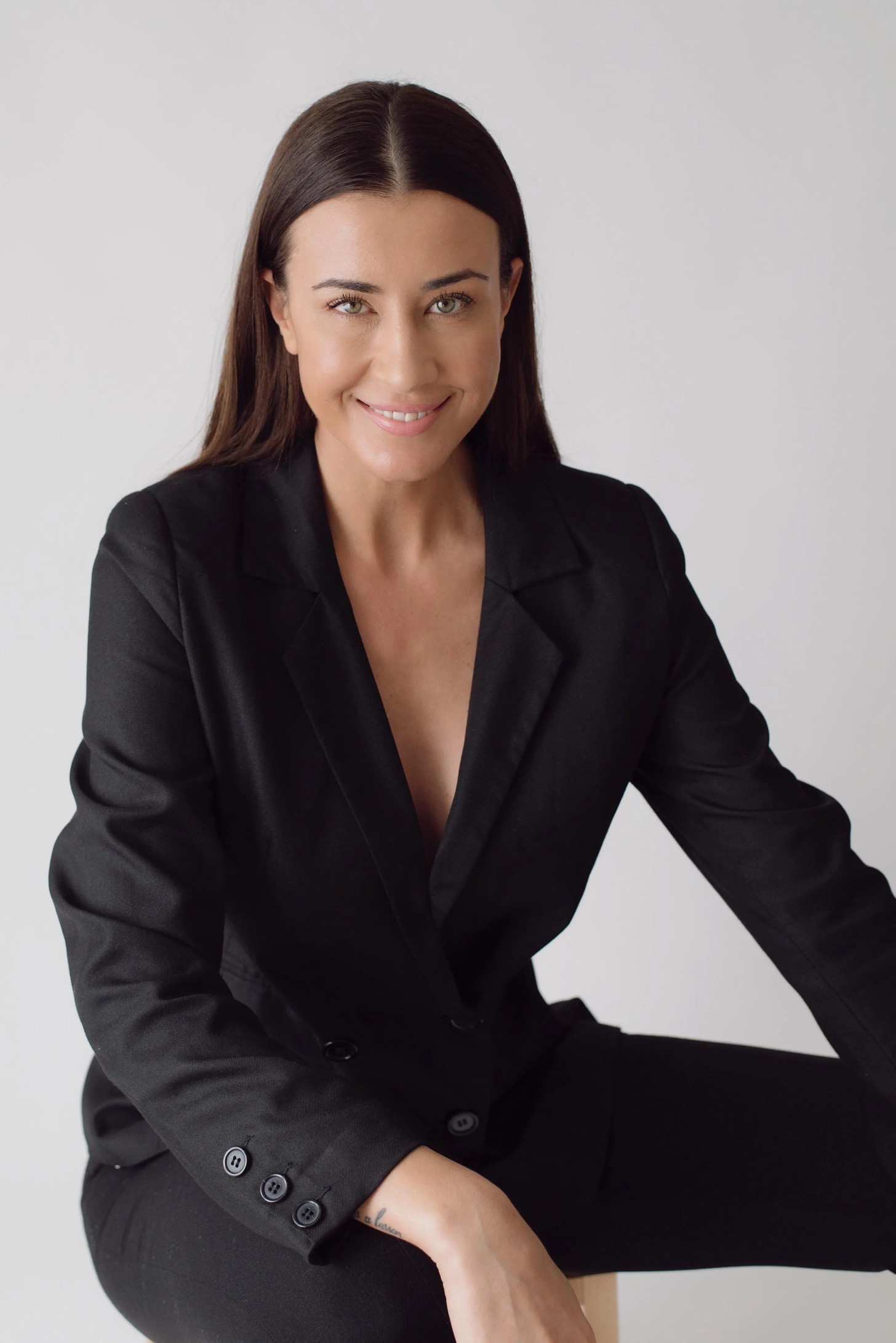
GLAMOUR: After 15 years of making other people and brands impossible to ignore, what are you most excited about making possible for yourself?
Lorinda: A life that feels as meaningful behind the scenes as the work sometimes looks from the outside.
I am excited about giving myself more room to flow, create, be curious, enjoy what I have built and explore what the next version of Elvee can become without feeling that everything has to happen immediately.
I also want to become more visible in my own right. Not because I suddenly want to be the story instead of the brands I represent, but because, after 15 years, I have something to say about this industry, about culture, women, relationships, and building a business.
For a long time I was most comfortable behind the scenes. I think I am finally allowing myself to take up a little more space in the story I have spent years creating for everyone else.
GLAMOUR: What kinds of brands, founders, women or ideas do you want Elvee Consultancy to champion in this next chapter?
Lorinda: I want to work with brands and people who understand the power of bringing women together.
More and more, I find myself drawn to ideas that create genuine connection. I don’t only want to build campaigns that women see; I want to create experiences and platforms that women can feel part of. Spaces where they can meet, share, learn from one another, celebrate each other, and, hopefully, leave feeling a little more seen, heard, and connected.
I would love Elvee to continue championing South African women and talent, but I also want to help brands understand that community is not something you create through a single event, an influencer campaign, or a hashtag. You build it slowly, through trust, consistency and creating reasons for people to keep coming back to one another.
Ultimately, I want Elvee to become known for bringing people together. If our work can help women discover one another, open doors for one another, celebrate each other and feel that they belong to something meaningful, then I think we are creating something far more valuable than brand awareness. I want us to build brands, yes, but I also want us to build belonging.
GLAMOUR: What do you hope people feel when they work with you and Elvee, beyond the results of a successful campaign?
Lorinda: I hope they feel that I cared. About their brand, yes, but also about the people involved, the details. More than anything, I hope people feel seen.
I want people to feel that they matter, regardless of their title, their following, their position in the room or what they can do for me. Whether you are a client, a creator, a supplier, a journalist or someone I have just met, I want you to feel that I genuinely see you and value what you bring.
I think that has become increasingly important to me as I have grown older. We spend so much of our lives working, and I don’t want the spaces I create to be only about deadlines, deliverables, and what we can achieve. I want there to be heart in them. I want people to feel comfortable enough to be themselves, confident enough to share an idea and supported enough to grow.
And if I can open a door for someone, make an introduction, share something I have learnt or create an opportunity that helps another person move forward, I want to do that. I don’t believe somebody else has to become smaller for me to succeed. There is space for all of us to grow.
That is also why community has become such an important word for me. It is not just about bringing people into a room. It is about what happens once they are there. Do they feel welcomed? Do they feel heard? Do they leave having connected with someone they might never have met otherwise? Do they feel a little more confident, inspired or supported?
Ultimately, I hope people remember that working with Elvee felt human.
Campaigns will come and go. The beautiful events eventually get packed away. The reports get submitted, and we move on to the next brief. But people remember how you made them feel.
If someone walks away from an experience with Elvee or me feeling seen, respected, uplifted and as if they belonged there, that means as much to me as any successful campaign ever could.
Recent stories by:
Thobeka Phanyeko

Beyond International Day of the Girl Child, empower your daughter with financial literacy

Women in Charge: Annelene Dippenaar on Leadership, Inclusion and the Business of Real Impact

This is how you can avoid a low credit score

Motivation Monday: This is how you can shift from Financial Anxiety to Financial Clarity


