
With a background spanning talent management, legal studies, and hands-on brand development, Kirsten Leo is quietly laying down the legal and commercial infrastructure needed to turn raw creative talent into sustainable, globally competitive businesses
Here, she opens up about the lessons learned along the way, the importance of fashion law, and lets us in on her her ambitions

Glamour: Your journey from an administrative assistant at a talent management agency to founding LEO SZN is anything but conventional. Looking back, was there a defining moment when you realised that you weren't just building a career in the fashion industry, but preparing yourself to lead and shape it?
Kirsten Leo: That's a big question! There were a series of defining moments this year that truly struck a chord with the deepest parts of me, and which impacted the business exponentially - both on a positive and a negative front. Learning to navigate through these waves, execute strong work, build and grow a strong team and expand the business in ways unimaginable all proved to me that LEO SZN could be everything I hoped it would be, and more. That was incredibly liberating.
The Creation Africa programme absolutely was the catalyst, and refined this growth, too. The masterclasses and mentorships that we attended, albeit on an intense schedule, were invaluable and looking back a year today, the programme certainly helped to shape and lead me and the business to where we are today.
GLAMOUR: When your parents could no longer afford your law school tuition, you had to find a way to fund your own education. How did that experience shape your relationship with independence, ambition, and the kind of leader you have become?
Kirsten: I am the eldest daughter of a boys-only family! Haha! 9 boys and 1 girl in total in the entire family - across my cousins, too- so I think I am pretty tough and ambitious. I started working on the weekends in retail stores from the age of 16, so I was well acquainted with working and studying by the time I got to university. I also really love to work, so it was really a win-win situation. I hated being a broke student! lol
It definitely was not a walk in the park, though; I’ll tell you that for free! But by the grace of God, each challenge I faced was a lesson that came to me (sometimes years later) in an “ah-ha!” moment.
I think every step had its own challenges and lessons that prepared me for this “final boss”: founding and running LEO SZN. The experience is a constant transition, so I am excited to see how we evolve into the next phase of our work.
GLAMOUR: You describe founding LEO SZN as the culmination of everything that came before it. What gap in the African fashion industry did you see that made you feel compelled to build a business of your own?
Kirsten: In the beginning, we thought that the gap was between the incredible talent that creatives possess and the strength of their business models. As we went deeper into the issues, I quickly understood that while we may have been right on the business model challenges that designers faced, we were also confronted with challenges across the fashion, textile, legal and manufacturing sectors that widened this gap. The entire ecosystem needs contributions from legal, accounting, IP ownership, and logistics sectors to thrive. Through my experience working in creative businesses, my knowledge and expertise from my formal education, a strong and thriving network of creatives and professionals willing to support the cause, and an inherent instinct to use what I have to help others, it felt like the natural next step in the journey. GLAMOUR: You have an ambitious vision to build the LVMH of the African continent. What would that look like in practice, and what needs to change within Africa's fashion ecosystem for homegrown designers to build globally competitive businesses?
Kirsten: Ambitious, indeed! Sometimes I think I must be crazy to dream this big, but why not? France gave the world LVMH—proving that structure, discipline, and capital turn raw creative genius into global, multi-generational power. With the right support, expertise and experience, why don’t we build the LVMH of Africa? I am confident (ambitious? delusional? haha!), and think we all have something to contribute, but influenced by my academic background, I am compelled to start with empirical data that helps us form policy frameworks and legislation around fashion law in the SADC region. In practice, I have become certified and have launched The Ali Project - a two-fold programme that provides designers with business and brand development skills, while collecting empirical data that helps us validate available sources that structure and formalise the sector. This project is supported by the Embassy of France in South Africa, Lesotho and Malawi and the French Institute of South Africa through the Création Africa. I think that with the correct support, expertise and structure, we could build something wide-reaching and that contributes meaningfully to the African fashion ecosystem.
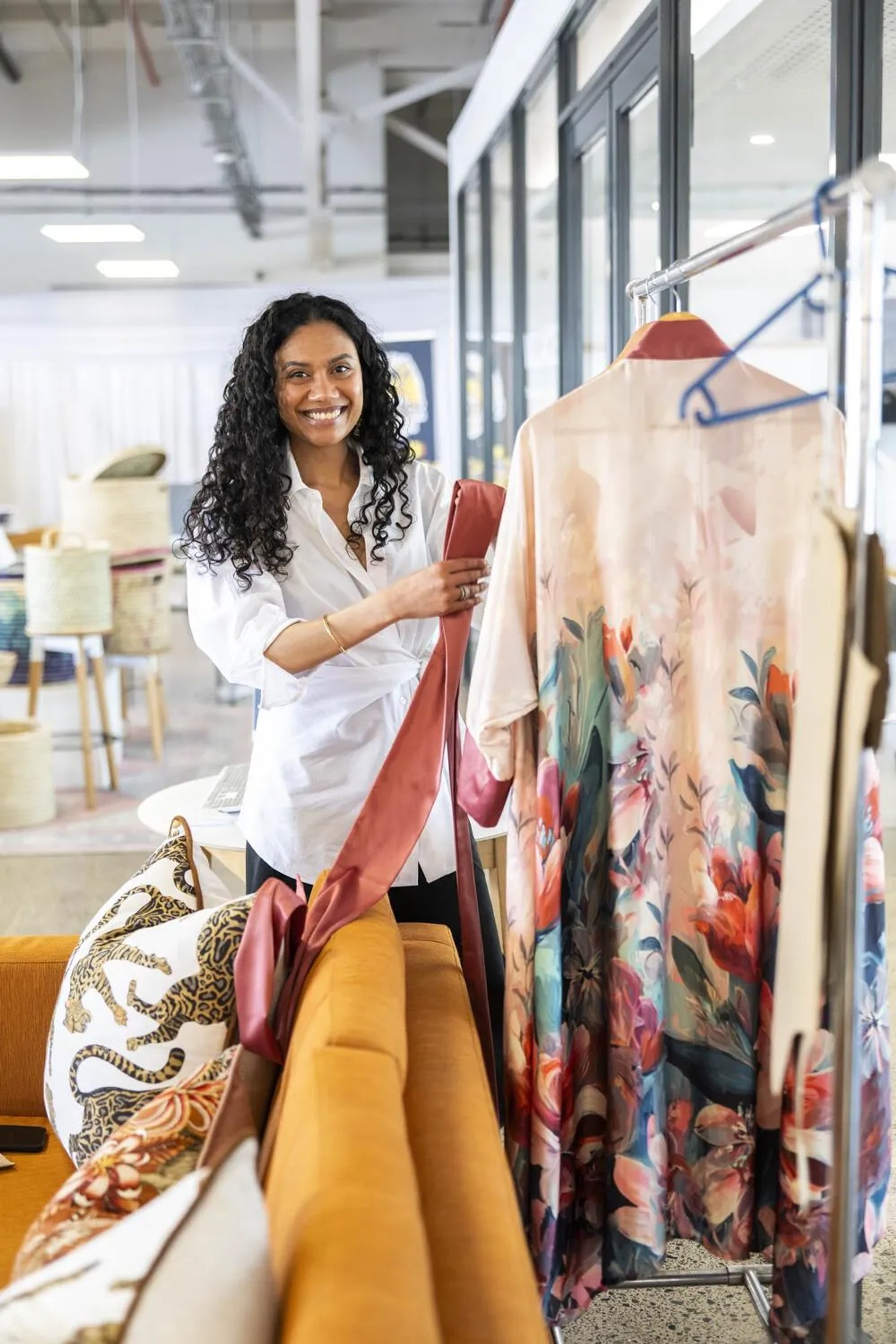
GLAMOUR: Fashion is often celebrated for its creativity, but the commercial infrastructure behind it receives far less attention. Why is investing in the business of fashion just as important as investing in design and creative talent?
Kirsten: I once heard, “You can make a pretty dress, but can you build a business around it to sustain it?” That hit home for me. Creatives create from their soul, from what's within, and I think it's really freaking brave to create something from within, show it to the world (which sometimes can be so cruel) and ask them to pay money for it. That's brave! Now, if someone makes something very pretty, shows it to the world, and people actually want to pay money for that thing, they need to be able to sustain that demand by building a business around that product. And then comes the real work. I think that kind of bravery and talent should be supported, given space to grow.
There's a podcast that David Tlale was on that succinctly put it: when you invest in building fashion businesses, you are investing in employment, in a stronger textile industry, a stronger creative economy. Fashion and textiles contribute tremendously to our GDP. These sectors must be recognised and receive investment into the infrastructure that sustains them.
GLAMOUR: You are now pursuing certification as a Fashion Law Practitioner through the African Fashion Law Institute. How do you see the intersection of law, intellectual property, and business becoming a game-changer for African designers, particularly when it comes to protecting their creativity and building sustainable brands?
Kirsten: These are all very closely aligned. A designer's creation is their IP, and being informed on how to protect, grow and monetise that IP is imperative for business growth. Seeing more formalisation around labour and employment law, protecting models’ rights, greenwashing and responsible production, agriculture, registering trademarks and even crunching down on policy regarding mining of minerals for our jewellery is something that needs serious attention and nurturing. Our entire ecosystems rely on this to stabilize and scale. If we want to build an LVMH-esque conglomerate, we need to ensure that top to bottom is covered. This is an imperative, strategic key to protecting creativity while building sustainable brands.
GLAMOUR: Through LEO SZN, you're creating opportunities for designers through showrooms, retail placements, workshops, and platforms such as SA Fashion Week. What responsibility do you believe established industry players have in opening doors for the next generation of African creative talent?
Kirsten: Make the circle bigger! Haha. But really, that's how I feel. I work and experience work in a very open format - I am open and willing to share ideas, insights, opinions, and willing to receive them too. I think the time for gatekeeping is done; it’s served its purpose for the time that it did, and now we have a new generation of brilliant, passionate, humble creatives who are dealing with an entirely new set of challenges on top of the existing ones, and leading with purpose and openness is something I sincerely strive for. I am lucky to have a very strong network of individuals and institutions who share the same values, and so it is a collaborative spirit to open doors for the next generation. I think recognising these things, and using our God-given talents to build a strong foundation for the next lot of creatives is important for me.
GLAMOUR: As a woman building a business in an industry that is both creatively driven and commercially demanding, what has been your biggest lesson in leadership? Have you ever had to make an unpopular decision to protect the bigger vision?
Kirsten: Two big lessons I learned this year: Leaders Eat Last, and your business is only as good as you are. If I am unwell, overwhelmed or battling through something, the business will echo that energy, and that's not good. Learning to let go, take care of yourself, and allowing the incredible talent around you to constantly inspire you is something I have to remind myself often in order to be a good leader. It also allows space for a regulated nervous system, clear decision-making and general calmness that is a superpower in a highly chaotic industry.
GLAMOUR: You speak about trusting that everything that needs to happen for fate to take its place will happen. How do you balance that belief with the very practical realities of building and scaling a business?
Kirsten: Learning to trust your intuition and act on your instincts (informed, well-regulated, and precise), coupled with years and years of experience in the industry, multiple qualifications in formal education, and a good read of people, helps me to balance this belief with the realities that we face every day. For example, if there is an opportunity that comes up, and every turn we take, there seem to be obstacles or challenges that are unusual or persistent, that's usually my little red flag to know that we may need to adjust the strategy or approach, or that this is simply not right for us. I am not saying give up at every opportunity, but know when the writing is on the wall and move along.
On the other hand, some projects and opportunities come up, and just flow from start to finish (even with a couple of challenges along the way); those are my special signs that fate is playing its role. It's never just a reliance on intuition though; I think we are very lucky and have worked hard to be in the advantageous position that we are in (see, that's fate. haha).
GLAMOUR: When you look five or ten years ahead, what would make you feel that LEO SZN has genuinely changed the trajectory of African fashion, and what legacy do you hope to leave for the women who will come after you?
Kirsten: In five to ten years from now, having reliable, empirical data on the fashion, retail and manufacturing landscape that is accessible across the continent to fashion designers, along with multiple ecosystems that support the development of collections and fashion businesses, and having this across the continent under the LEO SZN ambit would be the signal that Mama, we made it! Supporting designers to enter markets on different continents, and growing household names under our brand would be a dream come true. I hope to leave a legacy of compassion and humility, and a genuine collaborative spirit that grows the fashion industry on the continent.
Recent stories by:
Thobeka Phanyeko

Our Favourite Moments from Stars and Vows: Anele & Buzza

Founder of GUGUBYGUGU, Gugu Peteni reflects on identity, local sustainability, and redefining African craftsmanship on the global stage

Motivation Monday: Founder of Soul Speak, Nokwanda Khumalo on the power of human connection and leading with grace

Inside Anele and Bonelela " Buzza" James Mgudlwa’s four-part Netflix wedding special, Stars and Vows ahead of the premiere


