
You can hear Popi Sibiya’s voice before you even see her. Her unmistakable animated narration, effortlessly moving between isiXhosa and English, has become a signature of her work. Then comes the familiar invitation: “Link in bio.” It’s a phrase her audience knows well, part punchline, part invitation to follow wherever the story goes next.
But there is more to Popi’s work than travel and a good story. Her content sits at the intersection of culture, people and the everyday realities often left out of glossy travel guides. She finds humour in ordinary moments while touching on complex issues around class, race, inequality, safety and how different communities experience the world.

She takes us beyond the obvious, into people’s homes, around their dinner tables and into the rhythms of everyday life. Her storytelling can be playful and deliberately exaggerated, but the curiosity behind it is genuine. She wants us to look at the people behind the places and recognise the similarities in how we live, work, dream and navigate the world.
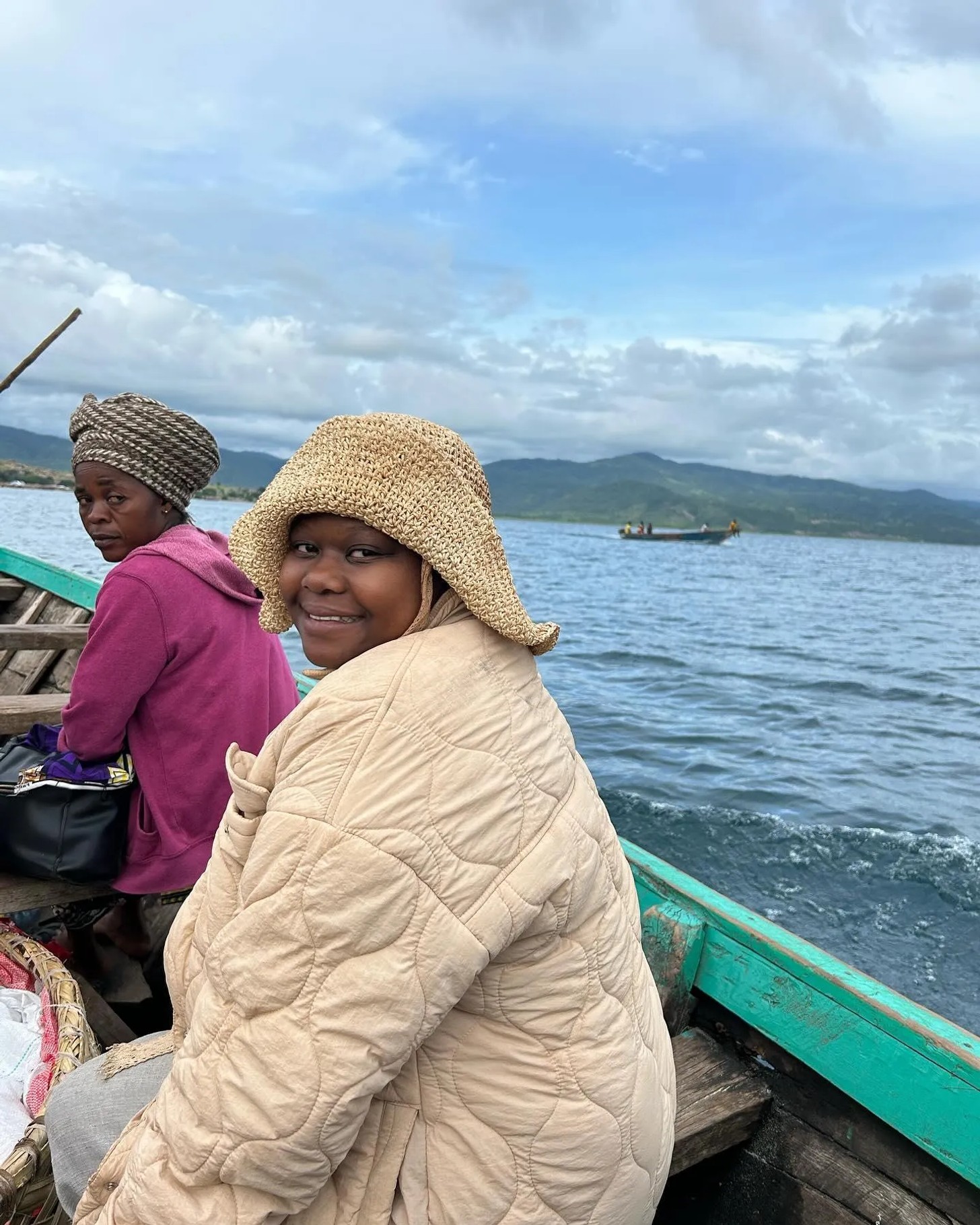
As her platform has grown, so has the conversation around what she does. Sibiya is not only navigating the pressures of being a creator, but the responsibility that comes with showing audiences a world that is often more complicated than the version presented online.
Popi sat down with GLAMOUR’s Sindeka Mandoyi to open up about finding courage in the unknown, the realities behind her travels, her complicated relationship with social media, and the community that continues to show up, even when there is nothing new to post.
GLAMOUR: Let’s take it back to the beginning. Before the travel, the content and the fame, who is Popi? Where did you grow up?
Popi Sibiya: I grew up in Bisho in the Eastern Cape. I’m one of four siblings and I’m the youngest. It was a pretty normal childhood. Nothing much happened, but it was safe and predictable.
We didn’t travel much as a family. During school holidays, we’d go to my grandmother’s house in Alice, or to the beach in East London. That was pretty much what travel looked like for us growing up.
GLAMOUR: Before you started creating content full-time, what were you doing?
Popi Sibiya: I started out as a business analyst. Then I moved to China, where I taught English, and eventually became a full-time content creator. Each experience gave me something different, but my love for travel really started developing while I was still working as a business analyst.
@popi_sibiya I found the San of Botswana! 🇧🇼😃 #thepopishow ♬ original sound - The Popi Show | Travel 📺 🌍
GLAMOUR: Do you remember your first international destination?
Popi Sibiya: I think it was Lesotho, while I was still working as a business analyst. That was around the time the travel bug really hit me.
I had a colleague who loved travelling. When I got my first car, she encouraged me to drive it everywhere and gave me places to visit. One of the first was Pilanesberg National Park, where she told me to do a self-drive game drive. After that, I was hooked.
Every six weeks or so, I’d save money, take leave and travel around Southern Africa — Lesotho, Eswatini, Zimbabwe and different parts of South Africa.
GLAMOUR: When did you realise that travel could become your niche and something you could offer people through your content?
Popi Sibiya: I was in China and wanted to pivot because I was bored of teaching. There were these two girls on Instagram who would work for three months, then travel the world until they ran out of money and go back to work. I thought, “Wow, what an interesting concept.”
I also liked the way they travelled. They didn’t do tourist attractions or try to see everything. They loved lounging on the beach and doing nothing. I remember watching their content and thinking, “This is interesting to watch.”
That’s where I got the inspiration to travel the way that I do. It’s a sort of slower type of travel. It’s not necessarily tourism and it’s not touristy.
Most travel content creators do the whole “10 things to do in Kenya” type of content. I thought there was room for something different, road travel rather than business class, living with people, looking for host families, telling people’s stories and taking an interest in how everyday people actually live.
GLAMOUR: One of the things that makes your content so compelling is how much you highlight everyday life. When you travel, how do you find the families who host you?
Popi Sibiya: Someone will DM me and say, “Hey, here’s a content piece. Why don’t you try this?” Or I’ll see something on TikTok and get inspiration.
Then I’ll post an Instagram Story saying, “Hey guys, any host families around here?” If it’s quiet, then I’ll have to knock door to door.
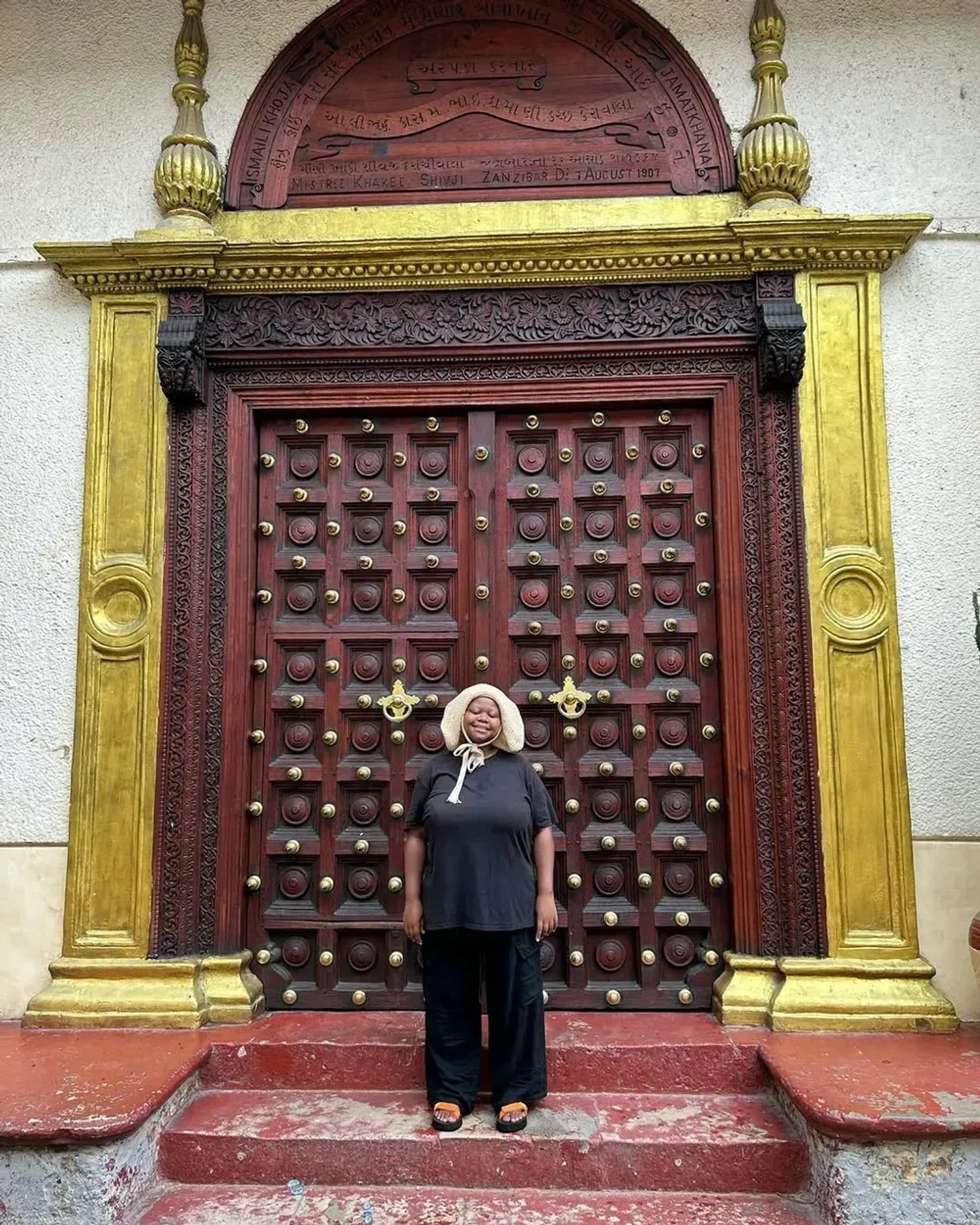
But now that the show is growing, there’s usually someone who watches the show wherever I go, especially in South Africa. In other parts of the world, like the Middle East and Asia, I still don’t have those connections, so I have to go door to door. “Can you host me? Can you host me?” Eventually, I find someone who is willing.
GLAMOUR: You’re incredibly courageous in the way you travel. Where do you think that courage comes from?
Popi Sibiya: I think a lot of it comes from how we were raised. Growing up, we had to justify our fears. If you said, “I’m scared to do this,” my parents would ask, “Why? What are you scared of?” You always had to explain what exactly you were afraid of.
That taught me that most of the time, we’re actually afraid of the unknown.
I remember being stuck in Gabon during a coup. I was on a road trip from South Africa to Ghana, so I still had several countries to travel through. People would ask me, “When they open the borders, are you going to go home?”
I thought, absolutely not. I kept thinking about what my parents would say. I imagined getting home and them asking, “Did you make it to Ghana?” and me saying, “No, there was a coup in Gabon.” Then they’d probably ask, “Okay, but how did that stop you from getting to Ghana?”
We really had to interrogate our fears growing up. So it’s difficult for me to let fear get in the way because once I interrogate it, I usually realise that it’s simply fear of the unknown.
GLAMOUR: Food is also such a big part of your content. What is your relationship with food, and what do you want people to take away from seeing it?
Popi Sibiya: I actually didn’t realise food was such a big part of my content. I think I just really like eating. I enjoy food, so naturally, if I’m eating something, it ends up in the content.
People will ask, “Don’t you get sick? What about your stomach?” And I’m like, we’re all human. We have the same organs and the same digestive system. If it’s good for them, it’s good for me.
Maybe subconsciously, I am showing people the different foods that grow around the world, how they’re prepared and how people enjoy them.
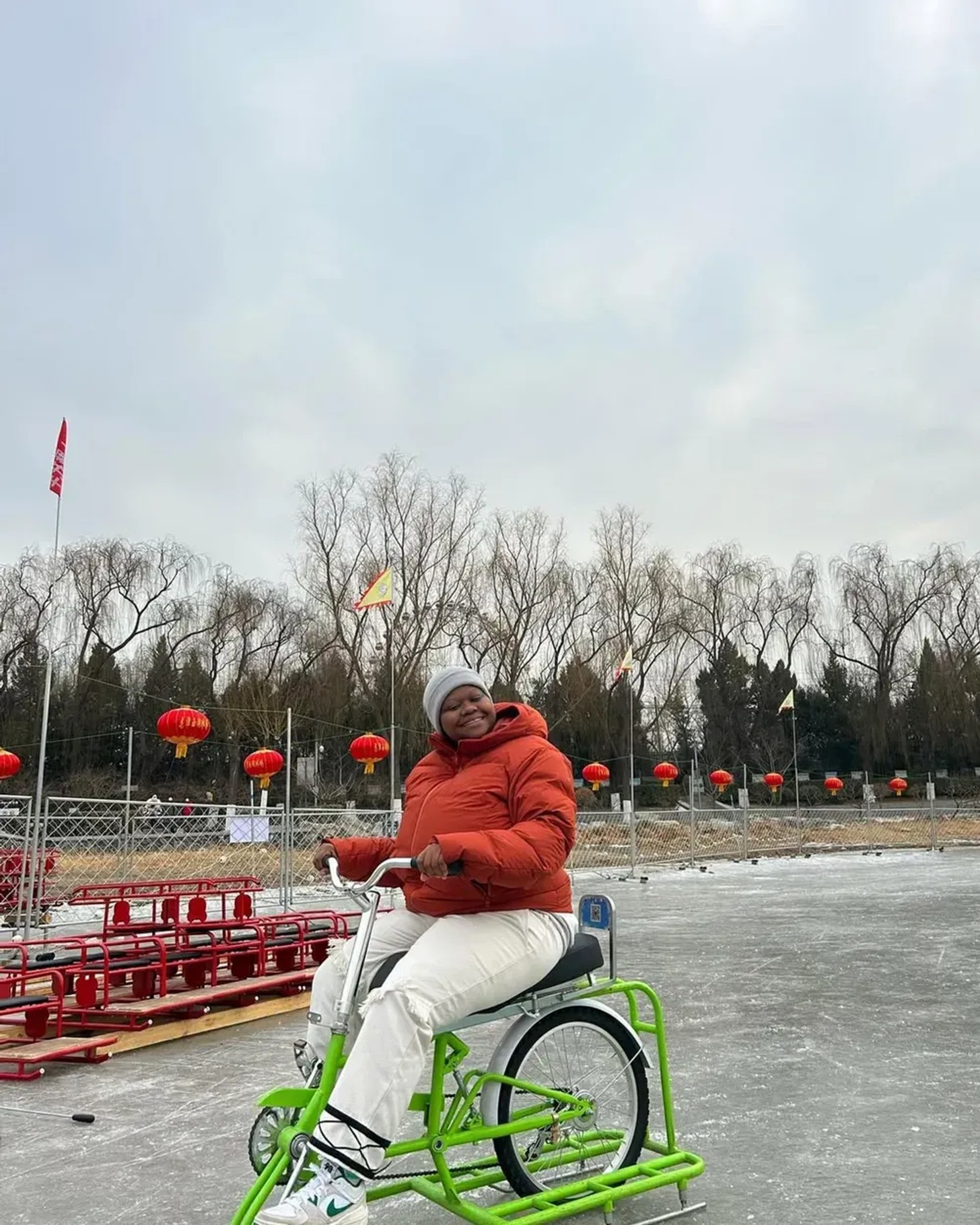
GLAMOUR: Storytelling is another huge part of your content. Where did that come from?
Popi Sibiya: We grew up listening to stories. My sister used to illustrate pictures while telling us stories, and we would sit there for hours listening.
So when I started travelling, storytelling felt natural. I wanted to tell people what was happening and make the experience more interesting.
Now, the stories don’t always correspond to what actually happened. Sometimes I’ll take footage of something quite ordinary and create a completely different story around it. I think I’m doing it for fun and to make the content go further.
GLAMOUR: You recently stepped outside your usual world of travel and appeared on The Masked Singer**. How did that opportunity come about?**
Popi Sibiya: When I was initially approached, my first reaction was, “Nope, not at all.”
I was travelling at the time, so I wasn’t sure I’d even be available. But then I thought, actually, this could be interesting. It was completely outside my usual world and outside my comfort zone.
@maskedsingerza Popi Sibiya traded a backpack experience for The Masked Singer stage? We made it!😍 Catch the repeat on Thursday at 21:00 on SABC 1. #MaskedSingerSA #MzansiSecrets #HebanaNiceTry #PapandWorsMaskSA ♬ original sound - The Masked Singer South Africa
People are interested in what I do, so I thought, let me try as many different things as I can. Let me see how far I can go. Eventually, I got back to them and said, “Fine, I’ll do it.”
GLAMOUR: What was it like being part of such a secretive production?
Popi Sibiya: It was amazing. Everything was incredibly hush-hush. You would wear a visor and a black hoodie and weren’t allowed to talk to anyone.
There was one person who knew who you were and they would take you to your dressing room. You’d get into your costume and then there was no talking. You had to whisper.
When you went on stage, someone would speak into your ear and give you directions. Then you’d go off stage without seeing anyone. I only found out who the other contestants were when I watched the show with the rest of the country.
GLAMOUR: Social media has played a big role in building your career. How has your relationship with it changed as your platform has grown?
Popi Sibiya: It used to be a playground where I connected with friends, but now it feels like a workplace. The platforms push you to be constantly present and posting, so it’s become a chore.
I also don’t feel as connected to my wider online community anymore. The algorithm often shows my content to people who don’t follow me before those who do. My Close Friends community is different because they’re repeat subscribers, so there’s a genuine connection there. But with random people online, I don’t feel that same sense of community.
GLAMOUR: How do you fund your travels?
Popi Sibiya: I charge a subscription, and that’s what funds the travel. People pay to watch my Close Friends content, and that’s how the show generates revenue.
People click the link in my bio, subscribe and that income allows me to continue travelling and creating the show.
GLAMOUR: When you’re not travelling for work or creating content, how do you switch off?
Popi Sibiya: Honestly, I visit friends and lie in bed. I’ve only recently started exploring more when I’m on leave. I used to work myself to exhaustion, so by the time I went on holiday, I’d just sleep.
Now I’m trying to travel for myself. I was recently in Lamu, Kenya, after spending time with a friend in Nairobi, and I’m heading to Moshi in Tanzania to visit another friend.
GLAMOUR: What do you think people who don’t travel will never understand about leaving your comfort zone?
Popi Sibiya: That it’s actually not that scary. I think people sometimes believe that everyone is out to get them.
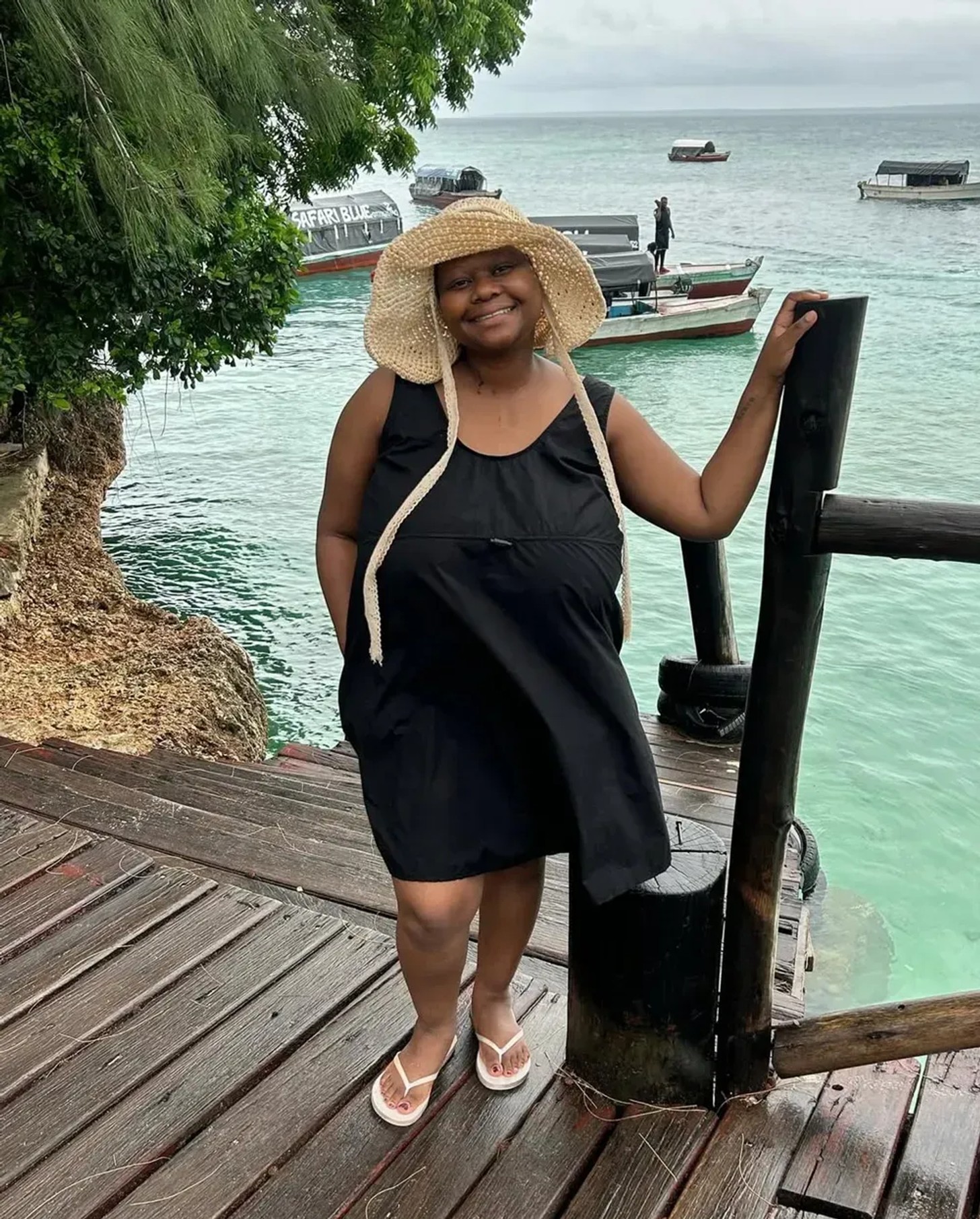
What I’ve learnt is that most people are simply trying to make it home. They’re going back to their families after work. Of course, dangerous things happen, but I think we often imagine people to be far more dangerous than they actually are.
GLAMOUR: When you travel, you often use public transport and experience a destination in the same way many locals do. What have you noticed about the way public transport is perceived in South Africa?
Popi Sibiya: I think some privileged South Africans are so removed from the reality of the country that when someone uses public transport, which is how most Black South Africans move around, they see it as a life-threatening experience.
That frustrates me because taking a bus or taxi is normal for us. It’s how we move across the country. I want people to understand that our lived experience shouldn’t automatically be seen as dangerous simply because it’s unfamiliar to them.
GLAMOUR: Your content often touches on complex social issues without making them the entire story. How conscious are you of showing those realities when you travel?
Popi Sibiya: Every time I go somewhere, I try to show that people have dreams and hopes. They work hard. They wake up early in the morning and go to work, just like we do.
I think that’s important because when you travel, it can be easy to reduce a place to its attractions or its problems. I want people to also see the people who live there and recognise the similarities between their lives and ours.
Even when I go somewhere that looks completely different from home, the people there are still living their lives. They have families, responsibilities, ambitions and they’re trying to make a living, just like everyone else.
GLAMOUR: What is your proudest moment thus far?
Popi Sibiya: I think it’s the entire show as a whole. I don’t have one specific moment that stands out.
I’m proud of the fact that I’ve humanised people from a certain income group and shown people a different way of looking at them. I’m also proud that wherever I go, people know that I’m going to come out safe and alive, and that people are starting to understand what I’m doing now.
GLAMOUR: What do you want to say to your audience who have supported you from the beginning until now?
Popi Sibiya: Wow. I want to say thank you so much for enjoying the work, for seeing me and loving me.
My subscribers have shown me time and time again that it’s not just about the work; it’s also about me. There have been times when I’ve had nothing to share and they’ve said, “Girl, we’ll be here when you’re back. Go rest.”
That means a lot because it reminds me that there are people who genuinely care about me beyond what I produce. I’m incredibly grateful for that.
Recent stories by:
Sindeka Mandoyi

Nomalanga Shozi stuns in a silver slip dress at Paris Fashion Week

Tyla adds a second Pretoria show to her A*POP World Tour

Rihanna is bringing her signature style at Paris Fashion Fashion Week

5 Quick African books to pack for your next trip

When South African heritage becomes fashion: The FIX x Lucky Star
GLAMOUR Recommends
South African properties turning Heritage Day into a 365-day commitment
Travel Tuesday: What if your next escape felt truly unforgettable? Santorini offers the perfect escape
Kay Yarms announces pregnancy with stunning maternity photos
Angélique Kidjo talks Hollywood walk of fame star, HOPE!! and her return to South Africa: GLAMOUR Exclusive


