
Mzukisi Mbane just proved that you can win in Paris and still come home. This is the story of a South African print house having its biggest year yet — without losing an inch of itself.
Some designers chase Paris and never look back. Mzukisi Mbane went, won, and got straight on a flight to Eswatini. That, right there, is the whole plot of Imprint South Africa's 2026.

If you know Imprint, you know the ethos before you know the clothes: Leave a Mark. It's been the brand's north star for over a decade — a visual language built from bold print, sharp tailoring and a refusal to treat African identity as a "moment" rather than a foundation. This year, the world finally caught up.
PARIS SAID YES
In June, Mbane took Imprint to Paris Fashion Week as part of Africa Fashion Up — and walked away with the title of Best Fashion Designer 2026, a prize backed by none other than Balenciaga. Not a nomination. Not a nod. The win.
The prize itself is a masterclass in what real investment in African talent can look like: mentorship with Balenciaga, a place at Istituto Marangoni Paris, and business development support courtesy of HEC Paris. It's the kind of recognition that could easily pull a designer permanently into the European fashion machine.
Mbane had other plans.
THEN: ESWATINI
Weeks later, Imprint was headlining the Standard Bank Luju Food & Lifestyle Festival in Eswatini — trading the polish of Paris for the pulse of a Southern African cultural institution. Mbane didn't just show up for a runway slot; he plugged into the festival's full fashion programme, meeting audiences on their own turf.
It was a quiet but pointed statement: global success and continental presence were never meant to be a trade-off. You can have the Balenciaga mentorship and the Eswatini crowd. Imprint is proof.
AND THEN: NAIROBI, WITH 23 LOOKS AND A DECADE OF RECEIPTS
By August, the house had landed in Kenya for Noir Kenya Fashion Week — and instead of debuting something new, Mbane did something braver: he looked back. The 23-look presentation pulled prints, motifs and colour stories from across Imprint's ten-plus-year archive and put them in conversation with each other. Call it a retrospective with a runway.
The result read less like a collection and more like a living archive — proof that Imprint's print language has grown up without losing its accent.
THE EDITORIAL THAT MADE IT PERSONAL
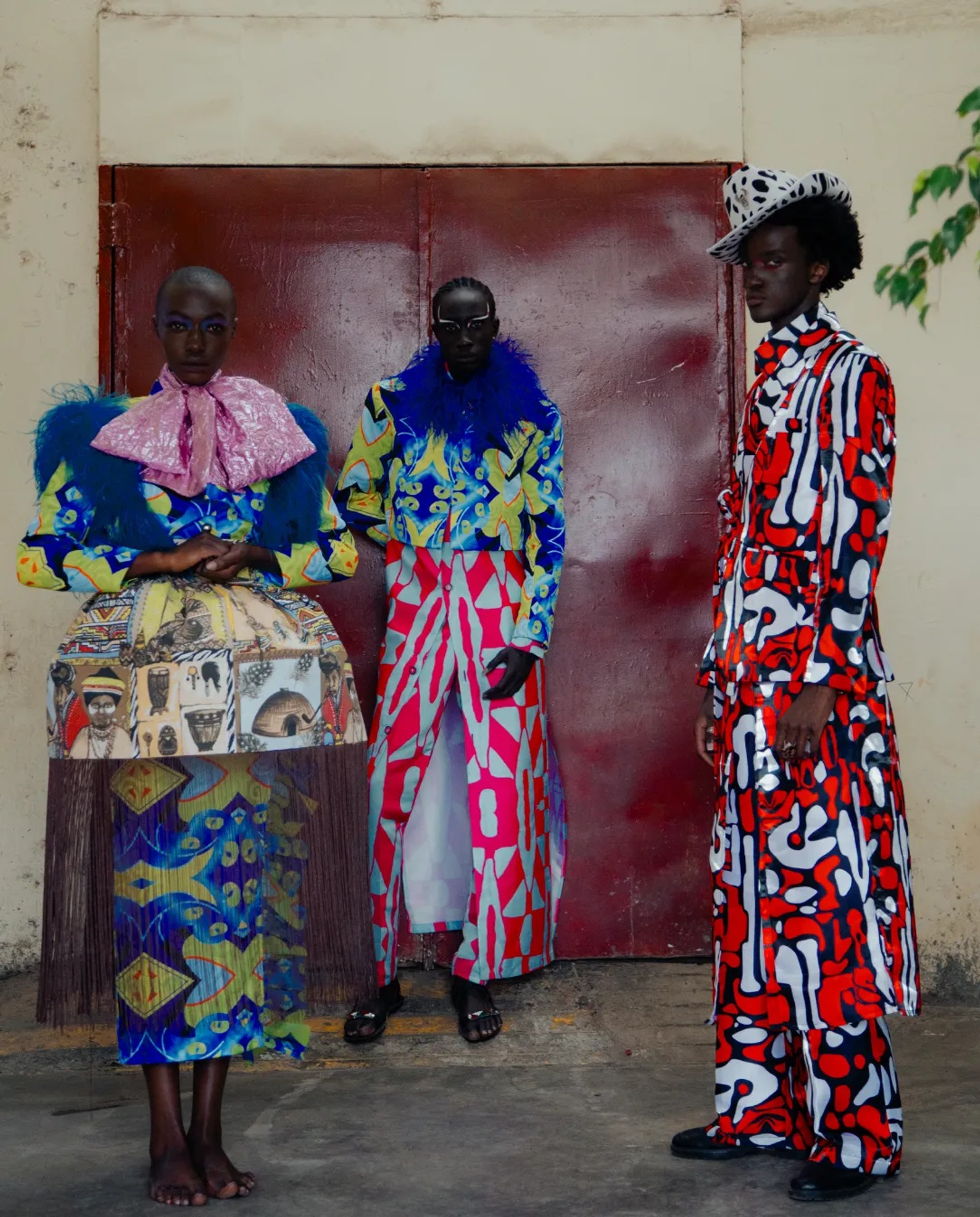
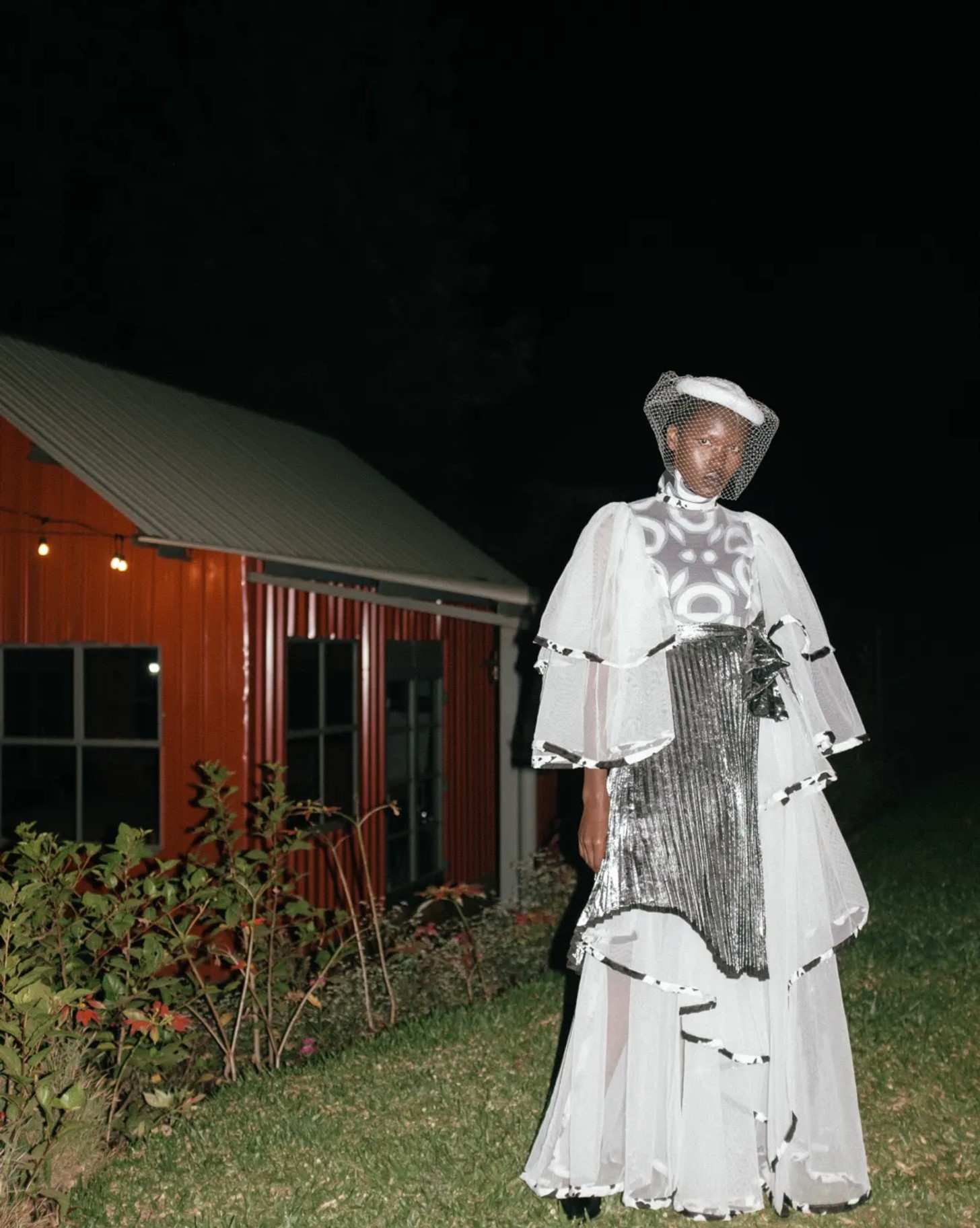
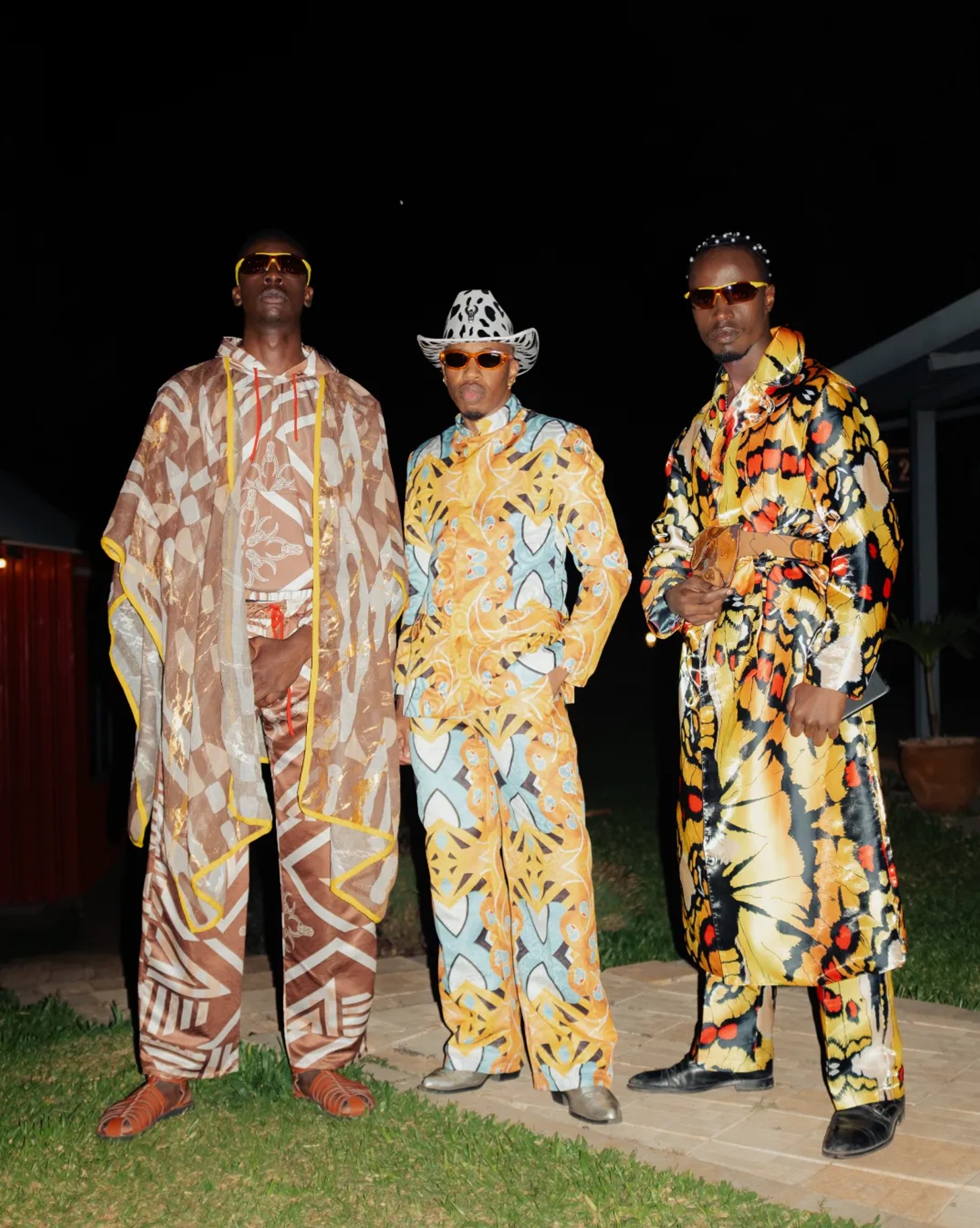
Nairobi wasn't just about the runway. It produced a fashion editorial shot by Kenyan photographer Rogers Ouma (@rogersouuma), starring models Mary Kendi (@mary_kendi1), Khamiss (@khamiss_whopsydark) and Aman (@aman._asf), with creative direction and styling by Mbane himself (@mzukisimbane).
The images do something a lookbook never could — they put South African design language in direct dialogue with Kenyan creative talent. It's Pan-Africanism as practice, not just a press release buzzword: South African prints, Kenyan eyes behind and in front of the camera, one shared story.
A DECADE IN THE MAKING
Paris, Eswatini and Nairobi might be 2026's headlines, but they're really the latest chapters in a much longer story. Imprint has already made stops in New York, Milan, Morocco, Lagos, Ghana, Dakar and Shanghai, showing at platforms like South African Fashion Week, Lagos Fashion Week, Tranoï Paris and Shanghai Fashion Week. Vogue Italia, Vogue Portugal and Harper's Bazaar Vietnam have all taken notice, and the clothes have found their way onto Billy Porter, Jidenna and Lalah Hathaway.
Then there are the collaborations that prove Imprint's cultural reach goes well beyond fashion insiders: a first-of-its-kind capsule with KFC South Africa tied to the brand's Braamfontein concept store, a rugby-inspired jersey with ASICS, and projects with Glenfiddich, Markham and Omega Shoes.
Through all of it, print has never just been decoration for Imprint. As the brand puts it, print is archive. Print is memory. Print is protest, celebration — sometimes, print is simply a declaration.
THE MARK HE'S REALLY TRYING TO LEAVE
Mbane put it best himself:
"Leaving a mark isn't only about being seen. It is about leaving evidence that we were here, that our stories mattered and that African fashion belongs wherever the global fashion conversation is happening."
"Paris was an extraordinary affirmation of that journey. But being able to move from Paris back onto the African continent — to Eswatini and then Nairobi — feels equally important to me. I want Imprint to grow internationally without ever having to dilute where it comes from."
"Our African identity is not the limitation to our global ambition. It is the reason for it."
That's the line to remember. Because while everyone else is still debating whether African fashion needs Paris's permission, Mbane is somewhere between Johannesburg and Nairobi, quietly rewriting what "global" is supposed to mean.
Recent stories by:
Tania Durand

The Gucci codes driving Demna’s new era

Wedaad Lima on fashion, motherhood and marketing G-Star Africa

LFW: H&M brings Nick Knight, Labrinth and Alex Consani to its A/W 2026 London show

LFW: ONALAJA unveils its new collection, Re:Birth

Simonsig opens Vonkel, a mediterranean-inspired restaurant in Stellenbosch
GLAMOUR Recommends
Trend Report: Embrace the capri pant trend this season
Michael Ludwig: The designer transforming fashion through personal connections
Collina Strada's Spring 2027 collection: A sustainable fashion statement in Copenhagen
Mastering Spring layering: Your guide to transitional fashion
South African born Charlize Theron’s fashion Odyssey isn’t over yet!
Shopping Edit: Items on my radar to invest in now


