
The epic adventure begins with the phone's features, its flexible form and the freedom to move between work, creativity and discovery. Travel season is upon us, and there is something fitting about looking at the world through a device designed to open up new possibilities.
MX Lead: Product and commercial at Samsung South Africa., Zahir Cajee enlightens that the evolution of Samsung's foldables represents a broader shift in how we interact with technology. We caught up with him ahead of Galaxy Unpacked in London to explore the latest generation of Galaxy devices, and why the foldable experience becomes particularly compelling when life refuses to fit into one neat screen.

The Galaxy Z8 series introduces what Samsung describes as an agentic AI experience. But what does that actually mean when you're holding the phone in your hand? "For the average user, agentic AI is about moving from simply asking your phone to do something towards your phone being able to understand what you are trying to achieve and help you get there," says Zahir.
It is a subtle but significant distinction. Rather than technology simply responding to individual commands, the ambition is for the phone to understand context and help connect the dots between different tasks. That becomes particularly relevant when you're constantly switching between them.
A screen designed for a life in motion
The Galaxy Z Fold8 Ultra is aimed squarely at people whose days rarely follow a single track.
"For someone who is constantly moving between different types of work and does not want to compromise or drop the ball," Cajee says, the device is designed to support everything from entrepreneurship and creative projects to business leadership and side hustles.
Think of the traveller answering emails before a flight, reviewing a presentation between meetings, researching a destination while simultaneously messaging a colleague or a creative person, capturing an idea and immediately turning it into something more substantial.
The Fold's appeal lies in giving those moments more room.
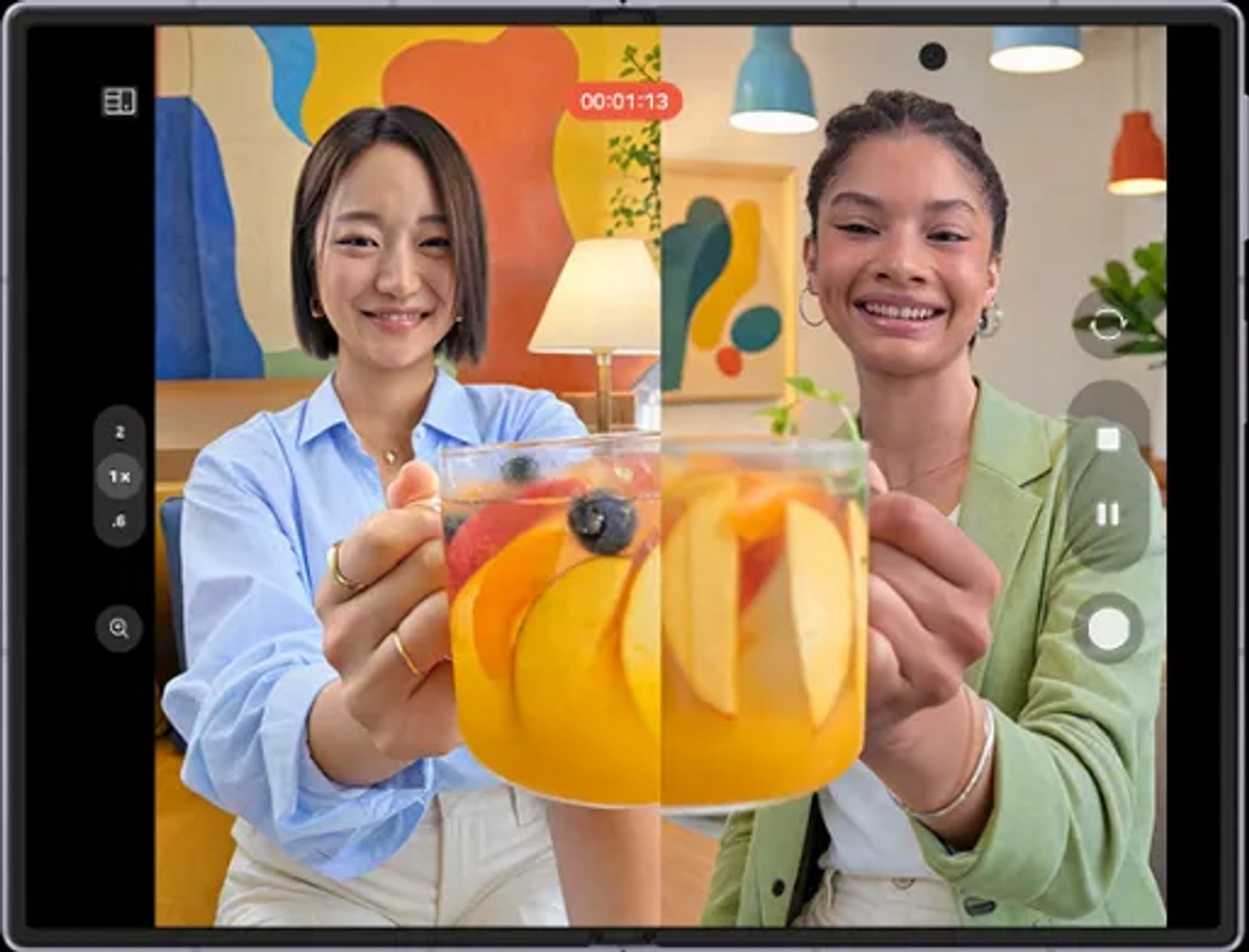
Samsung has also responded to changing patterns of mobile consumption with a wider, more natural aspect ratio. As users spend increasing amounts of time watching video, browsing the web and discovering content, the device has evolved around those behaviours.
"Fold8 is designed to deliver a more intuitive everyday experience through a wider, more natural aspect ratio," he says. The result is a form factor that feels less like simply carrying a bigger screen and more like having a different kind of workspace in your pocket.
Fold it. Flip it. Make it yours.
The Fold may be about opening up space, but Samsung's other foldable proposition takes a different approach. The Galaxy Z Flip8 is built around compactness, self-expression and creativity: qualities that continue to make the format particularly appealing to creators and style-conscious users. "The Galaxy Z Flip8 was built for users who want their phone to feel as dynamic as they are," Zahir explains. "It was designed around quick interactions, personal expression and AI-native experiences."
It is another expression of the same fundamental idea: that a smartphone doesn't have to dictate how you use it. Its shape can adapt to you.
The engineering behind the adventure
Notably, making a foldable thinner and lighter while maintaining confidence in its durability is no small engineering feat. According to Zahir, Samsung's approach is not about relying on one reinforced component. Instead, durability comes from a combination of innovations across materials, construction and the overall hardware architecture. The display is central to that challenge.
Samsung has applied Flex Titanium technology, combining a titanium alloy film beneath the display panel with a reinforced titanium plate. The approach is designed to reduce display creasing while improving resistance to external impacts within a slimmer design.
Samsung has also continued evolving its reliability testing based on years of real-world foldable user data. The goal? A device that feels sophisticated without feeling fragile.
When AI starts anticipating the next move
The most interesting part of the latest Galaxy experience may ultimately be less visible than the hardware. Features such as Now Nudge and Gemini point towards an AI experience that can become more proactive, moving beyond answering a question to understanding what is happening on your screen and helping determine what comes next.
"Galaxy AI initially began as a set of individual features designed to help users with specific tasks such as translation, summarisation, and photo editing," he says. "Today, it is evolving into a foundation that brings together the broader mobile intelligence experience."
That evolution could make the phone feel increasingly like an everyday assistant.
AI can understand the context of what a user is doing, identify the apps and services involved, and connect the appropriate functions to help complete the next task.
Zahir points to Now Nudge as an example. Rather than remaining within messaging applications, it can surface relevant information and recommended actions across a broader range of touchpoints. For travellers, creatives, entrepreneurs and anyone whose day involves a constant stream of information, that kind of contextual intelligence could be where the real transformation happens.
The feature you only understand once you live with it
Specs tell one story. Living with a foldable tells another.
If you’re considering making the switch for the first time, Zahir believes the most compelling discovery is the way the form factor itself changes your relationship with your phone. "This form factor changes the way people use their phones," he says.
With the Fold, that means gradually appreciating the value of more space for multitasking, content and productivity. With the Flip, it is the opposite sensation: discovering how a compact form factor and expressive design can change the way you engage with your device, whether you are creating or consuming content.And this is the real adventure.
Recent stories by:
Thobeka Phanyeko

Your friendly financial check-in starts here...

GLAMOUR's Features Editor's Top Picks: Add These Books to Your October Reading List

Registered Counsellor, Melissa Davids on 'The Art of Holding Space'

Mental Health Awareness Month: The Mind-Body Connection Unpacked


