
South Africa has lost one of its most influential women in public life. Phumzile Mlambo-Ngcuka, who served as the country's first woman Deputy President and later led UN Women, died at the age of 71, leaving behind a career that spanned the anti-apartheid struggle, democratic politics, education and international advocacy.
Her journey was not simply about occupying positions of power. Throughout her career, she worked to expand opportunities for women and girls, influence policy and challenge the barriers that limited their participation in society.

As tributes continue to pour in, we look back at 10 significant achievements that form part of her legacy.
1. She became South Africa's first woman Deputy President
In June 2005, Mlambo-Ngcuka made history when she was appointed South Africa's first female Deputy President under then-President Thabo Mbeki. She held the position until September 2008.
Her appointment represented an important milestone in a country still navigating the transformation of its democratic institutions and the representation of women in senior political leadership.
2. She signed legislation that legalised same-sex marriage in South Africa
One of the significant moments in Mlambo-Ngcuka's public service came in November 2006, when she signed the Civil Union Bill into law on behalf of then-President Thabo Mbeki.
The legislation made South Africa the first country in Africa, and the fifth in the world, to legally recognise same-sex marriages and civil unions.
It was an important moment in the country's constitutional commitment to equality and the protection of LGBTQ+ rights. Her role in signing the legislation has since become an important part of her legacy.
3. She played a role in the anti-apartheid struggle
Long before holding senior government positions, Mlambo-Ngcuka was involved in activism against apartheid. Her commitment to social justice developed early in her career, including through her work with young women.
She later worked as a coordinator for the World Young Women's Christian Association (YWCA) in Geneva, where she established a global programme for young women. Her early advocacy helped lay the foundation for a lifelong commitment to women's rights and opportunities.
4. She helped advance transformation in South Africa's mining industry
During her tenure as Minister of Minerals and Energy from 1999 to 2005, Mlambo-Ngcuka was part of a significant period of transformation in South Africa's mining sector.
Her portfolio oversaw important legislative changes, including the Mineral and Petroleum Resources Development Act of 2002 and the introduction of the Mining Charter. These reforms sought to transform ownership and participation in an industry historically shaped by racial exclusion.
Her work also included advocating for greater participation and ownership by women in mining.
5. She contributed to the drafting of South Africa's democratic Constitution
As a member of the first generation of MPs elected in 1994, Mlambo-Ngcuka served in the Constitutional Assembly, which was responsible for drafting the country's democratic Constitution.
It was a defining period in South Africa's history, and her involvement formed part of the broader work of establishing a constitutional democracy founded on equality, human dignity and human rights.
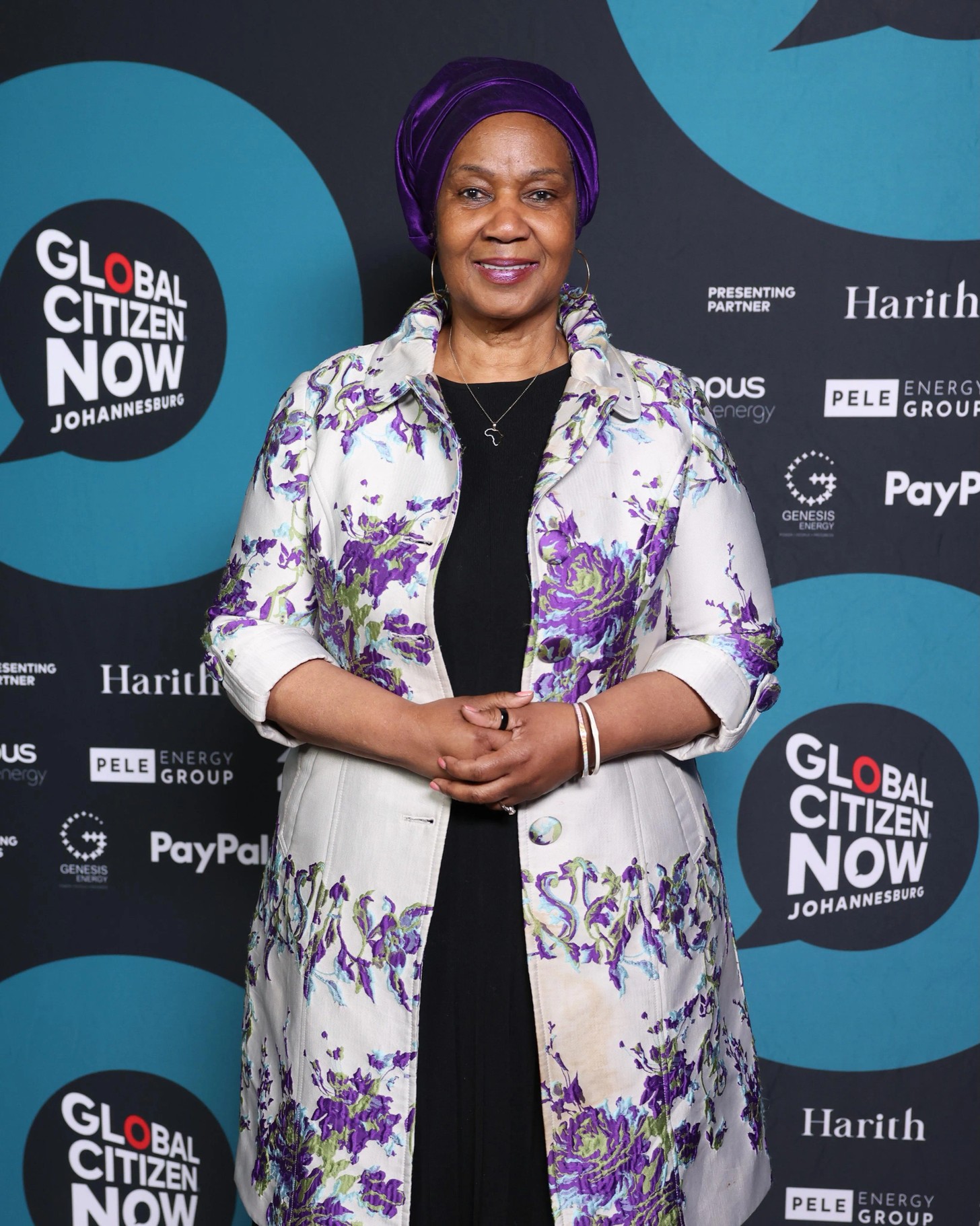
6. She championed programmes aimed at addressing poverty and unemployment
As Deputy President, Mlambo-Ngcuka was involved in government initiatives aimed at reducing poverty, addressing unemployment and creating opportunities for more South Africans to participate in the economy.
She formally launched the Accelerated and Shared Growth Initiative for South Africa (AsgiSA) in February 2006. The following month, the Joint Initiative on Priority Skills Acquisition (Jipsa) was established to address critical skills shortages.
These initiatives formed part of government's broader economic development ambitions, with an emphasis on skills, growth and expanding economic participation.
7. She helped strengthen South Africa's response to HIV and AIDS
Her public service also included work around HIV and AIDS, particularly the disproportionate impact of the epidemic on women and girls.
Her approach recognised that the crisis could not be addressed through healthcare interventions alone. Inequality, access to resources and the social circumstances affecting women also needed to be considered.
Her later work with UNAIDS continued this focus, bringing attention to the relationship between gender inequality and the HIV epidemic.
8. She led UN Women as its Executive Director
In August 2013, Mlambo-Ngcuka became United Nations Under-Secretary-General and Executive Director of UN Women, placing her at the forefront of international efforts to advance gender equality.
She served two terms, remaining in the position until 2021. During this period, she championed women's rights, economic empowerment, political participation and opportunities for girls across the world.
Her appointment also marked an important moment for African representation in global leadership, with a South African woman leading one of the United Nations' key agencies.
9. She founded the Umlambo Foundation to improve education
Beyond government and international leadership, Mlambo-Ngcuka invested in education through the establishment of the Umlambo Foundation.
The organisation focuses on supporting teachers and improving learning opportunities for pupils, particularly in under-resourced communities.
Her commitment to education was also reflected in her academic work. In 2013, she completed a doctorate at the University of Warwick, researching how mobile technology could support teacher development in resource-poor countries.
10. She became an influential global voice for women and girls
Perhaps one of her most enduring achievements was the influence she built as an advocate for women and girls, both in South Africa and internationally.
Across her years in public service, civil society and the United Nations, she consistently pushed for women's participation in decision-making, economic opportunities, education and leadership.
Her work helped bring women's experiences into conversations about development, democracy and social justice. She also challenged the idea that gender equality should be treated as a separate issue, rather than an essential part of building fairer societies.
Her contribution was recognised by leaders across South Africa and the international community following her death, with UN Secretary-General António Guterres remembering her as a lifelong champion of women's and girls' rights.
A legacy that extends beyond the positions she held
Phumzile Mlambo-Ngcuka's life offers an important reminder that leadership is not measured only by the titles one holds, but also by the institutions one helps shape and the opportunities one works to create for others.
From the classrooms where she began her career to the highest levels of South African government and the United Nations, she spent decades advocating for a world in which women and girls could participate more equally.
Her legacy will remain part of South Africa's political history and the wider global movement for gender equality.
Recent stories by:
Sindeka Mandoyi

Justice Mukheli takes his directing talent global with Gates Foundation films and Loerie win

Mo’s Crib takes its South African handcrafted homeware to Los Angeles

Luyanda Zwane joins Garnier as its newest brand ambassador in Sub-Saharan Africa

Do you really need a neck cream? An expert explains what your neck actually needs

When sibling rivalry turns into a feud: How to navigate conflict without letting it consume your family
GLAMOUR Recommends
Dr Pashy on the women who shaped her journey from rural Limpopo to becoming a specialist Doctor
Navi Pillay: 5 Things to know about South Africa's 2026 Nobel Peace Prize Winner
Omila Gqoboka on fashion, motherhood and building a personal brand with purpose
8 Women, one city and a question South Africa has asked before: How Many More?


