
From #OOTD posts in 2012 to fronting H&M South Africa’s CurvyFit Denim campaign, content creator Paula Bee has spent over a decade turning a love of fashion into a career on her own terms. She opens up about the confidence it took to get here, the boundaries she had to learn the hard way, and why representation — for herself and the women watching her — still matters most.
Glamour: I found your blog while researching you — how much have you changed since your last post?

Paula Bee: “2019 Paula” was shy and introverted, and I dressed to fit trends rather than what I actually liked.The biggest change is confidence —trusting my own instincts, saying no when something doesn’t feel right, and knowing my value. My love for fashion, beauty and creativity has stayed exactly the same; what started as a hobby just became a career. I’ve changed a lot, but that girl who started taking outfit photos is still in there, and I’m glad she is.
G: Can you share a bit about your childhood — the moments that shaped you?
PB: I’m the youngest of three and the only girl, with two brothers who loved to roughhouse with me — a great blend of tomboy and girly that I still move between today. My mom loved taking me shopping, and I’d “model” the outfits for the family, the total drama queen. I grew up hugely supported.
G: Was the life you have now everything you imagined as a young person?
PB: Not at all. I wanted to be an artist or fashion designer, imagined working at Foschini, then studying art. I had a fairly traditional idea of success and never pictured building a career in social media— that industry barely existed when I was younger. What I have now came with hard work, uncertainty and plenty of unexpected turns, but I’m proud of it.
G: How have you balanced your public and private life?
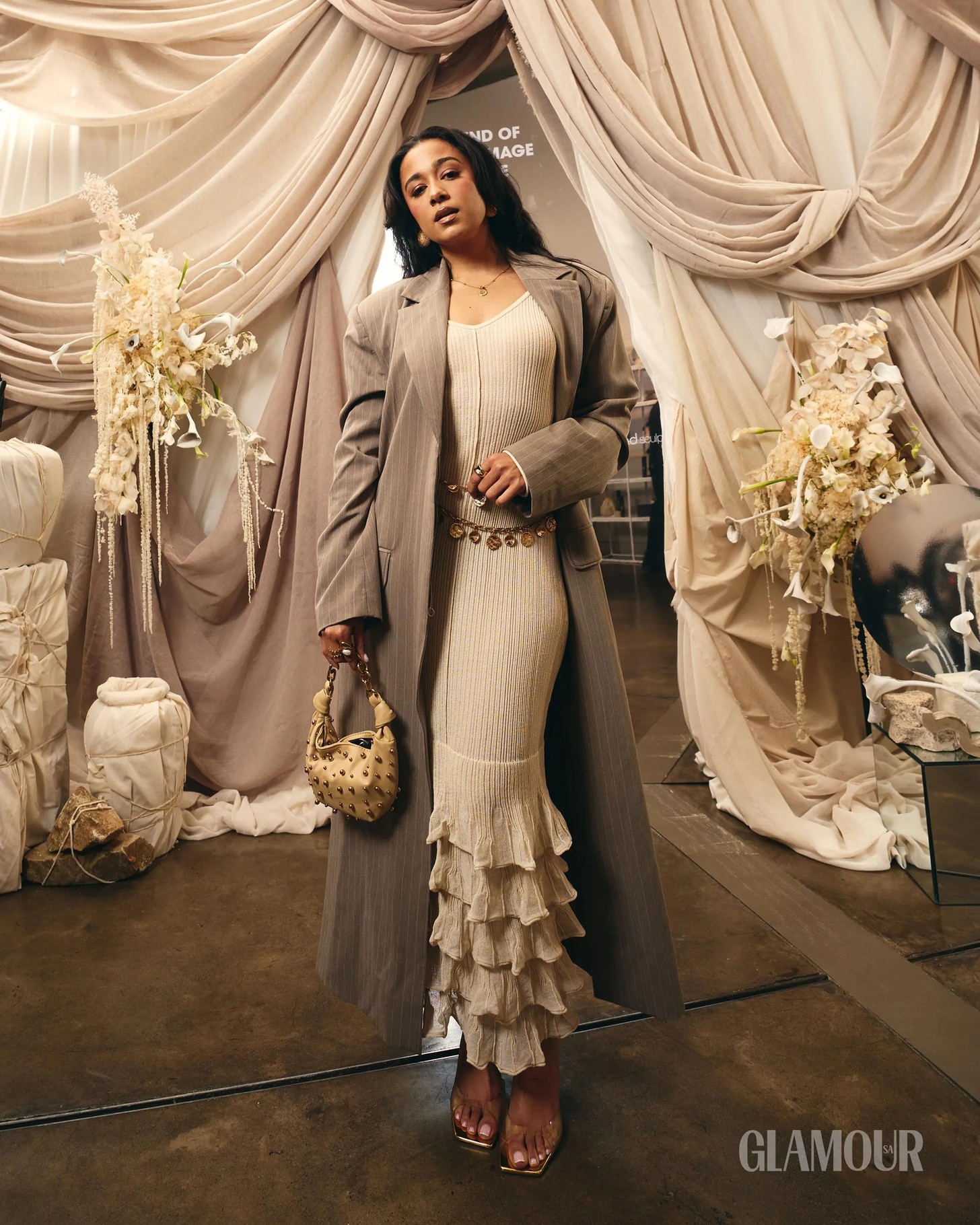
PB: I’m actually quite a private person.I’ve always shared what I was genuinely comfortable with while keeping other parts of my life just for myself. My content stays centred on fashion and beauty, which has let me build a real connection with my audience without giving away everything.
G: What are your non-negotiables in your career?
PB: Boundaries — I learnt that the hard way after feeling taken advantage of, giving more time and creativity than I should have. I’m also big on being heard; if I’m on camera for a brand, I want my personality to come through, not a script.I want to work with brands that respect my creativity, my time and what I bring.
G: What are your self-care practices?
PB: I’ve been investing in vitamins and supplements for hair strength and skin collagen, and — my favourite — giving myself salon-quality blowouts at home.
G: What have been some of your greatest accomplishments?
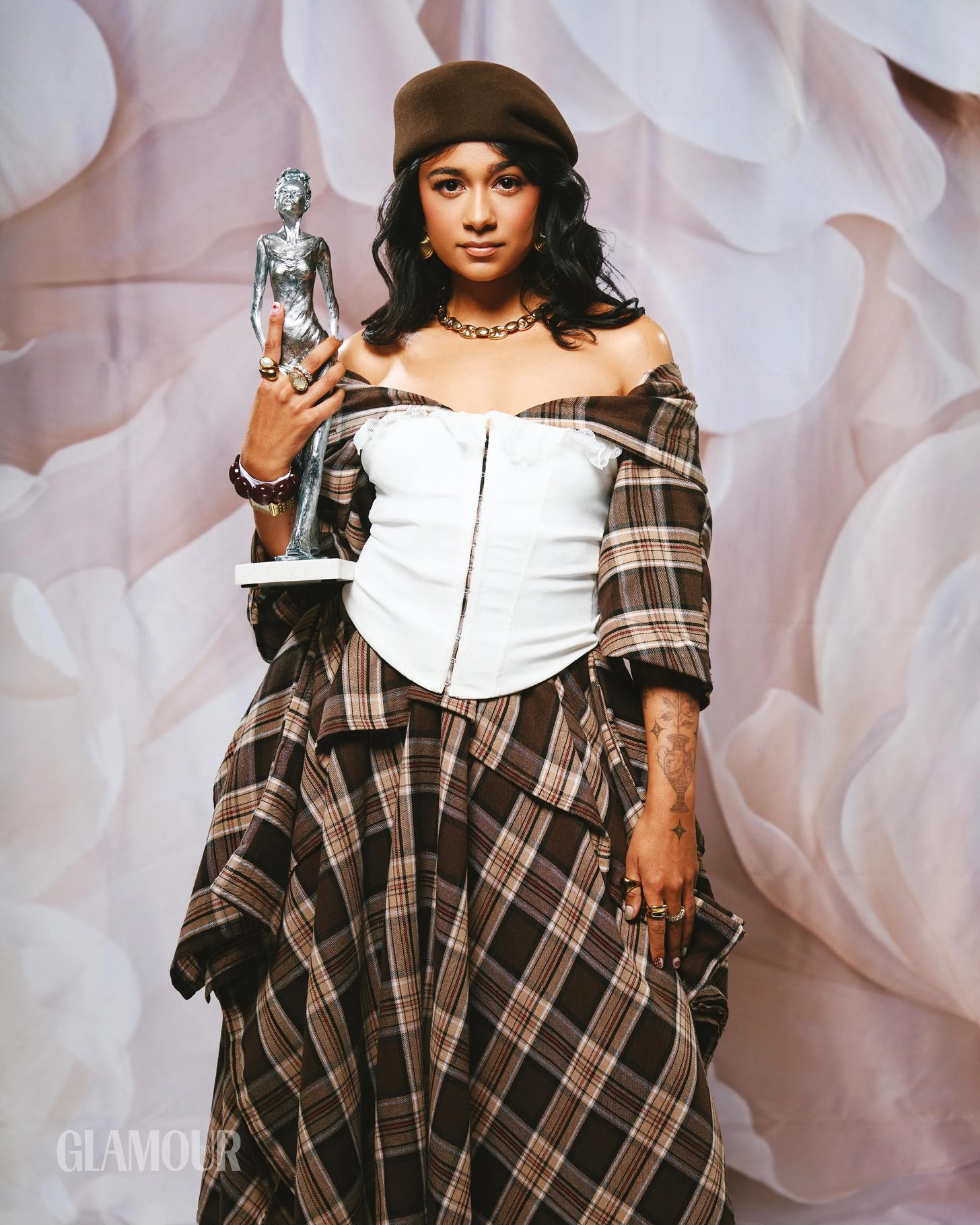
PB: Longevity, honestly. I started posting#OOTDs in 2012 and launched Ms PaulaBee as a blog in 2014, and I’m still doing it more than a decade later. Being a face of H&M South Africa’s Curvy Fit Denim campaign in 2025 felt full-circle, since fashion is why I started. Joining CanalWalk’s #CWSquad and being recognised by Glamour South Africa for my street style have meant a lot too.
G: What are your non-negotiables when working with brands?
PB: Respect for my time, creativity and audience; creative freedom to bring my own voice; and clear communication upfront — timelines, usage rights, exclusivity and fair compensation.
G: How has the content creation industry changed, and what challenges does it face?
PB: It’s finally seen as a legitimate career, and it’s become far more diverse and inclusive. Short-form video has also opened doors for anyone with a phone and a point of view. But the industry is saturated, the pressure to constantly create is real, and there’s a huge amount of unpaid, unseen work behind the scenes — strategy, editing, admin — that creators are often expected to do for very little, or for “exposure.”
G: Being a woman of colour in this space — advantage or disadvantage?
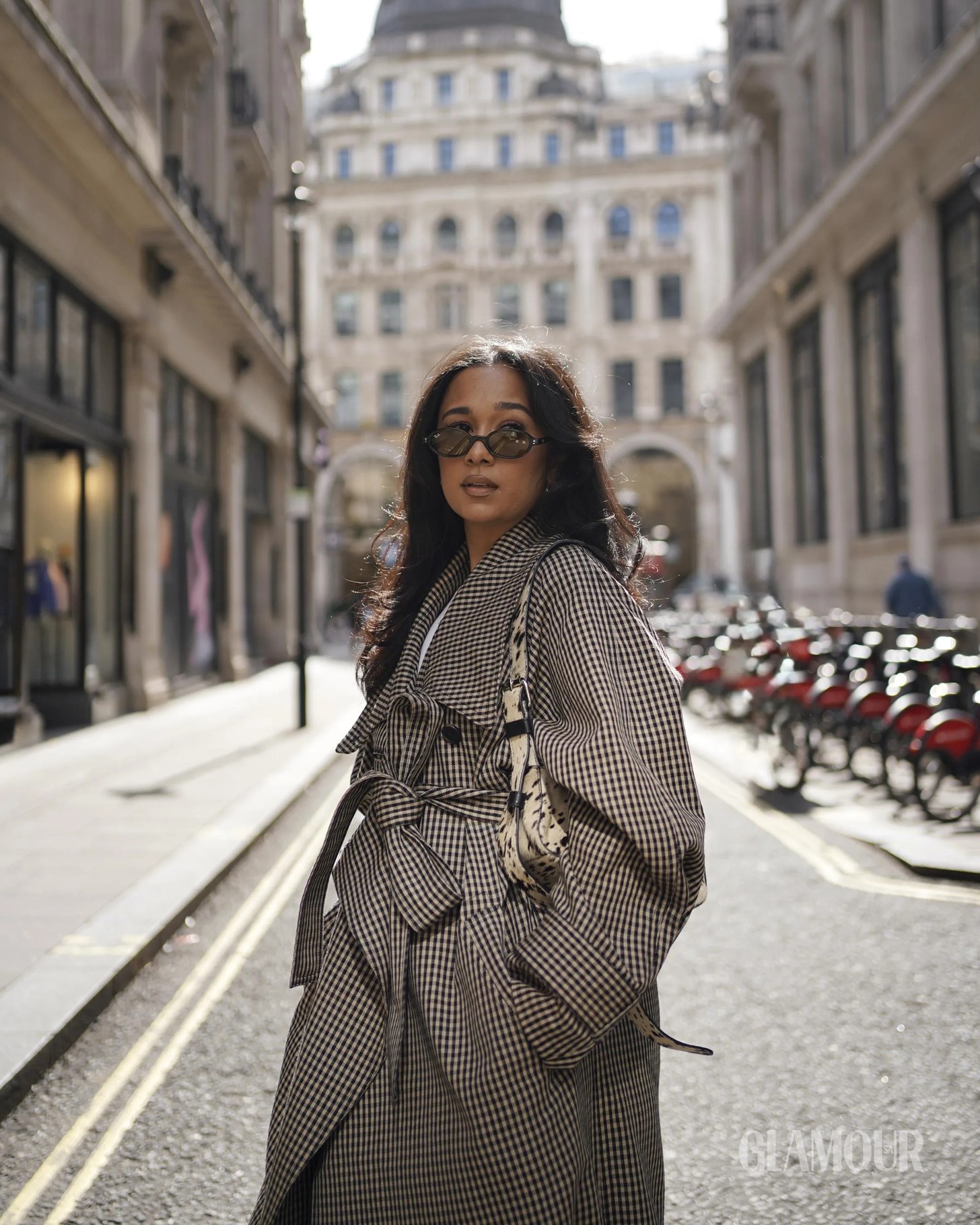
PB: Both, honestly. It’s shaped my style and the stories I tell, which is an advantage. But there have been moments I’ve questioned whether I fit the image a brand wanted. I’ve watched the industry become more inclusive, andI hope that by showing up authentically, I make these spaces feel more accessible to the women who come after me.
G: Do you feel responsible for opening doors for other women of colour?
PB: I do. Younger women are watching and looking for proof that this is possible for them too. I didn’t have a blue print when I started, and I’m still learning —if my journey shows another woman of colour there’s space for her, that matters.
G: How important is having a moral compass in this industry?
PB: Hugely. Not every well-paid opportunity is the right one, and my audience’s trust matters more to me than any single campaign. Saying no sometimes costs money, but protecting my integrity is worth more long-term.
G: The industry is oversaturated with people trying to break in. What’s your advice?
PB: Don’t get into this to become an influencer — get into it because you love creating something. Don’t get so focused on numbers that you lose your own voice; you don’t have to be the loudest person online. And not every free product or collaboration is worth saying yes to —know your value and treat this like the business it is.
G: Which influencers do you admire?
PB: Noorie Ana, Nabilah Kariem, Maureen Moores, Jenn Bregande andApril Buckles — each has built a distinct identity and voice rather than copying anyone else, which is something I really value.
G: Do you see yourself owning a fashion, beauty or marketing business one day?
PB: Absolutely. After more than a decade across blogging, content creation, photography and strategy, I’ve realisedI don’t need to box myself into one thing yet. Whatever I build next has to be something I’m genuinely passionate about, with real longevity — so I’m in no rush to force it.
Recent stories by:
Tania Durand

The Gucci codes driving Demna’s new era

Wedaad Lima on fashion, motherhood and marketing G-Star Africa

LFW: H&M brings Nick Knight, Labrinth and Alex Consani to its A/W 2026 London show

LFW: ONALAJA unveils its new collection, Re:Birth

Simonsig opens Vonkel, a mediterranean-inspired restaurant in Stellenbosch
GLAMOUR Recommends
Nomalanga Shozi stuns in a silver slip dress at Paris Fashion Week
MFW: Louise Trotter Lets the Light Into Bottega Veneta
The Gucci codes driving Demna’s new era
LFW: H&M brings Nick Knight, Labrinth and Alex Consani to its A/W 2026 London show
Inside CHROMISM: How the BAM Collective turned a Johannesburg forest into fashion's most immersive runway yet
Heritage, Reimagined: Inside Woolworths and Thebe Magugu's Lineage collaboration


