
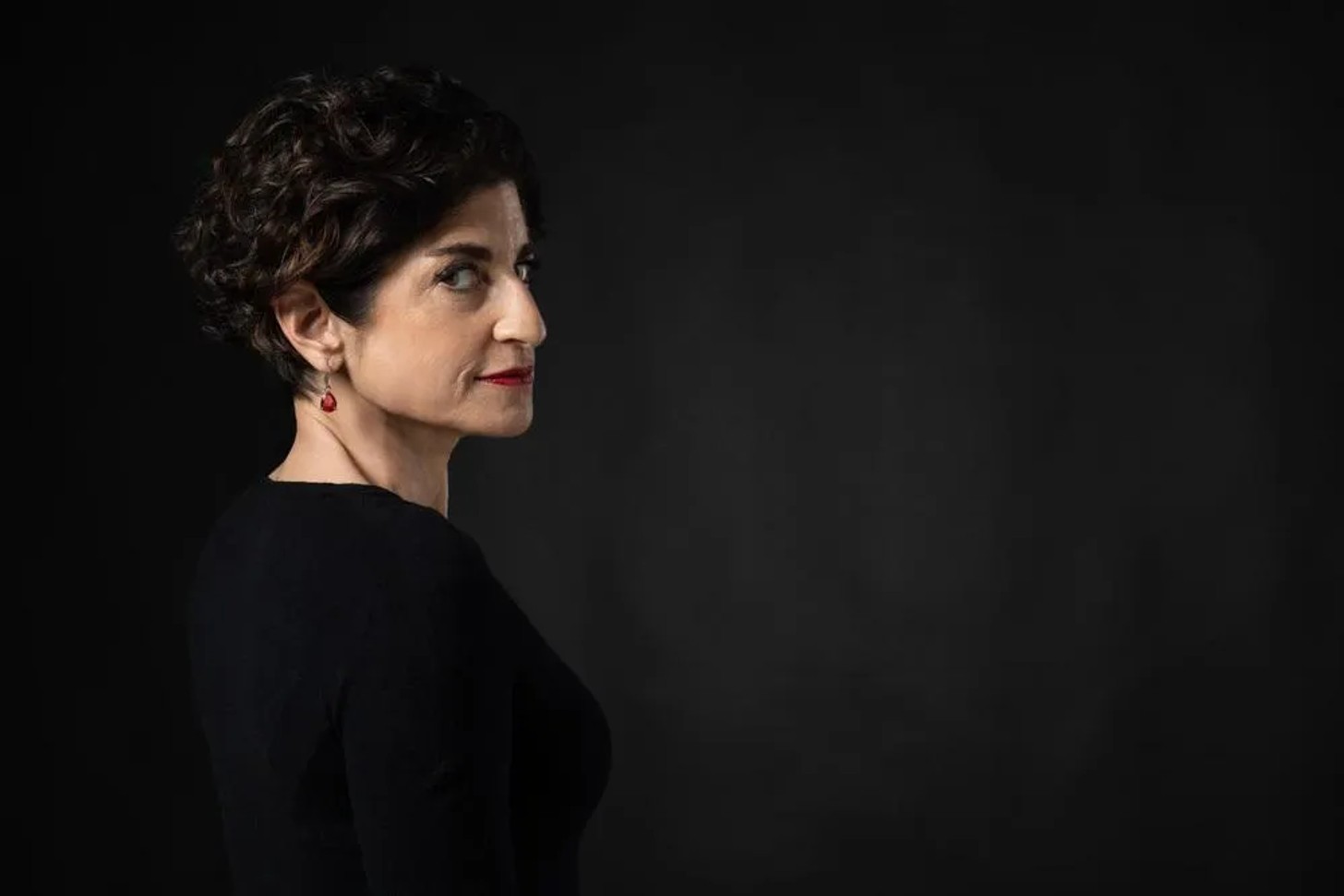
In an inspiring blend of analytical thought and raw artistry, renowned economist and public policy expert, Miriam Altman is making a bold artistic statement with the release of her debut jazz album, The Butterfly Project. Known for navigating complex economic landscapes, she steps into the spotlight to explore the intricate contours of human emotion, transformation, and rebirth.
Here, she opens up about returning to her musical roots, finding harmony between discipline and creative freedom, and giving herself permission to embark on a deeply personal new chapter.

GLAMOUR: You have built a career as an economist while also nurturing a deep connection to music. When did you realise that music needed to have a more intentional place in your life?
Miriam: Music has always been important to me. I trained as a classical singer when I was younger, but life took me in another direction. After a difficult period, I felt a strong pull to return to it, as something I needed to commit to. I began again pretty much from the ground up: rebuilding my voice, exploring new aspects of it, learning jazz, writing and finding my own sound. Now I am completely immersed.
GLAMOUR: There’s something fascinating about the intersection of economics and jazz: two worlds that require both structure and creativity. How do these different sides of you influence each other?
Miriam: They may look like very different worlds, but both require discipline, curiosity and the ability to see patterns. My world of public policy, economics and strategy requires me to listen closely, understand complexity and work patiently, drawing stakeholders together towards solutions and action. Jazz demands its own rigour: you learn the harmony, rhythm and craft, and then you have to be present enough to respond in the moment. My musical journey has benefited from years of building stamina, focus and agility, and learning to trust instinct and take risks. But music asks more of me personally, physically and emotionally; it requires me to be free and open.
GLAMOUR: What has music allowed you to express that perhaps your work as an economist could not?
Miriam: Music lets me stay with feelings that cannot be resolved in a sentence or a chart. A voice can hold grief, anger, longing and joy at the same time, and leave room for the listener to bring their own experience. I can tell a story without explaining every part of it. That is liberating for someone whose work often requires analysis and clear conclusions. My song The Train expresses frustration at elusive national progress towards the South African dream – my economics work asks “how to get there?” while the music asks “how does it feel?”
GLAMOUR. You’ve now released your debut album. What does arriving at this particular moment mean to you, especially after having an established career outside of music?
Miriam: I have worked very hard over the past four years to find my voice - literally, but also to discover my sound and build a community of people I work with. The album is a major milestone in that journey of discovery. I am intensely proud of the music we have created. There is a real thrill in finally sharing it, but I am also trying not to become too absorbed in the moment as I prepare for the two concerts!

GLAMOUR: Was there a particular moment during the making of the album when you thought, this is why I needed to do this?
Miriam: There was no single point; it has been a series of experiences. As my skill level grows, I can lean further into the music, and as my relationship with the band deepens, new moments open up. I felt that again in a recent rehearsal when the music rose to new heights in energy and impact. These experiences have been profound, life-changing and continuously evolving.
GLAMOUR: What stories, emotions or experiences did you want to capture through the album?
Miriam: The Butterfly Project grew out of a difficult, tumultuous period in my life, when I was trying to find my way through change and uncertainty. The songs move through the depths of grief to courage and release, transformation and renewal. The title track came after I moved to Cape Town and found a wall at my home covered in black caterpillars. I wondered how any of them could make that difficult journey and emerge renewed and fully alive. That image stayed with me.
GLAMOUR: How would you describe the sound and spirit of this body of work, and what do you hope listeners take away from it?
Miriam: It is contemporary vocal jazz, shaped by soul, blues, rock, classical music and the rhythms of South Africa. I wanted it to have space and intimacy, but also movement: songs that can groove, surprise and build into something powerful. Some of the themes are dark, but the music carries movement, energy and release. The shape of the music is intentional, and I hope listeners hear something new in the vocals or instrumentals each time they return to it. I hope listeners find a song, a line or a moment that keeps them company and gives them a little more courage.
GLAMOUR: There can be a vulnerability that comes with putting something deeply personal into the world. What has releasing your music taught you about being seen?
Miriam: I have a public profile through my work, but I am an intensely private person, so it is strange to put something so personal into the world. As I went through challenging times, I benefited enormously from people who shared their own experiences. I felt it was time for me to do the same, in my own way, through music. It has taught me that I can be truthful in a song while still allowing listeners their own relationship with it.
GLAMOUR: You’re now preparing to take the album to audiences in Johannesburg and Cape Town. What can people expect from these shows that they won’t necessarily get from simply listening to the album?
Miriam: I love what we created on The Butterfly Project. An album is fixed in time and space. The concerts will be so much more than that. In fact we are working hard to shape the music for the stage and put on an exquisite performance. We are going to push and pull sound and light to tease, delight, drive emotions, and draw the audience in with us. Look forward to an exhilarating performance.
GLAMOUR: What does performing live give you that recording in a studio doesn’t?
Miriam: The studio is a fantastic place to make music. Recording is ruthless: it reveals so much about where you are, and it gives you the opportunity to experiment and shape every detail. But it cannot compare with live performance. There is a human connection in a room full of people that can be enthralling and enveloping. You move away from the near-perfection recording demands and into the risk and imperfection of real life.
GLAMOUR: At this stage in your life and career, what does it mean to give yourself permission to pursue a creative dream?
Miriam: It is a very relevant question for me. I think it took me so long to return to music because I could not give myself permission. Life experience, maturity and coming through serious challenges have made me want to live differently and pursue this part of myself. It has meant accepting being a beginner again, asking for help and continuing through the awkward parts of learning. I do not think there is an age at which curiosity, growth or a creative beginning becomes unavailable to you. I gave myself permission to set aside familiar paths and immerse myself in this creative part of my life.
GLAMOUR: Do you see this album as the beginning of a new chapter, or as something that has always been unfolding alongside the rest of your life?
Miriam: This is definitely the opening of a new chapter. Over the past few years, I have built my musical skills and a community around the work, creating a foundation for what comes next. I am now at a major juncture, launching my debut album with these two concerts. I see myself performing this music on stages in South Africa and internationally, pursuing new collaborations and continuing to create. I see this musical life existing alongside my passion for strategy work and communication.
Recent stories by:
Thobeka Phanyeko

Mental Health Awareness Month: The Mind-Body Connection Unpacked

In support of Breast Cancer Awareness Month, we chat to four survivors

Women in Charge: Inside Sorisha Naidoo's glamorous life

Breast Cancer Awareness Month: Tisha Boatman on Resilience, Early Detection and Reclaiming Your Health


